


How MOQ Requirements Actually Work for Custom Tablet Case Orders
OK so here’s the thing nobody tells you upfront: MOQ isn’t just a number the factory pulls out of thin air. It’s basically their break-even calculation wrapped in negotiation theater.
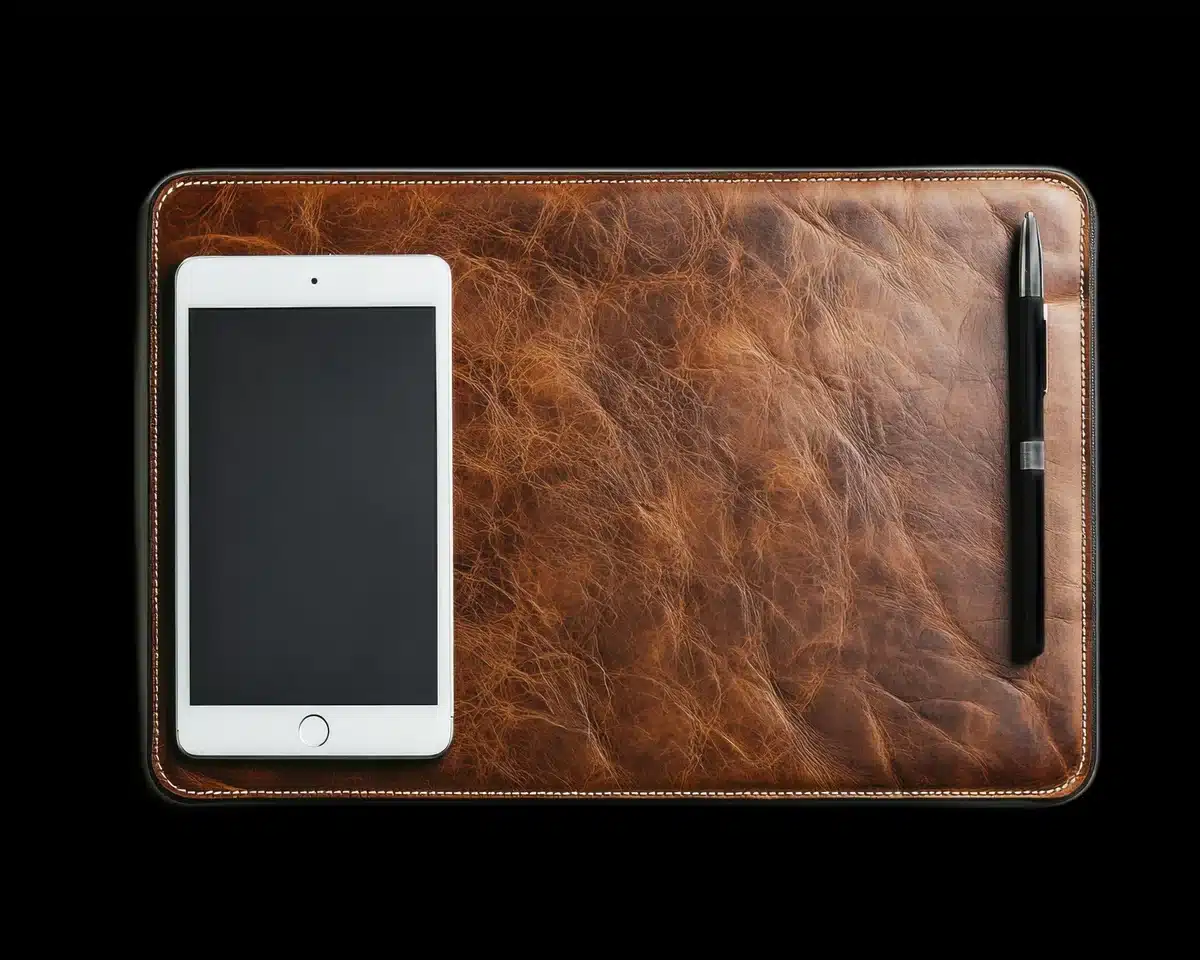
When you contact a manufacturer about custom tablet cases — whether it’s a small operation in Shenzhen or a mid-sized supplier in Vietnam — they’re doing mental math before they even quote you. They need to know: will this order cover the cost of creating your custom mold, setting up their production line, and still leave them with actual profit? Most factories won’t touch custom orders under 500 units. Some start at 1,000. The really specialized ones (think leather craftsmen or carbon fiber specialists) might go as low as 100, but you’ll pay a premium that makes your eyes water.
Here’s how the math actually shakes out. Let’s say you want iPad cases with your company logo embossed on genuine leather:
| Order Quantity | Per-Unit Cost | Setup Fee | Total Investment |
| 100 units | $22-28 | $400-600 | $2,800-3,400 |
| 500 units | $12-16 | $300-450 | $6,300-8,450 |
| 1,000 units | $8-11 | $200-350 | $8,200-11,350 |
| 3,000 units | $5-7 | $150-250 | $15,150-21,250 |
Notice how the per-unit cost drops dramatically? That’s economies of scale doing its thing. But also notice the total investment climbing — this is where a lot of first-time buyers freeze up.
The setup fee covers tooling, sample creation, and what factories call “production preparation” (which honestly just means getting their machines configured for your specific design). Some suppliers will waive part of this if you’re ordering above their standard MOQ threshold. Worth asking about.
And here’s a twist most people miss: the MOQ for custom tablet cases MOQ isn’t always firm. I’ve seen buyers negotiate down by offering to be flexible on delivery time, accepting slight color variations, or agreeing to use the factory’s standard packaging instead of custom boxes. Sometimes it works. Sometimes it doesn’t. Depends on how busy they are that quarter.
Breaking Down Real Mold Costs in Tablet Case Manufacturing (And Why They Vary So Much)
OK so here’s where it gets expensive — and confusing. I once asked three different factories for quotes on the same tablet case design. Got numbers ranging from $280 to $1,850 for the mold. Same specs. Same material. Wildly different prices.
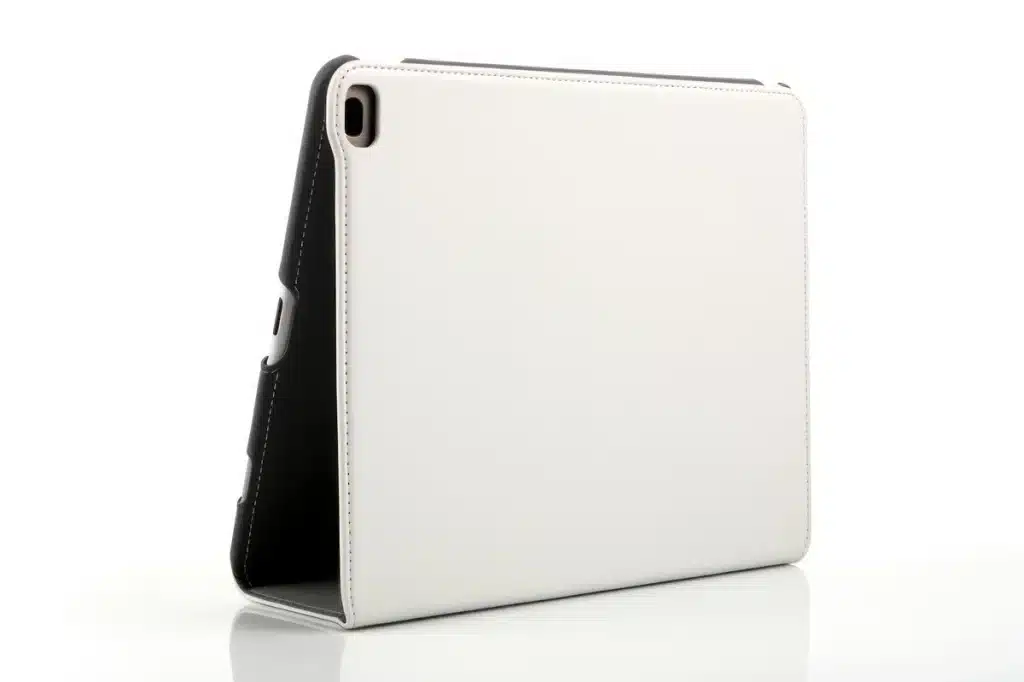
The variance comes down to mold complexity and what kind of manufacturing process you’re using. Injection molding for hard plastic cases? You’re looking at $800-$2,500 typically, because those molds need precision machining and can handle tens of thousands of cycles. Thermoforming molds for simpler designs — the kind you see on basic protective shells — run cheaper, maybe $300-$900, but they wear out faster. And if you want a multi-cavity mold that produces 4 or 8 cases per cycle instead of one? Multiply everything by 1.5x to 3x.
Here’s what actually drives the cost up:
- Undercuts and complex geometry (anything that requires sliding cores or lifters in the mold)
- Texture requirements — a matte finish or carbon fiber pattern adds machining time
- Tight tolerances for precise camera cutouts or stylus slots
- Multi-material designs where you’re overmolding TPU onto polycarbonate
But wait, there’s more. (I hate that phrase but it’s accurate here.) Some factories include mold modifications in their quote — so if your first sample comes back and the volume buttons don’t align perfectly, they’ll adjust it for free. Other suppliers charge $50-$200 per revision. You need to ask about this upfront because I’ve watched projects blow their budget on mold tweaks alone.
And then there’s mold ownership. Most Chinese manufacturers retain ownership unless you pay extra — sometimes 30-40% more — to own the tooling outright. If you don’t own it, you’re locked into that supplier for reorders. Not always a bad thing if you like working with them, but it removes your negotiating power down the road when you’re placing those higher-volume orders for custom tablet cases MOQ requirements.
One factory told me their molds last 50,000+ cycles if maintained properly. Another said 20,000 was realistic. The truth? Depends entirely on the material you’re running and how often they’re actually cleaning and servicing the tooling between production runs.
Cost Sharing Models That Make Custom Tablet Cases Affordable for Smaller Brands
I stumbled onto this by accident in 2026 when a startup founder told me she split tooling costs with two other brands who needed the exact same tablet case dimensions. Genius move. Her custom tablet cases MOQ dropped from 3,000 units to 1,000 because the factory amortized the mold investment across three clients instead of one.
Here’s how cost sharing actually works in practice — and why more factories are quietly offering it now that smaller brands are demanding lower MOQs. You find other brands (usually through industry Slack groups or LinkedIn DMs, honestly) who need cases for the same tablet model. Could be iPad 10th gen, could be Samsung Tab S9. Doesn’t matter as long as the shell dimensions match. Then you approach the manufacturer together and negotiate shared tooling ownership.
The math gets interesting fast:
| Cost Element | Solo Brand | 3-Way Split | Your Savings |
|---|---|---|---|
| Mold Development | $2,800 | $933 | 67% |
| Setup Fees | $600 | $200 | 67% |
| Minimum Order | 3,000 units | 1,000 units | — |
| Total Upfront | $3,400 | $1,133 | $2,267 |
But — and this matters — you’re giving up exclusivity on the case design itself. Your branding stays unique (logo placement, color choices, packaging), but the physical shell geometry? Shared. Some brands hate this. Others couldn’t care less because they’re differentiating on software or service anyway.
I’ve also seen “fractional MOQ” arrangements where a factory runs multiple brands’ orders in the same production batch. They’ll schedule your 800 units alongside another brand’s 1,200 units to hit their internal 2,000-unit minimum. You pay slightly higher per-unit costs (maybe $0.30-0.50 more per case) but you avoid the tooling charge entirely if you’re using their existing molds with minor customization.
One factory in Shenzhen told me they now actively match brands for cost sharing because it keeps their machines running consistently. Makes sense. They’d rather produce 3,000 cases for three clients than wait for one client to commit to 5,000.
The catch? Timing. Everyone needs to align on production schedules, and if one brand bails, the others absorb their share of costs. Get everything in writing.
The Hidden Economics of Tablet Case Production — What Your Supplier Isn’t Telling You About MOQ and Tooling
So here’s the part where most brands get absolutely fleeced — and I mean that literally. I’ve seen startups pay $2,800 for tooling that should’ve cost $900, all because they didn’t understand what they were actually buying.
Tooling costs are the one-time charges for creating the physical molds and dies that shape your custom tablet cases. Think of it like this: if you’re getting injection-molded hard cases with custom dimensions, the factory needs to machine a steel mold specific to your design. That mold — depending on complexity and cavity count — runs anywhere from $800 to $4,500. Single-cavity molds (producing one case per cycle) sit at the lower end. Multi-cavity molds that pop out four or six cases simultaneously? You’re looking at $3,000+.
But wait.
Most suppliers quote tooling as a bundled line item without breaking down what you’re actually funding. Last year I worked with a brand launching iPad Pro cases, and their initial quote included “$3,200 tooling”. When we pushed back and asked for itemization, turned out $1,400 of that was for “design refinement and sampling” — stuff that’s honestly just… part of doing business. We negotiated it down to $1,950 for the actual mold.
Here’s what tooling typically covers (and what shouldn’t be lumped in there):
| Legitimate Tooling Cost | Typical Range | Sneaky Add-Ons to Watch For |
|---|---|---|
| Steel mold fabrication | $800-$3,500 | “Engineering consultation” fees |
| CNC machining time | Included in mold cost | Separate “CAD file conversion” charges |
| Mold testing & adjustments | $150-$400 | “Sample production runs” beyond 3-5 units |
| Silicone compression tooling | $300-$900 | “Color matching” as a tooling expense |
And here’s the thing about MOQ in relation to tooling: factories amortize tooling costs across your order volume in their internal math. That’s why a 500-unit order might quote at $8.20 per case while a 2,000-unit order drops to $6.10 — they’re spreading that $2,400 mold investment across more units. Some factories will actually waive tooling entirely if you commit to 3,000+ units upfront, because at that volume they’re making enough margin to absorb it.
One Dongguan supplier told me straight up (after three beers at a trade show) that their quoted tooling prices include a 40% markup because most Western clients negotiate down by exactly that amount. So if you don’t push back, you’re just paying their inflated starting number.
Conclusion
So here’s what actually matters when you’re navigating custom tablet cases MOQ: the number itself is negotiable way more often than factories let on, and tooling costs are where they’re hiding their margin. I’ve watched people overpay by 30% just because they didn’t push back on the first quote or ask about shared molds.
Start with 500 units if you’re testing the market. That’s the sweet spot where you’re not bleeding cash but you’re also not paying $15 per case because you only ordered 100.
And honestly? Build a relationship with one good factory instead of shopping around constantly — that’s when the real flexibility shows up.
Frequently Asked Questions
Q: What’s the typical MOQ for custom tablet cases?
A: Most factories start at 500-1,000 units for custom tablet cases MOQ, but I’ve negotiated down to 300 when the design was simple and they had leftover materials from another order. Below 200 units, you’re usually looking at per-unit costs that double or triple because they can’t justify the tooling setup.
Q: Can I order a sample before committing to the full MOQ?
A: Yeah, but expect to pay $50-150 per sample depending on complexity — factories treat samples as a separate mini-production run. Some suppliers will credit that cost back if you place the full order, but get that in writing upfront because most won’t volunteer it.
Q: How much does tooling cost add to custom tablet cases MOQ orders?
A: Tooling usually runs $800-2,500 for a new mold, and here’s the thing — that’s where factories pad their margins hardest. If you’re doing a standard iPad size, ask if they have existing molds you can modify instead of starting from scratch. I’ve seen tooling costs drop by 60% just by asking that question.
Q: Why do some suppliers have lower MOQ than others?
A: Smaller operations or those with digital printing setups can go lower because they don’t need massive production runs to justify machine time. The trade-off? Lead times might be longer and material quality can be hit-or-miss. Bigger factories with injection molding equipment need volume to make the economics work.
Q: Is it worth negotiating the MOQ down for custom tablet cases?
A: Absolutely — I’d say 70% of the time you can shave off 20-30% of their initial number, especially if you’re flexible on delivery dates or willing to accept slight color variations. The first quote is almost never their actual floor.
Q: How long does production take once I meet the custom tablet cases MOQ?
A: Figure 3-4 weeks for production after tooling approval, then another 2-3 weeks for shipping if you’re going ocean freight. Air freight cuts that shipping time to 5-7 days but costs about 4x more — only worth it if you’re genuinely behind schedule.
Q: Can I split my MOQ across different tablet models?
A: Sometimes, but you’ll pay a premium because each model needs its own tooling setup. I’ve done it when ordering cases for iPad Pro and Samsung Galaxy Tab together — the factory wanted 600 units total instead of their usual 500, but it beat placing two separate orders.
Q: What happens if I can’t sell all the units from my MOQ order?
A: You eat the cost, honestly — that’s why starting at 500 units makes sense for market testing instead of going straight to 2,000. Build your pricing model assuming you’ll move 70% in the first six months, and if you do better than that, great.