
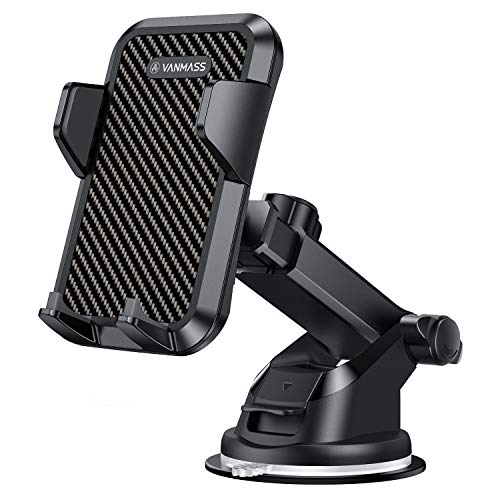

Why Heavy Truck Drivers Need Dedicated Phone Holder Solutions for Their Dashboards
I watched a guy nearly wreck his Peterbilt last month because his phone slid off the passenger seat mid-turn. He lunged for it — instinct, right? — and drifted halfway into my lane on I-80. Scared the hell out of both of us.
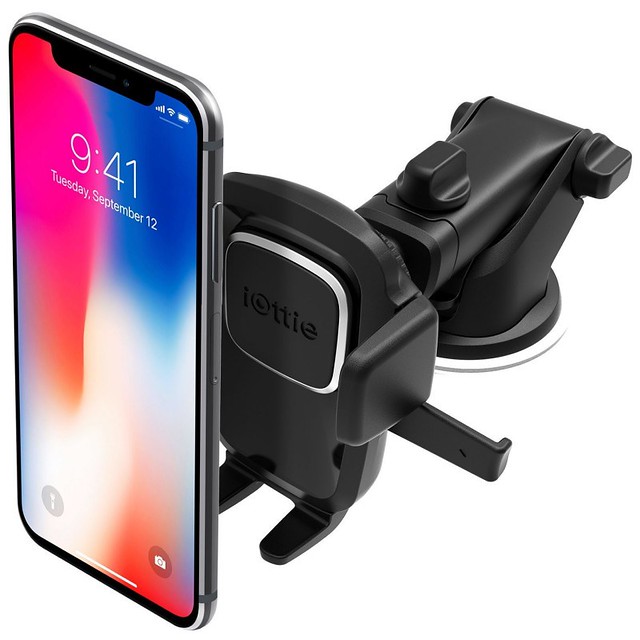
That’s the thing about driving something that weighs 80,000 pounds. You can’t afford those split-second distractions. Not when you’re hauling freight through construction zones or dealing with four-wheelers who think merging is optional.
Here’s what most people don’t get: a regular car phone mount won’t cut it in a commercial rig. The vibrations alone will shake that suction cup loose before you hit your second state. And the dash layout in a Freightliner or a Kenworth? Completely different animal. You’ve got deeper dashboards, weird angles, and controls everywhere — which means you need a truck cell phone mount that’s actually engineered for the environment.
So why does this matter so much?
Because you’re living in that cab. It’s not a 20-minute commute — it’s your office, your navigation center, sometimes your bedroom. Your phone handles dispatch calls, GPS reroutes, delivery confirmations, and (let’s be honest) the occasional YouTube video at a rest stop. If it’s bouncing around loose or wedged in a cup holder at a terrible viewing angle, you’re making your job harder than it needs to be.
And then there’s the safety piece. The FMCSA doesn’t mess around with distracted driving violations. Getting caught fumbling with your phone can cost you $2,750 per offense — plus whatever your company decides to do about it. A solid mount keeps your device visible and accessible without requiring you to take your eyes off the road for more than a second.
But it’s also just about not hating your day. When your phone is secure, charged, and positioned right where you can glance at it, everything flows better. You’re not stressed about missing a call or losing your route mid-delivery.
That’s worth the investment.
Best Types of Phone Holders for Truck Dashboards and How to Choose the Right One
I’ve tested maybe a dozen different mounts over the years, and honestly? The type matters way more than the brand. You can drop $60 on a fancy magnetic mount and hate it if it doesn’t fit how you actually use your truck.
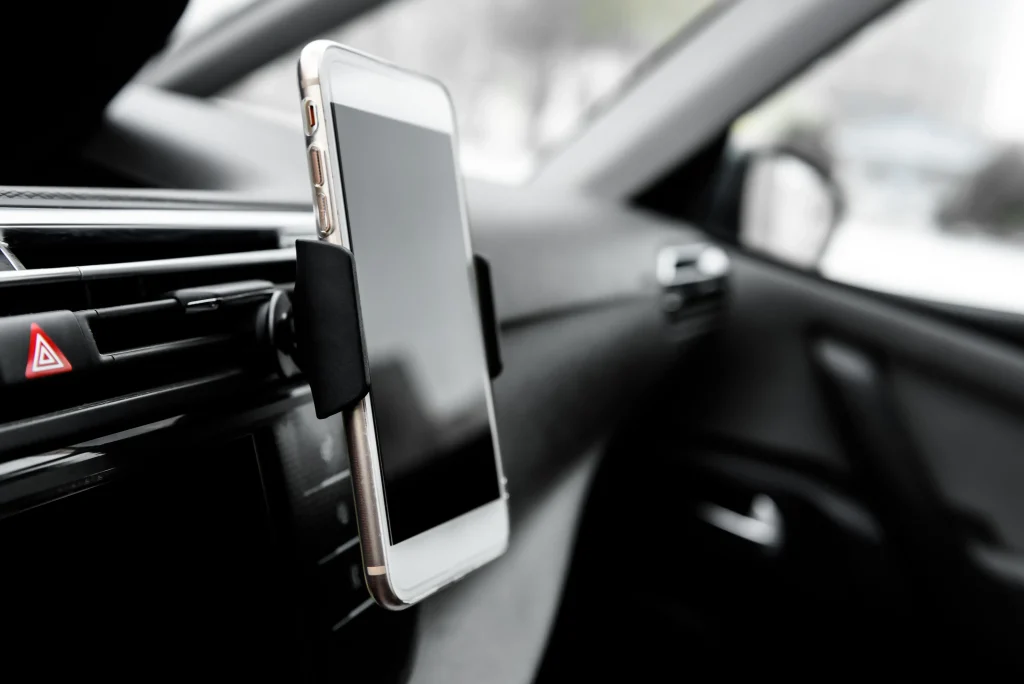
So let’s break down what’s out there — and more importantly, which one actually makes sense for your setup.
Vent clip mounts are the cheapest option, usually running $10-20. They hook onto your air vents and hold your phone with a spring-loaded clamp. Great if you’ve got vents in the right spot and you’re not blasting heat or AC directly at your device (which will kill your battery faster than you’d think). But in a big rig where the dash layout is all over the place? These are hit or miss.
Suction cup mounts stick directly to your windshield or a smooth section of dash. They’re adjustable, easy to reposition, and they work with almost any phone size. The catch: they lose suction in extreme heat or cold. I’ve had one let go in July traffic — not fun. If you go this route, get one with a gel pad that you can rinse and restore when it starts slipping.
Magnetic mounts are my personal favorite for long haul. You stick a metal plate on your phone or case, and the mount grabs it instantly. No clamps, no fumbling. Just slap it on and go. The downside is you need a case that plays nice with the plate, and wireless charging won’t work through metal.
CD slot mounts slide into your CD player (if your truck still has one). They’re stable as hell because they’re mechanically locked in. Zero vibration. But — and this is obvious — you lose the CD player. Not a dealbreaker in 2026, but worth mentioning.
Dashboard adhesive mounts use 3M tape or similar to stick semi-permanently to your dash. Once they’re on, they’re not going anywhere. Perfect if you’ve found the ideal spot and you’re not planning to move it. Just make sure you’re committed, because pulling them off can leave residue or damage the surface.
Choosing the right truck cell phone mount comes down to three things: where your dash has usable real estate, whether you need one-handed operation (you do), and how much vibration your truck throws at that spot. Test the position before you commit to anything permanent.
Installing and Positioning Your Truck Dashboard Phone Holder for Maximum Visibility and Safety
I’ve watched three different guys nearly rear-end someone because they mounted their phone directly in their blind spot. Don’t be that guy.
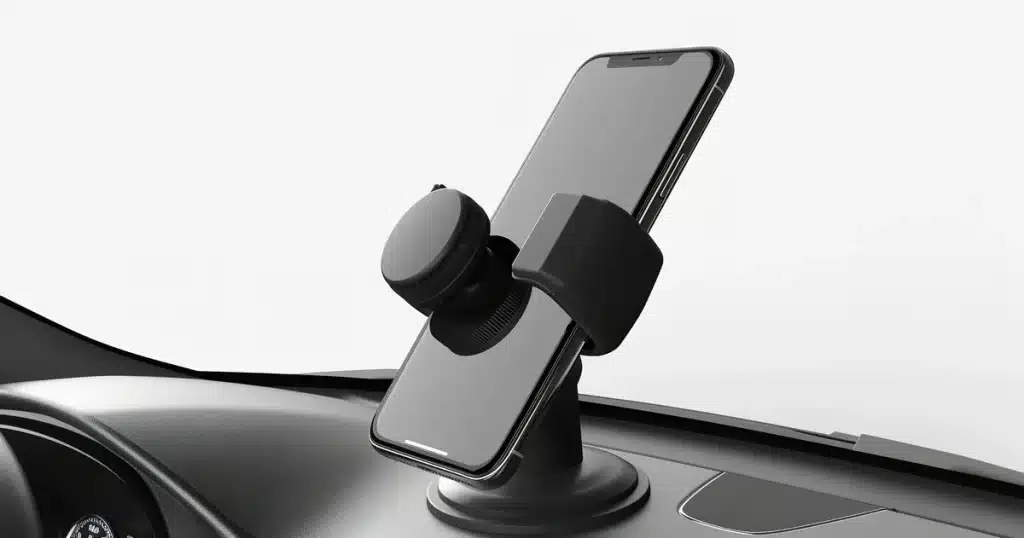
The golden zone for a truck cell phone mount is what I call the “glance triangle” — anywhere your eyes can dart to and refocus in under half a second. That’s typically the upper right corner of your dash (if you’re in North America), just below your line of sight to the road. You want it high enough that you’re not dropping your chin to look at it, but not so high it blocks any part of your windshield view. In my F-150, that’s about 4 inches down from where the dash meets the glass and maybe 8 inches left of the A-pillar.
Here’s what actually matters during installation: clean the surface like your life depends on it — because it kinda does. I use rubbing alcohol on a microfiber cloth, let it dry completely, then install. Room temperature helps too. If it’s below 50°F in your cab, the adhesive won’t bond right and you’ll be picking your phone up off the floor mat three days later.
Test the position before you commit. Seriously. Use painter’s tape to mock up where the mount will sit, then drive around for a day. Check it at night with GPS running. Make sure it doesn’t reflect weirdly in your side window when it’s dark out (this drove me insane on my last mount). And sit in the passenger seat to see if it blocks their view — your co-pilot will thank you.
For vent mounts, make sure the clips don’t restrict airflow so much that your defrost stops working. Found that out the hard way in January.
One more thing: if you’re installing a suction cup or adhesive mount, give it 24 hours to cure before you load your phone onto it. Yeah, the package says “instant hold” or whatever. Ignore that. Let the adhesive fully set, especially if you’re driving on rough roads or in extreme heat. The difference between 2 hours and 24 hours is whether your iPhone stays put or becomes a dashboard projectile when you hit a pothole doing 65.
Durable Phone Mounting Solutions That Actually Hold Up to Long-Haul Trucking Conditions
I’ve broken three mounts this year. Not from crashes or anything dramatic — just from the constant vibration, temperature swings, and the general punishment that comes with driving 10-hour days on highways that haven’t been repaved since the Obama administration.
So let’s talk about what actually survives out here.
The weak point on most mounts isn’t the grip mechanism — it’s the ball joint or the adhesive base. I had a mount that held my phone perfectly fine for two months, then one morning in July the adhesive pad just… gave up. Phone slid right off the dash mid-turn. The Arizona heat had slowly cooked the 3M tape until it stopped caring about its job. Now I only trust adhesive mounts that specifically mention operating ranges above 140°F, because your dashboard absolutely hits that in summer.
Ball joints are the other failure point. The cheap ones — and I mean anything under $25 — start getting loose after a few weeks of road vibration. You’ll be constantly readjusting the angle, which is annoying when you’re trying to keep your eyes on the road. The mounts that last are the ones with either a locking mechanism on the ball joint or a completely different design that uses a gooseneck arm instead.
Here’s what I look for now:
- Metal construction wherever possible, especially on the clamp or grip part that touches your phone
- Rubber dampening somewhere in the design — it absorbs vibration before it rattles your phone loose
- A base that’s either bolted down or uses industrial-strength adhesive (the VHB tape stuff, not the foam pads)
- A grip that closes with a mechanical latch, not just spring tension
And honestly? Test it empty first. Mount it without your phone and drive your normal route for a day. If the mount itself stays tight and doesn’t drift or wobble, then it’ll probably handle the phone weight fine. If it’s already creeping or sagging without any load on it, return it immediately.
One last thing that nobody mentions in reviews: UV exposure destroys plastic mounts faster than anything else. That windshield-mounted arm that looks solid in February will be brittle and cracked by August if you park facing south every day. Ask me how I know.
Conclusion
Look, a good truck cell phone mount isn’t complicated — it just has to survive conditions that would kill a regular car mount in a week. Metal frame, actual dampening, and a grip that locks mechanically. That’s it.
I’ve wasted money on seven different mounts over the years, and the pattern is always the same: the cheap ones fail fast, the mid-range ones fail slowly, and the overbuilt ones just… don’t fail. Spend the extra $20 now or spend $80 replacing garbage mounts every few months. Your call.
And seriously — test it empty first. One day of driving without your phone loaded will tell you everything you need to know about whether that mount is actually going to last.
Frequently Asked Questions
Q: What’s the difference between a truck cell phone mount and a regular car mount?
A: Trucks vibrate way more than cars — especially diesels and anything lifted. A regular car mount uses light springs and friction that’ll shake loose in about two weeks of truck driving. Truck-specific mounts have actual dampening systems and metal frames that can handle the constant rattling without your phone ending up on the floorboard.
Q: Can I use a suction cup mount in my truck?
A: You can, but it’ll fail. Suction cups hate three things: vibration, heat, and textured dashboards — and trucks have all three. I’ve never seen a suction mount last more than a month in a work truck, and that’s if you’re lucky.
Q: How much should I spend on a truck cell phone mount?
A: Between $35 and $60 if you want something that actually lasts. Anything under $25 is going to be plastic garbage that breaks within weeks. The $70+ mounts are usually overengineered (unless you’re running serious off-road rigs), but honestly I’d rather overspend once than replace a cheap mount four times.
Q: Where should I mount my phone in a truck?
A: Vent mounts are trash in trucks because the vents themselves shake. Your best bet is either a heavy-duty dash mount with adhesive backing or a cupholder mount if your console is stable. I run mine on the dash about 8 inches from the wheel — close enough to tap without reaching, far enough that it’s not blocking my view.
Q: Will a truck cell phone mount work with a thick phone case?
A: Depends on the mount’s grip width, but most decent ones adjust to about 3.5 inches wide. My Otterbox Defender fits fine in my current mount, but I had one cheap mount that couldn’t open wide enough. Check the specs before you buy — if it doesn’t list max width, it probably won’t fit bulky cases.
Q: Do wireless charging mounts hold up in trucks?
A: The charging part works fine, but the mounts themselves are usually heavier and put more stress on whatever attachment point you’re using. I tested one for about six months and the weight combined with vibration eventually loosened the ball joint. If you go wireless, make sure the mount itself is seriously overbuilt — not just the charging pad.
Q: How do I know if my truck cell phone mount is going to last?
A: Run it empty for a full day of driving before you trust it with your phone. If the mount itself stays locked in position and doesn’t wiggle loose, it’ll probably survive. Metal components, actual rubber dampening (not just hard plastic), and a mechanical locking mechanism instead of spring tension — those are your tells.