

360-Degree Rotating Tablet Cases vs. Standard Cases: What B2B Buyers Actually Need to Know
Procurement decisions rarely hinge on a single feature — but rotation mechanism design is one of those spec details that genuinely separates a useful bulk order from an expensive lesson. A 360-degree tablet case gives end users the ability to shift between portrait and landscape orientation without removing the device from its housing, which sounds minor until you’re deploying hundreds of units across a retail floor, a hospital ward, or a trade show circuit where staff are constantly switching between input modes and display modes.
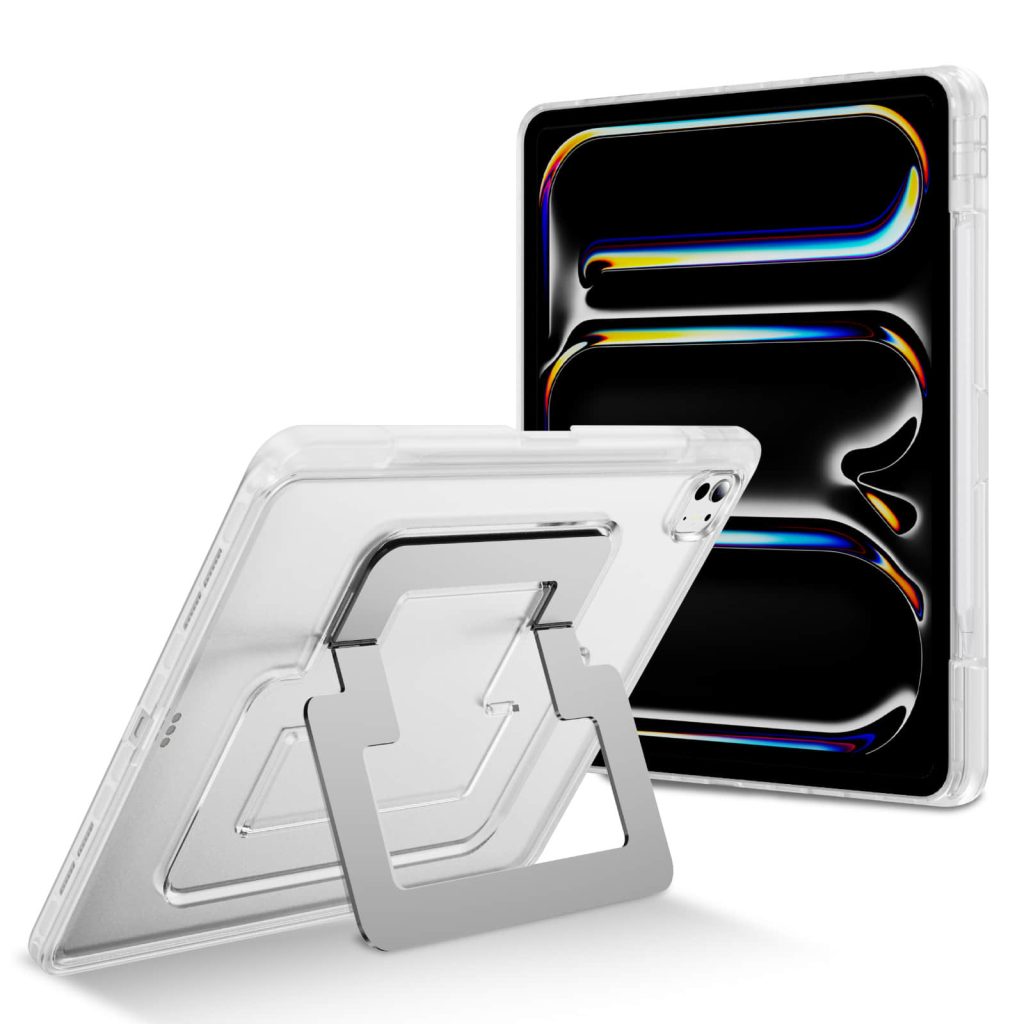
Standard fixed-orientation cases have their place — lower tooling costs, simpler construction, fewer mechanical failure points. But for enterprise deployments where tablets serve dual roles (customer-facing display and staff input terminal, for instance), a rotating tablet case delivers operational value that fixed cases simply can’t match. The rotation mechanism itself is where quality diverges fast between suppliers.
Here’s what the comparison actually looks like across the spec sheet:
| Feature | 360-Degree Tablet Case | Standard Fixed Case |
|---|---|---|
| Orientation flexibility | Full portrait/landscape switching | Single fixed orientation |
| Mechanism complexity | Higher — bearing or pivot assembly required | Low — no moving parts |
| Unit cost at volume | Moderately higher | Lower |
| Typical MOQ range | 200–500 units (OEM configurations) | 100–300 units |
| Customization scope | Shell material, logo, color, strap options | Shell material, logo, color |
| Failure risk area | Pivot wear over high-cycle use | Port cutout alignment |
The pivot durability question is where B2B buyers should push hard during supplier evaluation. A 360-degree tablet case ordered at scale needs documented cycle-life testing on the rotation joint — not just a marketing claim. Suppliers with genuine OEM/ODM capabilities, like Shuowei, can provide customized specifications that address this directly, including mechanism material choices and pre-shipment quality control checkpoints that protect the buyer’s deployment timeline.
Bottom line: the format decision should follow the use case, not the price list. High-rotation environments justify the added cost and complexity. Lower-interaction deployments may not.
Rotating Tablet Case Designs: Where the Real Operational Advantages Show Up
Operational advantages in a rotating tablet case design don’t announce themselves on a spec sheet. They show up — or fail to — in the middle of a deployment, when a field technician is flipping between portrait and landscape fifty times a day, or when a retail kiosk needs to pivot toward a customer without the whole stand assembly moving with it.

The rotation mechanism is where procurement decisions either pay off or quietly drain value. A well-engineered 360-degree tablet case holds its position at any angle without creep — meaning the screen stays where it’s set, not where gravity pulls it. That sounds basic. But in high-cycle environments like point-of-sale, medical intake, or warehouse inventory management, positional instability creates friction at every interaction. Multiply that across hundreds of deployed units and the operational cost is real, even if it never shows up as a line item.
There are a few specific design factors worth pressing suppliers on during evaluation:
- Detent strength — does the mechanism lock at defined intervals, or does it rotate freely? Defined stops matter in shared-use environments where positioning consistency affects workflow.
- One-handed operability — a 360-degree tablet case that requires two hands to rotate is a liability in any deployment where the user is already holding something else.
- Surface grip under rotation — the base or mount interface needs to stay fixed while the case rotates, not travel with it.
- Mechanism material — nylon gears degrade differently than zinc alloy under sustained use, and that difference compounds at scale.
Buyers sourcing at volume should also factor in how a supplier handles specification flexibility on these points. OEM/ODM partners — Shuowei operates in this space — can adjust detent torque, mechanism material, and grip surface specifications to match a buyer’s actual deployment environment, rather than shipping a catalog default that was designed for no environment in particular.
And the commercial angle matters too. A 360-degree tablet case with a well-documented mechanism spec reduces warranty claim exposure and simplifies field replacement planning — both of which translate directly into procurement ROI that goes beyond unit price.
Standard Cases vs. 360-Degree Rotating Tablet Cases: Matching the Right Format to Your Deployment Environment
The format decision — standard case or rotating tablet case — tends to get treated as a minor spec detail, but for procurement managers deploying at scale, it’s actually a load-bearing choice. Get it wrong and you’re either over-engineering a simple use case or under-specifying a demanding one.

Standard fixed-orientation cases work well in controlled, predictable environments: point-of-sale terminals where the screen angle never changes, storage and transport applications where protection is the only priority, or situations where a single user interacts with a single device in a consistent posture. The protection-to-cost ratio is straightforward, and there’s very little mechanical complexity to maintain.
But the calculus shifts the moment orientation becomes a variable. Consider a few deployment scenarios where a 360-degree tablet case earns its place:
- Field service teams who alternate between reading schematics in landscape and capturing signatures in portrait — without stopping to hand the device off or reposition
- Healthcare environments where a tablet moves between wall-mounted display mode, countertop data entry, and handheld patient interaction within a single workflow
- Hospitality and retail kiosks where the same device serves both staff-facing and customer-facing functions, requiring a quick flip between orientations
- Education deployments where students and instructors share devices across different content types — video in landscape, note-taking in portrait
In each of these scenarios, the rotation mechanism isn’t a convenience feature — it’s operationally necessary. A fixed case in these environments creates friction that compounds across hundreds or thousands of daily interactions. That friction has a cost, even if it doesn’t show up on the unit price comparison.
The table below maps deployment environment characteristics to format suitability, which can help narrow the specification before engaging suppliers:
| Deployment Characteristic | Standard Case | 360-Degree Rotating Case |
|---|---|---|
| Single fixed orientation | Well-suited | Over-specified |
| Frequent orientation switching | Poor fit | Well-suited |
| High daily interaction volume | Adequate | Preferred |
| Multi-user shared device | Marginal | Well-suited |
| Transport and storage primary use | Well-suited | Over-specified |
| Kiosk or display mode required | Poor fit | Well-suited |
Suppliers who offer both formats — and can adjust specifications across them — give procurement teams more meaningful flexibility than those locked into a single product line. That’s where OEM/ODM sourcing relationships become practically useful: the deployment environment drives the spec, rather than the catalog driving the decision.
Sourcing a Rotating Tablet Case at Scale: MOQ, Certifications, Lead Times, and What to Watch For
Procurement decisions around a 360-degree tablet case shift quickly once volume enters the picture. At scale, the variables that matter most aren’t finish colors or packaging aesthetics — they’re structural: minimum order quantities, certification requirements, lead time reliability, and how well a supplier handles specification changes mid-production.
MOQ thresholds vary considerably depending on whether the case is a catalog item or a customized build. Standard rotating tablet case configurations — fixed hinge angles, generic tablet sizing, no branding — typically carry lower MOQs and shorter tooling timelines. Custom builds, particularly those with adjusted rotation ranges, proprietary locking mechanisms, or branded inserts, generally require higher minimums to offset setup costs. Buyers sourcing for fleet deployments or retail programs should clarify upfront whether a supplier’s quoted MOQ applies to a single SKU or across a combined order of variants.
Certification requirements depend heavily on destination market. CE marking is expected for European distribution. FCC declarations matter for the US market when the case integrates electronic components — charging pass-throughs, for instance. RoHS compliance is increasingly a baseline expectation across markets, not a premium add-on. Any supplier worth qualifying should be able to produce current documentation on request, not after a purchase order is signed.
- Confirm whether certifications are held at the factory level or product level — the distinction affects how quickly new SKUs can be cleared
- Request test reports, not just compliance statements
- Ask specifically whether existing certifications cover the rotation mechanism, not only the shell materials
- Clarify whether OEM/ODM modifications require re-certification and who bears that cost
Lead times for a standard 360-degree tablet case typically run four to eight weeks from order confirmation, depending on material sourcing and factory scheduling. Custom tooling adds time — sometimes significantly. Suppliers with established export workflows and dedicated project coordination tend to surface scheduling conflicts earlier, which matters when a deployment has a hard go-live date.
One practical watch point: rotation mechanism durability testing. Ask for cycle-count data on the hinge — how many open/close rotations the unit is rated for under load. This is rarely volunteered, but for high-interaction deployments, it’s the spec that predicts replacement frequency better than almost anything else.
Conclusion
The hinge cycle count is the spec most buyers forget to ask for — and it’s the one that will cost you the most if you skip it.
A 360-degree tablet case looks straightforward on a product sheet, but the real due diligence happens in the questions you ask before placing an order: rotation mechanism testing data, whether certifications actually cover the moving parts, and how a supplier handles OEM modifications without blowing up your timeline. Suppliers with tight export coordination flag these issues early; the others let you find out at the worst possible moment.
Get the cycle data. Get it in writing. Then decide.
Frequently Asked Questions
Q: What is a 360-degree tablet case and how is it different from a regular case?
A: A 360-degree tablet case is built around a rotating hinge or swivel mechanism that lets the device flip, rotate, or fold into multiple orientations — portrait, landscape, tent, stand — without removing it from the case. Standard cases lock the tablet into one or two fixed positions; a 360-degree design is engineered for users who switch between modes constantly, which puts far more mechanical stress on the case itself.
Q: How long does a 360-degree tablet case typically last before the hinge wears out?
A: Hinge lifespan varies significantly by build quality — entry-level cases often survive a few thousand rotation cycles before the mechanism loosens, while better-engineered units can handle tens of thousands of cycles under proper testing conditions. The problem is that most product listings don’t publish cycle data at all, so asking for it directly from the supplier (and getting it in writing) is the only way to compare honestly. If a supplier can’t produce rotation testing data, that tells you something.
Q: Why do 360-degree tablet cases fail faster in commercial or educational settings?
A: High-interaction environments — classrooms, retail kiosks, healthcare carts — put the hinge through far more daily cycles than a single user at home ever would. A case that holds up fine for 18 months of personal use might degrade within weeks when 30 students are rotating it throughout the day. Deployment context is the variable most buyers underestimate when spec’ing cases for volume orders.
Q: How much should a quality 360-degree tablet case cost for a bulk order?
A: Per-unit pricing for a 360-degree tablet case on a bulk order depends heavily on materials, hinge construction, and any OEM customization — but expect a meaningful price gap between cases with documented cycle testing and those without. Treating the cheapest option as equivalent to a mid-tier unit because both list “360-degree rotation” is where procurement decisions go sideways. The hinge mechanism is where cost differences actually live.
Q: Can I get a 360-degree tablet case customized with a logo or specific color for my brand?
A: OEM and ODM customization is widely available through B2B suppliers — logo printing, colorway changes, and even modified kickstand angles are common requests. The catch is that any structural modification to the rotation mechanism itself (angle stops, torque tension, locking positions) needs to go back through testing before you commit to a production run. Suppliers with tight export coordination — like those focused specifically on customized sourcing support — flag these retesting timelines upfront rather than letting them surface mid-production.
Q: Is a 360-degree tablet case worth it for light, occasional tablet use?
A: For low-frequency personal use, the extra mechanical complexity of a 360-degree design may offer more flexibility than you’ll realistically use — a folio or slim stand case is often lighter and cheaper. That said, if you regularly switch between typing and media consumption, the rotating form factor earns its keep quickly. The “worth it” calculation shifts decisively once you start using the multi-mode functionality daily.
Q: What materials hold up best in a 360-degree tablet case hinge?
A: Metal alloy hinges — aluminum or zinc alloy — consistently outperform plastic pivot assemblies under repeated stress. The outer shell material matters less than what’s happening inside the rotation joint; a premium faux-leather exterior wrapped around a cheap plastic hinge is still a cheap hinge. When evaluating samples, the smoothness and resistance consistency of the rotation (no wobble, no sudden looseness) is a more reliable indicator than the finish you can see.
Q: How do I test a 360-degree tablet case sample before committing to a large order?
A: Request the supplier’s rotation cycle testing report first — then stress-test the sample yourself by running it through rapid, repeated full rotations and checking for play or grinding in the hinge after several hundred cycles. Drop and corner-impact tests matter too, but for a 360-degree tablet case specifically, the hinge is the failure point that determines replacement frequency across your fleet. Skipping this step on a large order is the kind of decision that looks fine until it isn’t.