
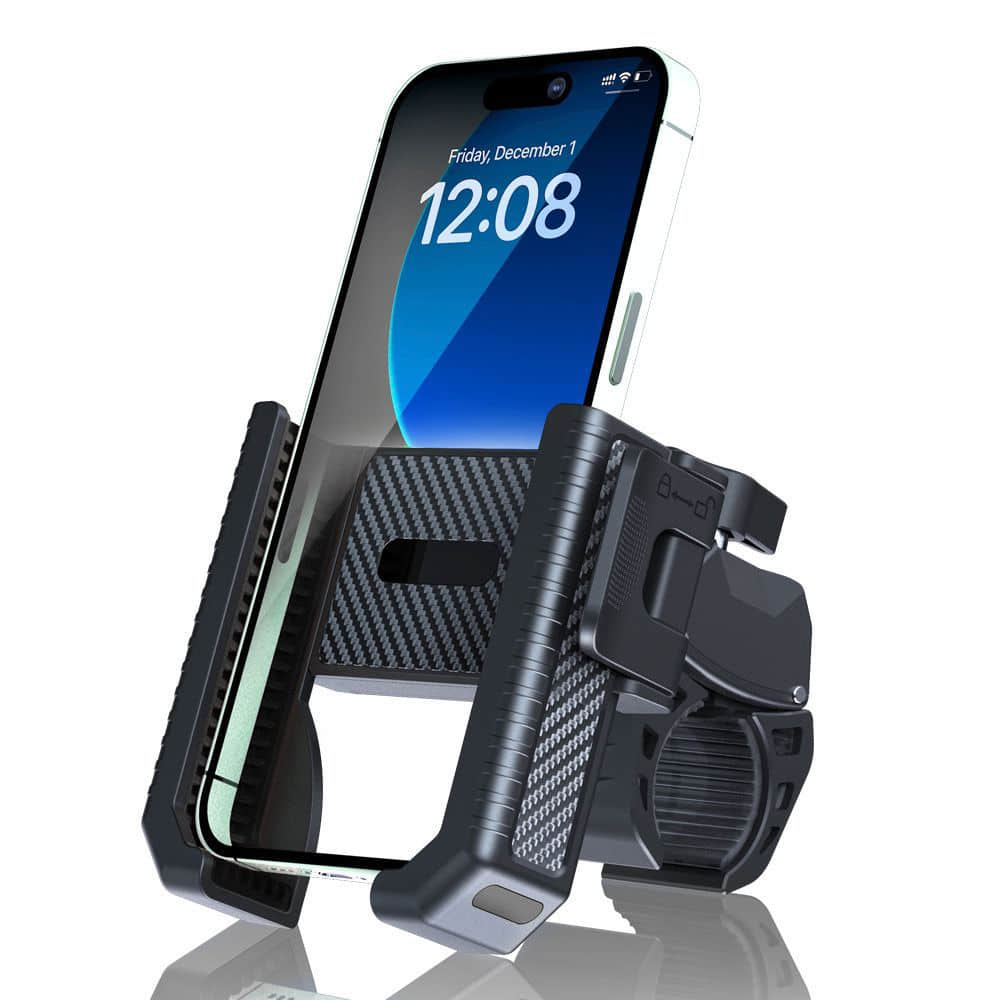

Bike Holder vs Armband: What B2B Buyers Actually Need to Understand First
The framing matters here — and most procurement teams get it wrong from the start. Comparing a bike holder vs armband as if it’s a simple product choice misses the operational layer entirely. These are two distinct product categories with different supply chains, different end-user contexts, and — critically — different implications for whoever is placing the bulk order.
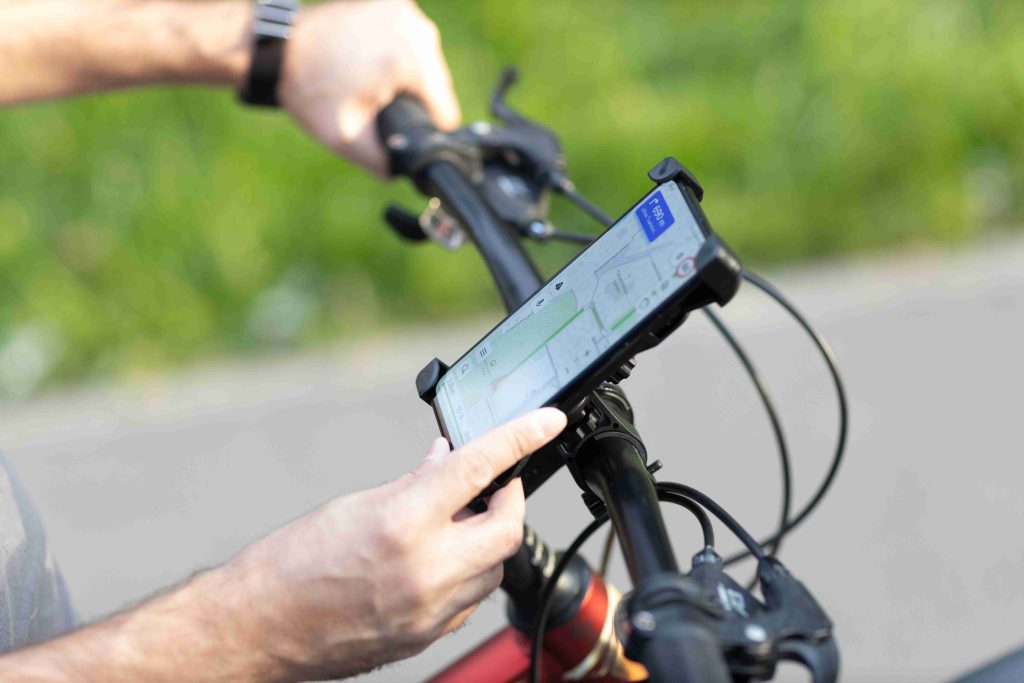
Bike holders (also called handlebar mounts or cycling phone mounts) are rigid, externally mounted accessories. Armbands are worn directly on the body. That distinction sounds obvious, but it cascades into real procurement differences: material sourcing, certification requirements, SKU complexity, packaging format, and how returns get handled when a product fails in the field.
So before any supplier conversation starts, buyers need to ask a more fundamental question — who is actually using this product, and under what conditions? A cycling phone carry option that works for a casual urban commuter may be completely inadequate for a fleet of delivery riders logging six-hour shifts in variable weather. The use case shapes the spec sheet, and the spec sheet shapes the supplier shortlist.
There’s also a market segmentation angle worth thinking through early. Armbands tend to skew toward fitness and sport retail channels — gyms, sporting goods stores, subscription boxes. Bike holders move through different distribution paths: cycling accessories retailers, e-commerce bundles, fleet procurement for logistics companies. A buyer sourcing for the wrong channel will end up with inventory that doesn’t move, regardless of product quality.
| Factor | Bike Holder | Armband |
|---|---|---|
| Primary use context | Mounted navigation, delivery, commuting | Fitness tracking, running, casual cycling |
| Key materials | ABS, TPU, aluminum alloy | Neoprene, lycra, TPU window |
| Typical certification focus | Vibration resistance, weatherproofing | Skin-safe materials, sweat resistance |
| Distribution channel fit | Cycling retail, fleet, B2B logistics | Fitness retail, sports bundles, DTC |
Getting clarity on these fundamentals — before evaluating any supplier — is what separates a procurement decision from a purchasing gamble.
Comparing Cycling Phone Carry Options Across Use Cases, Channels, and Customer Segments
Channel alignment is where the bike holder vs armband decision stops being theoretical and starts costing — or saving — real margin. The two products don’t compete in the same retail environments, don’t serve the same end-user psychology, and don’t move through the same procurement pipelines. Treating them interchangeably at the sourcing stage is a structural mistake.
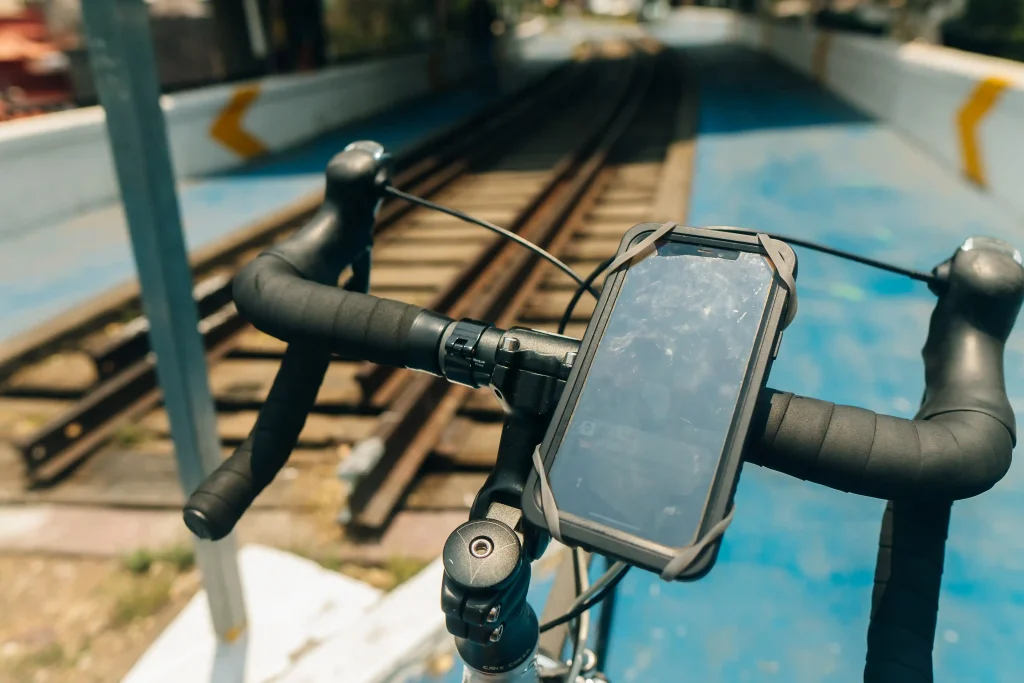
Bike holders track closely with B2B and semi-institutional channels: cycling fleet operators, last-mile delivery companies, corporate wellness programs, and specialty cycling retailers. These buyers tend to place larger initial orders, require consistent spec compliance across batches, and prioritize durability documentation over price-per-unit. Lead time tolerance is generally higher, but quality deviation tolerance is not.
Armbands sit in a different commercial ecosystem entirely. Fitness retail, sports apparel bundles, DTC subscription boxes, promotional merchandise — these are the natural homes. Order volumes can be high, but they’re driven by seasonal spikes and campaign timing rather than ongoing operational need. The buyer profile is often a category manager or marketing procurement lead, not a fleet or logistics coordinator.
So when mapping out cycling phone carry options across customer segments, the question isn’t just “which product performs better” — it’s which product fits the demand pattern of the channel you’re serving. A supplier who excels at producing ruggedized bike holders for fleet accounts may not be the right partner for an armband SKU destined for a promotional sports bundle with a 45-day launch window.
| Use Case | Preferred Product | Channel Type | Key Procurement Priority |
|---|---|---|---|
| Last-mile delivery fleets | Bike holder | B2B / fleet procurement | Vibration resistance, batch consistency |
| Fitness retail bundles | Armband | Specialty retail / DTC | Skin-safe materials, seasonal MOQ flexibility |
| Corporate cycling programs | Bike holder | B2B / wellness procurement | Branding options, volume pricing |
| Promotional sports merchandise | Armband | Marketing / events | Short lead time, custom print capability |
Suppliers like Shuowei — operating at the OEM/ODM level with export-oriented fulfillment — are positioned to support buyers across more than one of these segments, provided the product brief is specific enough. That specificity is the buyer’s responsibility. Vague briefs produce generic products. Channel-specific briefs produce SKUs that actually move.
Supplier Selection Criteria for Bike Holders and Armbands: MOQ, Certifications, and Lead Time Realities
Procurement decisions rarely fail at the product level — they fail at the sourcing level. Choosing between a bike holder vs armband is straightforward once the use case is clear; finding a supplier who can actually deliver on spec, on time, and at the right volume is where buyers lose months.
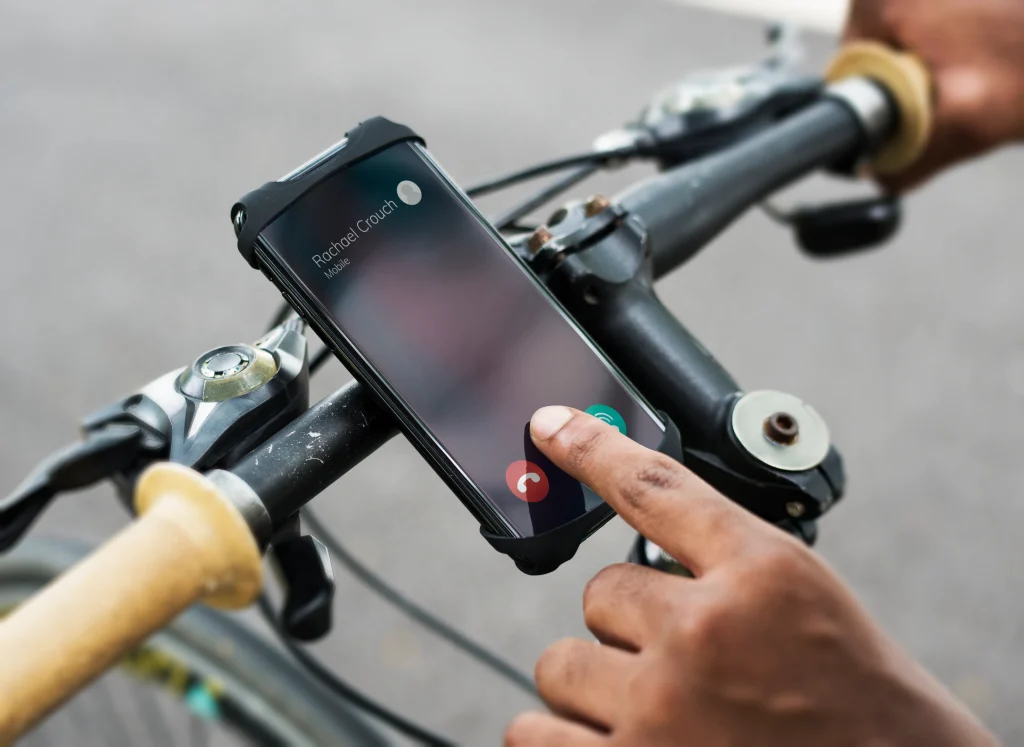
MOQ is the first pressure point. Bike holders — particularly mount-based designs with injection-molded housings or articulating arms — typically carry higher per-unit tooling costs, which means suppliers set minimum order quantities accordingly. Expect MOQs in the range of several hundred to a few thousand units for custom configurations. Armbands sit lower on the tooling complexity curve, so MOQs are often more flexible, especially for standard-size runs with custom print. That said, any buyer requesting full custom silicone construction or proprietary closure systems should anticipate MOQ commitments closer to bike holder territory regardless of product category.
Certifications matter differently depending on the product. For armbands — direct skin contact, elastic materials, dye processes — buyers sourcing for EU or North American markets should confirm compliance with relevant material safety standards before sampling begins. Bike holders destined for automotive or cycling accessory retail channels may face drop-test or vibration-resistance documentation requirements depending on the retailer’s vendor compliance program. Neither category is regulation-heavy by default, but neither is documentation-free either.
- Request material safety data sheets (MSDS) for any armband with dyed or coated fabric components
- Confirm mounting load ratings are tested and documented for bike holders used in corporate or fleet programs
- Verify export packaging compliance if the order is destined for multi-country distribution
- Ask whether the supplier has managed cycling phone carry options across both product types — cross-category experience signals genuine OEM depth
Lead time realities are blunt: standard production runs for either product typically run four to eight weeks from approved sample, with custom tooling adding two to four weeks on top. Suppliers operating with export-oriented fulfillment infrastructure — the model Shuowei runs — can compress coordination timelines, but no supplier compresses tooling physics. Build that into the procurement calendar before committing to a launch window.
The bike holder vs armband sourcing decision ultimately rewards buyers who front-load their specification work. Vague briefs were flagged in the previous section — the same logic applies to supplier qualification. Structured RFQs, documented compliance requirements, and realistic timeline expectations separate efficient sourcing cycles from expensive ones.
Building a Procurement Strategy Around Cycling Phone Carry Options That Scale
Scaling a product line around cycling phone carry options requires more than picking the right form factor — it demands a sourcing architecture that can flex without breaking. Buyers who treat the bike holder vs armband decision as a one-time selection often find themselves re-sourcing within two seasons, either because demand patterns shifted or because their initial supplier couldn’t accommodate volume changes without renegotiating from scratch.
The smarter procurement posture builds modularity in from the start. That means qualifying suppliers across both product categories simultaneously, even if the initial order skews heavily toward one. A supplier with demonstrated capability in both bike holder and armband production — tooling, materials, compliance documentation — gives buyers room to rebalance SKU ratios based on actual sell-through data rather than pre-launch assumptions.
A few structural considerations worth building into the procurement framework:
- Negotiate tiered MOQ structures upfront, so volume increases don’t trigger full renegotiation cycles mid-season.
- Confirm that the supplier’s quality control process is consistent across both product types — some factories treat mounting hardware and textile-based products as separate production streams with different QC checkpoints.
- Request documentation on material sourcing lead times, not just finished goods lead times. Component delays are where procurement calendars actually collapse.
- Clarify intellectual property terms for any custom tooling or branding elements before the first production run, not after.
Operational ROI on these decisions compounds over time. Buyers who consolidate bike holder vs armband sourcing under a single export-capable supplier — one with coordinated project management and OEM/ODM flexibility, the model Shuowei operates within — typically reduce administrative overhead across sampling, compliance review, and shipment coordination. That efficiency isn’t visible on a unit cost comparison, but it shows up clearly in total landed cost and reorder velocity.
The category rewards disciplined buyers. Front-loaded specification work, structured supplier qualification, and realistic calendar planning aren’t optional refinements — they’re the difference between a product line that scales and one that stalls at the first reorder cycle.
Conclusion
The bike holder vs armband decision isn’t complicated — it’s just easy to get wrong when buyers treat it as a product choice instead of a channel strategy.
Mount-based holders are the more defensible retail bet right now: broader device compatibility, longer product shelf life, and fewer fit-related returns. Armbands still have a place, but that place is increasingly narrow — dedicated runners, fitness-first SKUs, and markets where wrist-free convenience justifies the size constraints. Know which customer you’re actually selling to before you lock in specs, because switching formats mid-development cycle is expensive in both time and tooling.
Get the specification work done upfront, qualify your supplier before sampling starts, and don’t let unit cost be the only number on your comparison sheet. Total landed cost tells a very different story.
Frequently Asked Questions
Q: What’s the real difference between a bike holder and an armband for phone use?
A: A bike holder mounts your phone to the handlebar so you can glance at navigation without breaking stride — it works with almost any phone size and keeps your arms completely free. An armband straps the device to your upper arm, which suits runners who want minimal setup but creates real problems the moment your phone is even slightly too large for the sleeve. The use cases sound similar on paper; in practice, they serve different bodies, different sports, and different buyer expectations.
Q: Is a bike holder or armband better for cycling?
A: For cycling specifically, a bike holder wins — full stop. Your phone is visible at a glance, navigation apps are actually usable, and you’re not dealing with sweat-soaked fabric pressing against your arm for an hour. Armbands were never really designed with cycling mechanics in mind; the arm position on a bike means you’d have to contort your wrist just to see the screen.
Q: How do I choose between a bike holder vs armband when sourcing for retail?
A: Start with your target customer’s primary activity — that single decision drives everything else. Bike holders carry broader device compatibility and fewer fit-related SKU headaches, which typically makes them the safer wholesale bet across mixed retail channels. Armbands make sense when you’re specifically targeting runners or fitness-first buyers who’ve already accepted the size limitations. Suppliers who offer both formats (with OEM spec flexibility) let you test both without doubling your tooling investment.
Q: Why do armbands cause so many fit and return issues?
A: Arm circumference varies far more than most buyers anticipate — what fits a lean runner won’t fit someone with larger arms, and elastic degrades faster than rigid plastic does. Add phone size fragmentation into that equation and you’ve got a product that’s essentially sized twice over. Retailers consistently see higher return rates on armbands than on mount-based holders, not because the product is bad, but because the fit variables are genuinely hard to predict at point of sale.
Q: How long do bike phone holders typically last compared to armbands?
A: A well-spec’d bike holder — rigid mount, UV-stabilized polycarbonate or TPU, stainless hardware — can realistically handle two to three years of regular outdoor use before showing meaningful wear. Armbands have a harder ceiling: the elastic degrades with repeated washing and sweat exposure, often within a season of heavy use. If shelf life and perceived product durability matter to your category, the bike holder vs armband comparison doesn’t really stay close once you factor in lifespan.
Q: Can an armband replace a bike holder for commuting?
A: Technically possible — practically awkward. Urban commuting usually involves frequent navigation checks, traffic awareness, and one-handed interactions that a handlebar mount handles cleanly. An armband forces you to raise and rotate your arm every time you need to check the screen, which is both slower and less safe in traffic. For any commuting use case, the bike holder vs armband trade-off lands firmly on the mount side.
Q: How much does MOQ typically differ between bike holders and armbands?
A: Minimum order quantities vary by supplier and product complexity, but armband MOQs can run higher when custom sizing or elastic sourcing is involved — you’re often committing to multiple size variants rather than a single SKU. Bike holders with universal clamp designs tend to be more MOQ-friendly because one SKU genuinely covers a wider device range. That’s worth factoring into your total landed cost calculation before comparing unit prices in isolation.
Q: What should I check before sampling a bike holder or armband from a new supplier?
A: Confirm material specs in writing — specifically the grade of TPU or polycarbonate, hardware corrosion resistance, and (for armbands) elastic composition and wash cycle ratings. Ask for a compatibility matrix showing which phone dimensions the holder actually fits, not just a vague “universal” claim. Suppliers with real OEM/ODM experience will have this documentation ready; ones who hesitate are usually sourcing components rather than manufacturing them, which creates quality control gaps down the line.