
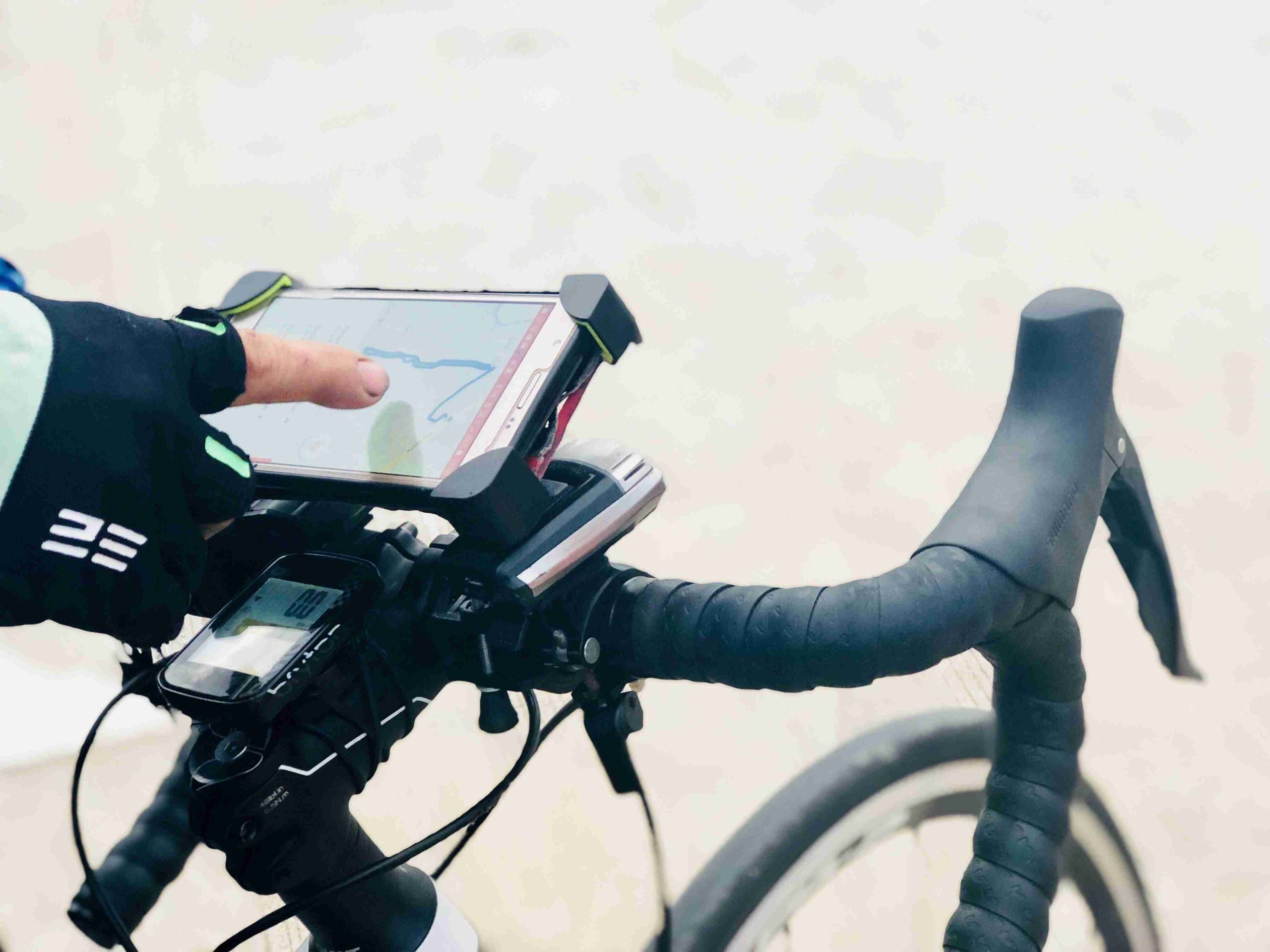

What Makes a Bicycle Phone Holder Actually Work for Long-Distance Cycling
Long-distance cycling puts hardware under sustained stress that a 20-minute commute simply never reveals. Vibration accumulates. Temperature swings expand and contract mounting materials. Handlebar grip shifts under load. For procurement managers sourcing a lightweight bike holder at volume, understanding these mechanical realities is the starting point — not an afterthought.

The core tension in this product category is straightforward: reducing weight typically means removing material, and removing material raises questions about structural integrity over extended use. A mount that holds a 200g device securely at 15km/h on flat tarmac may behave very differently at 40km/h on a gravel descent over four hours. Buyers specifying a long-distance cycling mount for distribution or private-label use need to push suppliers on exactly this point — what test conditions were used, and do those conditions reflect real-world touring or endurance cycling scenarios?
There are four structural factors that consistently separate functional long-distance mounts from ones that fail in the field:
- Clamp material and tolerance — aluminum alloy clamps with precision-machined threading hold calibration under vibration; injection-molded plastic equivalents often don’t
- Locking mechanism design — tool-free adjustments are convenient, but the locking geometry needs to resist rotational drift without requiring excessive tightening force
- Device retention method — silicone grips, spring-loaded arms, and secondary safety tethers each carry different durability profiles across temperature ranges
- Mounting interface compatibility — proprietary rail systems versus standard 22–35mm handlebar fitments affect how broadly a product can be deployed across a buyer’s SKU range
Weight targets matter commercially too. Distributors and OEM buyers sourcing lightweight bike holder products for cycling-focused retail channels are increasingly seeing sub-80g specifications become a baseline expectation rather than a premium feature. Suppliers capable of hitting that threshold without compromising clamp torque or UV-resistant coating durability are the ones worth shortlisting.
Certification documentation — particularly for shock resistance and material compliance — is another differentiator that experienced procurement teams flag early. It reflects process discipline at the factory level, not just the finished product spec sheet.
Why Weight and Vibration Resistance Are Non-Negotiable on Long-Distance Cycling Mounts
Procurement teams sourcing for multi-day touring or endurance cycling channels often focus heavily on weight savings — and rightly so. But the structural demands of a long-distance cycling mount introduce a second set of requirements that weight alone cannot satisfy. Road vibration, particularly over extended hours on varied terrain, creates cumulative mechanical stress that exposes weak points in both the clamping mechanism and the device cradle. A holder that performs adequately in short-use urban conditions can fail — sometimes catastrophically — under the continuous micro-stress of a loaded touring setup.
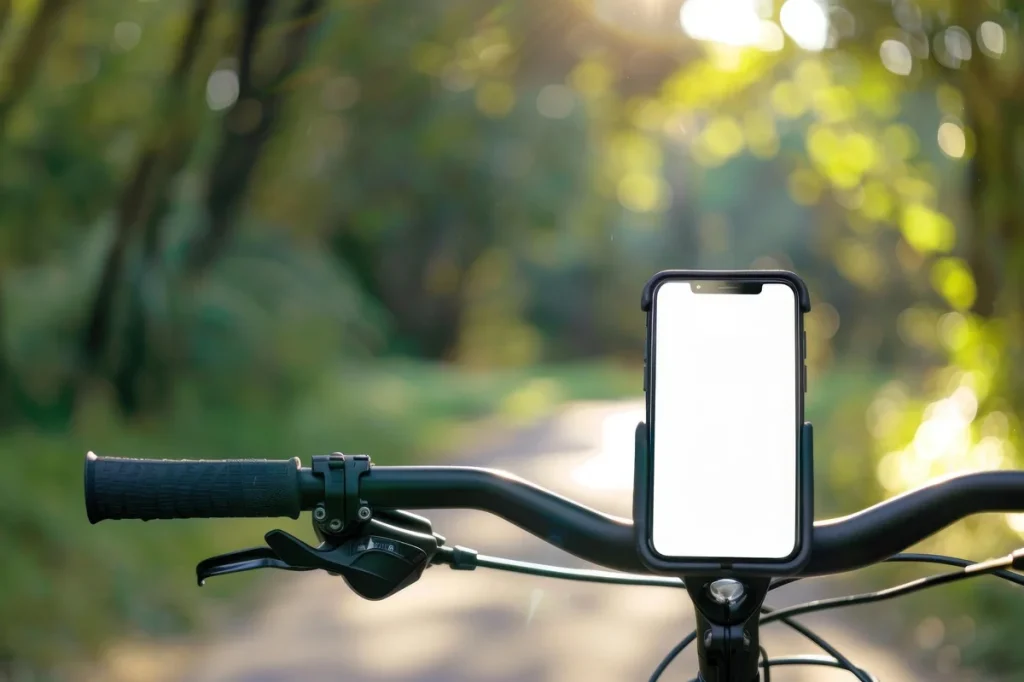
The physics here are straightforward. Aluminum alloy frames absorb vibration differently than polycarbonate cradles. Silicone dampening inserts, when specified correctly, reduce transmitted vibration at the device interface without adding meaningful gram weight. The problem is that many lightweight bike holder products at the lower end of the market skip this dampening layer entirely — optimizing for the weight spec on paper while leaving the actual in-use durability gap unaddressed. Buyers sourcing at volume need to verify whether vibration attenuation is engineered into the product or simply assumed.
- Ask suppliers for fatigue cycle test data — not just static load ratings. A holder clamped to a handlebar under road vibration behaves very differently from one tested in a lab press.
- Check whether the clamp locking mechanism uses a screw-tighten or quick-release design, and confirm that neither loosens under sustained vibration without a secondary retention feature.
- Confirm that TPU or silicone contact points are bonded, not friction-fitted — the latter degrades faster under thermal cycling and repeated vibration exposure.
- Request sample units for real-route testing before committing to bulk orders, particularly when the end application involves rough-surface or gravel touring use cases.
Suppliers with genuine process discipline — the kind that shows up in documented QC protocols rather than just marketing language — will have answers to these questions without hesitation. That transparency matters commercially. A lightweight bike holder that fails mid-route generates returns, warranty claims, and brand damage that erode the cost advantage of a low unit price very quickly. For procurement managers building a defensible SKU selection, vibration resistance is not a secondary specification. It is a primary commercial filter.
How Material Choices Affect Durability Over Extended Rides
Material selection is where long-term procurement value either gets built or quietly eroded. For a lightweight bike holder, the engineering tension is pretty straightforward: cut mass without sacrificing the structural integrity that extended, high-vibration use demands. That balance is harder to hit than most product sheets suggest — and the material choices made at the design stage have direct consequences for warranty rates, return volumes, and whether a SKU stays commercially viable at all.

Polycarbonate and glass-fiber-reinforced nylon are the two polymer families that consistently hold up across extended ride conditions. Polycarbonate absorbs impact well and resists UV degradation — relevant for any long-distance cycling mount that faces sustained outdoor exposure across multiple seasons. Glass-filled nylon offers higher rigidity at elevated temperatures, which matters when a holder is mounted near a dark-colored frame in direct summer sun. The catch? Both materials need controlled injection molding parameters to actually hit their rated properties. A supplier cutting cycle times to meet a price point will produce parts that look identical on the surface but behave very differently under load.
Aluminum alloy components — typically 6061 or 7075 grade — come into play for clamp arms, mounting brackets, and hardware where point-load stress concentrates. Anodized finishes add corrosion resistance, but anodizing thickness and process quality vary considerably between manufacturers. Thin anodizing chips and oxidizes at contact points. That accelerates mechanical loosening over time. Not a great outcome.
- Request material certifications and resin data sheets, not just finished-part specs — these confirm the actual base material grade rather than a vague polymer category.
- Verify that metal hardware meets minimum hardness and corrosion-resistance standards appropriate for the target market’s climate conditions.
- Confirm the supplier’s QC process includes post-mold dimensional checks, because material quality alone doesn’t guarantee consistent part geometry across production runs.
Suppliers with solid OEM and ODM capabilities — the kind that support custom material specifications and provide documented process controls — give procurement teams real advantages here. A lightweight bike holder built to a defined, auditable material standard is a fundamentally different commercial proposition than one sourced purely on unit price. Worth the extra vetting effort? Almost always, yes.
The Mounting Systems That Actually Hold Under Real Road Conditions
Mounting system design is where a lightweight bike holder either earns its specification or quietly fails procurement expectations. Material quality, as covered earlier, sets the ceiling — but the mounting architecture determines whether that ceiling ever gets reached under sustained road stress.
The core mechanical challenge is vibration. Road surfaces introduce continuous, variable-frequency input into any clamped assembly, and a mount that holds fine in static testing can develop progressive loosening, micro-cracking, or stress fatigue after several hundred kilometers of real use. For buyers sourcing products intended for commuter fleets, rental programs, or retail distribution into active-use markets, this distinction matters enormously. A long-distance cycling mount faces compounding load cycles that a standard urban holder simply does not — and the two should not be evaluated against identical mechanical criteria.
What separates reliable mounting systems from marginal ones usually comes down to a few specific design and manufacturing decisions:
- Clamping geometry — whether the mount distributes load across a broad contact surface or concentrates pressure at narrow points, which accelerates wear and handlebar marking.
- Retention mechanism — tool-free systems are commercially attractive, but the locking mechanism must still resist rotational and lateral play under load, not just vertical pull-out force.
- Hardware specification — fasteners, inserts, and adjustment components need to match the corrosion-resistance requirements of the target market, particularly for coastal or high-humidity distribution regions.
- Vibration damping — whether the design incorporates any compliance layer between the mount body and the device interface, which directly affects both product protection and perceived quality.
Procurement teams evaluating suppliers should request documented vibration and drop-test results — not marketing summaries, but actual test protocols and pass/fail thresholds. Suppliers with structured OEM and ODM programs typically maintain this documentation as part of their standard process controls, which makes supplier comparison far more objective. A lightweight bike holder that arrives with auditable mechanical test data is a different risk profile entirely from one supported only by catalog claims.
The mounting system is also where customization requests most frequently arise — handlebar diameter range, device interface width, tilt adjustment range. Suppliers with genuine engineering support capacity can accommodate these variables without compromising the structural integrity of the base design. That flexibility, backed by process documentation, is a concrete procurement advantage worth weighting in supplier selection.
Conclusion
The spec sheet doesn’t close the deal — the test documentation does. A lightweight bike holder is a simple product on the surface, but the procurement decisions that go wrong almost always trace back to skipped verification steps: no vibration data, no drop-test thresholds, no clarity on mounting range tolerances.
Don’t treat supplier documentation as a formality. Treat it as the actual product.
If a supplier can’t hand over auditable mechanical test results alongside their catalog, that’s your answer before you’ve placed a single unit. Push for it early — it filters out a lot of noise fast.
Frequently Asked Questions
Q: What is a lightweight bike holder and how is it different from a standard mount?
A: A lightweight bike holder is a mounting bracket or cradle designed to secure a bike — or a device to a bike — while keeping added weight to a minimum, typically through aluminum alloy, reinforced nylon, or composite construction. The distinction from a standard mount isn’t just material; it’s the engineering trade-off between clamping force and mass, which requires tighter tolerances to maintain grip without bulk.
Q: How much weight can a lightweight bike holder safely support?
A: Load ratings vary significantly by design — phone mounts typically handle devices up to around 400g, while bike rack or frame-integrated holders can support considerably more, often rated in kilograms rather than grams. The number on the spec sheet only matters if it’s backed by vibration and drop-test documentation; a rated load without test data is just a marketing claim.
Q: Why does the mounting clamp diameter matter when choosing a lightweight bike holder?
A: Handlebar and frame tube diameters are not standardized across bike types — road, MTB, and gravel bikes often differ by several millimeters, and a clamp sized even slightly off will either strip under torque or fail to grip at all. Buyers sourcing at volume should confirm the full tolerance range a holder accommodates, not just the nominal diameter listed.
Q: How long does a lightweight bike holder typically last under regular use?
A: Lifespan depends heavily on the mounting environment — UV exposure, road vibration, and temperature cycling degrade plastics and adhesives faster than most buyers expect. Holders with aluminum hardware and UV-stabilized polymer bodies generally outlast all-plastic designs by a meaningful margin, but the real indicator is whether the supplier can provide accelerated aging or fatigue-cycle test results.
Q: Can a lightweight bike holder be customized for private label or OEM orders?
A: Most established B2B suppliers — including China-based OEM/ODM operations like Shuowei — offer customization on clamp range, color, logo placement, and packaging without requiring a complete tooling overhaul, because these holders share base mold architectures across SKUs. The key question to ask upfront is whether the customization touches the structural geometry or stays cosmetic; the answer determines lead time and minimum order thresholds.
Q: What materials are used in a quality lightweight bike holder?
A: Aircraft-grade aluminum (6061 or 7075 alloy) and glass-fiber reinforced nylon are the two workhorses — aluminum for structural brackets, reinforced nylon for cradles and adjustable arms where some flex is actually desirable. Avoid holders where the clamping mechanism is entirely polymer with no metal insert; that’s where fatigue failures concentrate after repeated tightening cycles.
Q: Is it worth paying more for a lightweight bike holder with tool-free adjustment?
A: For end consumers — particularly cyclists who swap devices or reposition mounts frequently — tool-free adjustment is a genuine usability upgrade, not a gimmick. For B2B buyers specifying product for retail, it’s worth noting that tool-free mechanisms introduce more moving parts, which means more potential failure points; demand vibration-resistance test data for any quick-release design before committing to volume.
Q: How do I verify that a lightweight bike holder supplier’s quality claims are reliable?
A: Request the actual test documentation — not a certificate with a logo on it, but the underlying mechanical test results: drop heights, vibration frequencies tested, clamp torque thresholds. Suppliers who can produce auditable process records alongside their catalog are filtering themselves into a shorter, more credible list without you having to do much of the work.