
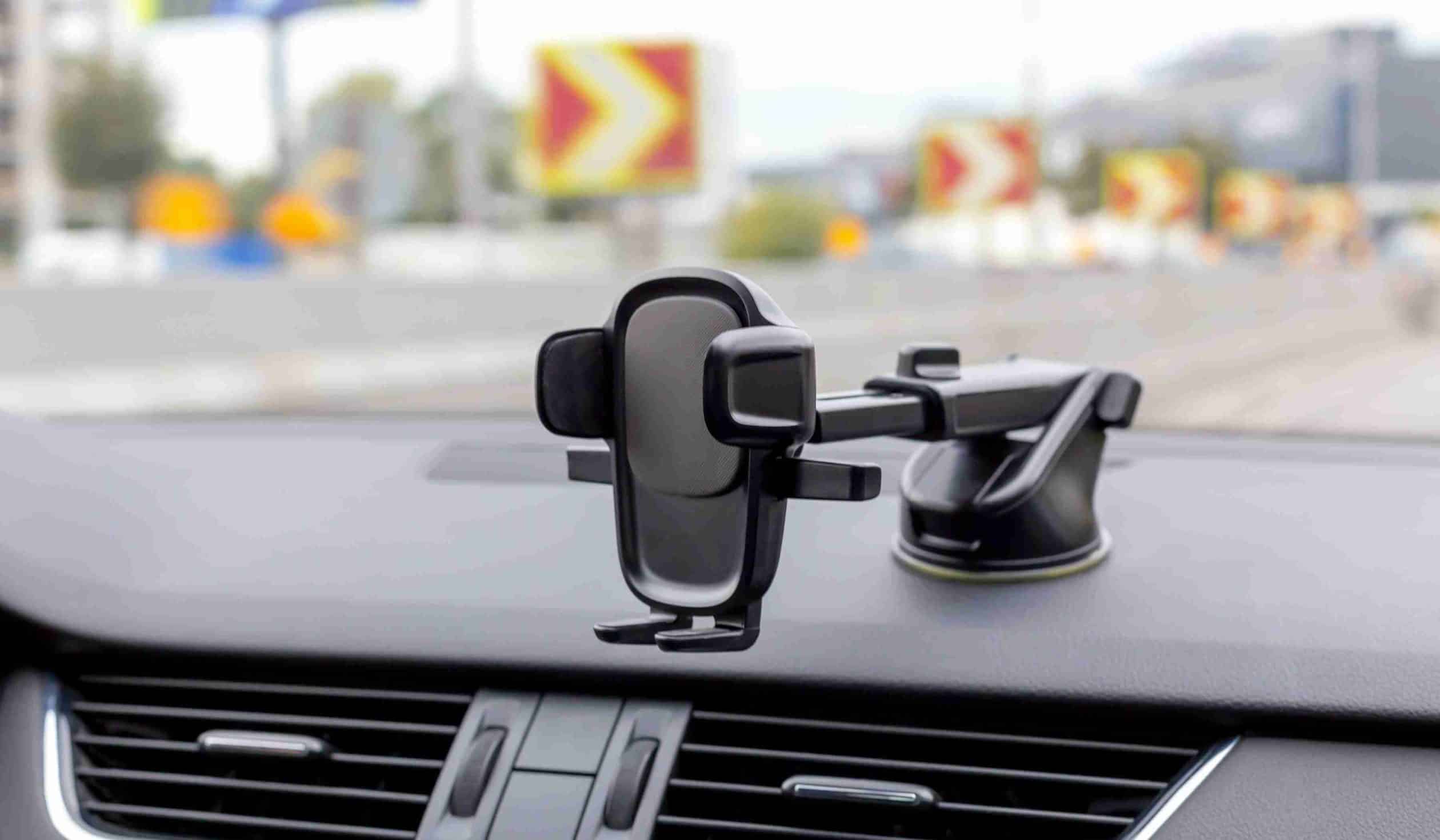

How to Evaluate Rearview Mirror Holders for Vans and Commercial Fleets
Procurement decisions for a commercial vehicle mirror holder rarely come down to a single spec. Fleet managers sourcing across dozens — sometimes hundreds — of vehicles need to think in terms of system-wide compatibility, durability under daily abuse, and total cost of ownership rather than unit price alone. The evaluation framework matters as much as the product itself.

Start with mounting architecture. Vans and light commercial vehicles vary significantly in windshield angle, cab geometry, and mirror stem diameter. A holder designed for a narrow-cab delivery van will not perform the same way in a high-roof cargo vehicle. Before issuing any RFQ, document the exact vehicle makes and models in your fleet — then verify that the supplier can accommodate those specs, either through standard SKUs or custom tooling.
Material grade is the next filter. Holders used in commercial environments face vibration from road surfaces, temperature swings inside parked vehicles, and repeated adjustment by different drivers. ABS plastic with UV stabilizers handles interior heat reasonably well; die-cast zinc or aluminum alloys add rigidity where the mount bears heavier accessories — a dashcam, a tablet, or a van phone mount integrated into the same bracket system. Ask suppliers directly what testing standards their components meet, and whether third-party certification documentation is available.
Retention force and adjustment range deserve specific attention. A commercial vehicle mirror holder that loosens over a 200-mile delivery route creates both a safety issue and a driver complaint backlog. Look for ratchet-lock or torque-controlled adjustment mechanisms rather than basic friction clips.
- Confirm MOQ thresholds early — fleet-scale orders often qualify for custom branding or modified specs, but only if volume commitments are established upfront
- Request sample units before committing to full production runs; fit-testing across multiple vehicle types catches compatibility issues before they become warranty claims
- Clarify lead times for reorder cycles, particularly if your fleet operates across multiple regions with staggered maintenance schedules
- Check whether the supplier supports OEM/ODM modifications, which matters when standardizing across mixed-brand fleets
Suppliers experienced in export-oriented B2B fulfillment — the kind that coordinate documentation, quality inspection, and packaging spec adjustments within a single workflow — tend to reduce the back-and-forth that inflates procurement timelines. That operational reliability compounds across a fleet program in ways that a low unit price rarely offsets on its own.
What Commercial Buyers Should Look for in a Van Phone Mount and Multi-Device Holder
Procurement decisions for van phone mount and multi-device holder configurations tend to look straightforward on paper — and then fall apart in the field. The gap usually comes down to specification depth: buyers who treat these as commodity accessories discover mid-deployment that mount geometry, vibration tolerance, and cable routing assumptions vary significantly across vehicle classes.

For commercial fleets, the baseline evaluation criteria should cover:
- Grip range and clamping mechanism compatibility across the device sizes your drivers actually carry — not just the current standard-issue model, but the next refresh cycle too
- Vibration dampening rating, particularly for vehicles running on mixed road surfaces or logging long daily mileage where micro-movement compounds into screen fatigue and mount wear
- Vent, dashboard, and mirror-arm attachment options — a commercial vehicle mirror holder configuration often suits fleet operators better than vent clips, which interfere with HVAC systems in temperature-sensitive cargo vehicles
- Material grade and UV resistance for vehicles operating in high-sun regions or running open-door cycles during deliveries
- Wireless charging pass-through compatibility if your fleet is transitioning to charging-integrated device management
Multi-device holder formats introduce a separate layer of assessment. When a single mount needs to accommodate both a navigation device and a communication tablet — common in logistics and field service operations — weight distribution becomes a structural concern, not just an ergonomic one. A mirror-arm mount rated for a single device may flex or fatigue under dual load over a full operational year.
Supplier capability matters here as much as product spec. Buyers sourcing at volume should confirm whether the supplier can modify clamp width, arm length, or base plate dimensions to match a specific vehicle interior — the kind of OEM/ODM flexibility that eliminates fitment workarounds across a mixed-brand fleet. Suppliers with export-oriented B2B infrastructure, like those coordinating custom specs alongside quality inspection and documentation, typically handle these modifications without adding lead time friction.
Finally, clarify what the supplier’s quality control process covers at the component level. A commercial vehicle mirror holder that passes visual inspection but lacks torque-load testing on the pivot joint will show failure patterns at roughly the same point in the fleet deployment — which means warranty claims arrive in batches, not as isolated incidents.
Sourcing and Supplier Selection: MOQ, Certifications, and Lead Times for Mirror-Mount Solutions
MOQ thresholds vary more than most procurement managers expect — and getting this wrong at the RFQ stage creates downstream budget problems that are genuinely hard to unwind. For a commercial vehicle mirror holder, B2B suppliers typically set minimum order quantities anywhere from a few dozen units for standard catalog configurations up to several hundred for fully customized specs. The gap matters, especially when a buyer is sourcing for a phased fleet rollout rather than a single deployment event.

Certification requirements depend heavily on the destination market. Export-oriented suppliers should be able to provide documentation covering material compliance, load-bearing test results, and where applicable, regional vehicle accessory standards. A van phone mount integrated into a mirror-arm assembly adds another layer — because now the unit is simultaneously a structural bracket and an electronics-adjacent accessory, which can affect what certifications a customs or fleet compliance officer will ask for at the point of delivery.
- Confirm whether the supplier’s stated lead time accounts for custom tooling, not just production run time — these are separate phases and often quoted separately only after the PO is signed.
- Request sample units before committing to full-run MOQ; reputable B2B suppliers with export infrastructure will treat sample lead time as a negotiable term, not a fixed one.
- Ask specifically which certifications are held at the factory level versus issued per-order — the distinction affects how quickly documentation can be produced for customs or fleet audits.
- Clarify whether MOQ applies per SKU or per shipment; for mixed-spec fleet orders, per-shipment MOQ flexibility can substantially reduce per-unit landed cost.
Lead times for a commercial vehicle mirror holder with custom dimensions typically run longer than catalog equivalents — that’s expected. What separates capable suppliers from difficult ones is whether that lead time is communicated accurately upfront or only revealed after production begins. Suppliers structured around OEM and ODM coordination, with dedicated project handlers rather than generalist sales contacts, tend to surface these variables earlier in the process. That kind of operational transparency is worth factoring into supplier selection as a practical criterion, not just a soft preference.
Operational ROI: Why the Right Rearview Mirror Holder Reduces Fleet Downtime and Driver Errors
Downtime arithmetic is simple: every hour a vehicle sits off-road because of a failed or missing mirror component is an hour of lost productivity — and in fleet operations, that math compounds quickly across dozens of units. A commercial vehicle mirror holder that fails mid-route doesn’t just create a safety issue; it triggers a chain of operational consequences that procurement teams often underestimate when evaluating spec decisions at the sourcing stage.
Vibration fatigue is the primary failure mechanism worth understanding here. Vehicles operating on mixed road surfaces — urban delivery routes, construction site access roads, rural freight corridors — subject mirror mounting hardware to continuous mechanical stress. Holders specified with insufficient bracket gauge or inadequate joint tolerances tend to develop play over time, causing progressive mirror misalignment before any visible crack or fracture appears. The driver compensates by repositioning manually, which is both a distraction and an early warning sign that the assembly is degrading. By the time the holder fails outright, the vehicle may have been operating with compromised rear visibility for weeks.
Driver error linked to poor visibility is harder to quantify than a broken part, but fleet managers who’ve run incident reviews will recognize the pattern. A commercial vehicle mirror holder that allows angular drift — even minor — shifts where a driver’s blind spot begins. In tight loading bays or high-pedestrian urban environments, that shift matters. Specifying holders with positive-lock adjustment mechanisms and vibration-damping mounts reduces drift incidents without relying on driver vigilance as the primary control.
There’s also a secondary consideration that’s grown relevant as cab interiors carry more equipment: accessories like a van phone mount are increasingly integrated into the same A-pillar or mirror-arm zone where the primary mirror holder is anchored. Poorly coordinated mounting configurations in that area create interference problems — both mechanical and visual. Sourcing mirror holders from suppliers who understand accessory co-location, and who can adjust bracket geometry or arm offset accordingly, prevents retrofit complications down the line.
- Specify vibration-rated hardware for the dominant road surface type in your fleet’s operating environment.
- Require positive-lock adjustment mechanisms on any commercial vehicle mirror holder used in urban or high-maneuver applications.
- Confirm bracket geometry compatibility with existing cab-mounted accessories before finalizing specs — especially in mixed-equipment configurations.
- Factor holder replacement frequency into total cost of ownership, not just unit purchase price.
Suppliers with structured OEM coordination — the kind that handles fleet-specific dimensioning and accessory co-location during the design phase rather than after — tend to produce holders that stay within spec longer. That’s not a premium feature. It’s the baseline that reduces the per-vehicle maintenance burden over a contract cycle.
Conclusion
The spec that looks fine on paper will fail in the field if vibration tolerance and adjustment lock aren’t matched to actual operating conditions — that’s the part most buyers skip until they’re dealing with mid-contract replacements.
Every commercial vehicle mirror holder decision is really a maintenance cost decision in disguise. Get the bracket geometry and hardware rating right upfront, or pay for it later across the whole fleet.
If you’re sourcing at volume, push your supplier on OEM coordination during the design phase — not after. That single conversation saves more time and money than any unit-price negotiation will.
Frequently Asked Questions
Q: What is a commercial vehicle mirror holder and what does it actually do?
A: A commercial vehicle mirror holder is the bracket assembly that mounts exterior mirrors to the vehicle body — it carries the mirror head, absorbs road vibration, and holds the mirror at the correct angle for the driver’s sightline. On heavy-duty vehicles, this isn’t a passive piece of metal; it’s a structural component that takes constant stress from wind load, vehicle movement, and temperature cycling. Get the geometry wrong and no amount of mirror quality fixes the blind spot problem.
Q: How do I know if a commercial vehicle mirror holder is compatible with my fleet’s make and model?
A: Compatibility comes down to three things: mounting hole pattern, arm reach (the horizontal distance from the vehicle body to the mirror head), and the load rating relative to your mirror’s weight and size. Most suppliers publish fitment guides, but if you’re running a mixed fleet or non-standard body configurations, the safest move is to confirm bracket geometry directly with the supplier before ordering at volume — especially if any OEM coordination is involved.
Q: Why do commercial vehicle mirror holders fail so quickly on certain routes?
A: High-vibration routes — construction sites, unpaved roads, stop-heavy urban cycles — expose weak points in the adjustment lock mechanism and the mounting hardware. A holder that performs fine on highway fleets can fail within months on distribution routes with constant low-speed maneuvering and kerb strikes. The bracket material and the vibration tolerance rating need to match the actual operating environment, not just the vehicle class.
Q: How long should a commercial vehicle mirror holder last before needing replacement?
A: Under normal operating conditions, a properly spec’d holder typically lasts several years — but “normal” varies enormously by route type, climate, and wash frequency (road salt and high-pressure washing accelerate corrosion on lower-grade finishes). Fleets running aggressive schedules often see mid-contract failures when holders were selected on unit price alone rather than duty-cycle fit.
Q: Can I use an aftermarket commercial vehicle mirror holder instead of the OEM part?
A: Aftermarket holders can be a practical option — particularly for older vehicles where OEM parts are discontinued or lead times are long. The real risk is dimensional variance: if the arm reach or mounting pitch differs even slightly from the OEM spec, mirror angle and stability are both compromised. Suppliers offering OEM-coordinated or custom-spec options (including ODM sourcing) close that gap more reliably than generic catalog parts.
Q: How much does a commercial vehicle mirror holder cost at wholesale volume?
A: Pricing varies widely depending on material (stamped steel vs. die-cast aluminum vs. reinforced composite), finish type, and whether the design is standard or custom-spec. The unit price conversation is often the wrong starting point — a cheaper holder that requires replacement twice as often across a large fleet costs significantly more over a contract cycle than a mid-range part with a better vibration rating and corrosion-resistant finish.
Q: What material is best for a commercial vehicle mirror holder in high-corrosion environments?
A: Die-cast aluminum with a powder-coat or anodized finish is the go-to for coastal or salt-road environments — it resists oxidation better than untreated steel and stays lighter than heavy-gauge alternatives. Stainless fasteners matter just as much as the bracket material itself; a quality holder fitted with standard zinc fasteners will corrode at the joints long before the bracket body fails.
Q: Is it worth investing in an adjustable commercial vehicle mirror holder versus a fixed-position bracket?
A: For mixed-use fleets where drivers or load heights vary, adjustability is genuinely useful — but only if the adjustment lock is robust enough to hold position under vibration. A poorly designed adjustable holder that drifts out of position mid-shift is worse than a fixed bracket, because the driver compensates and the blind spot risk increases. Spec the lock mechanism as carefully as you spec the adjustment range.