
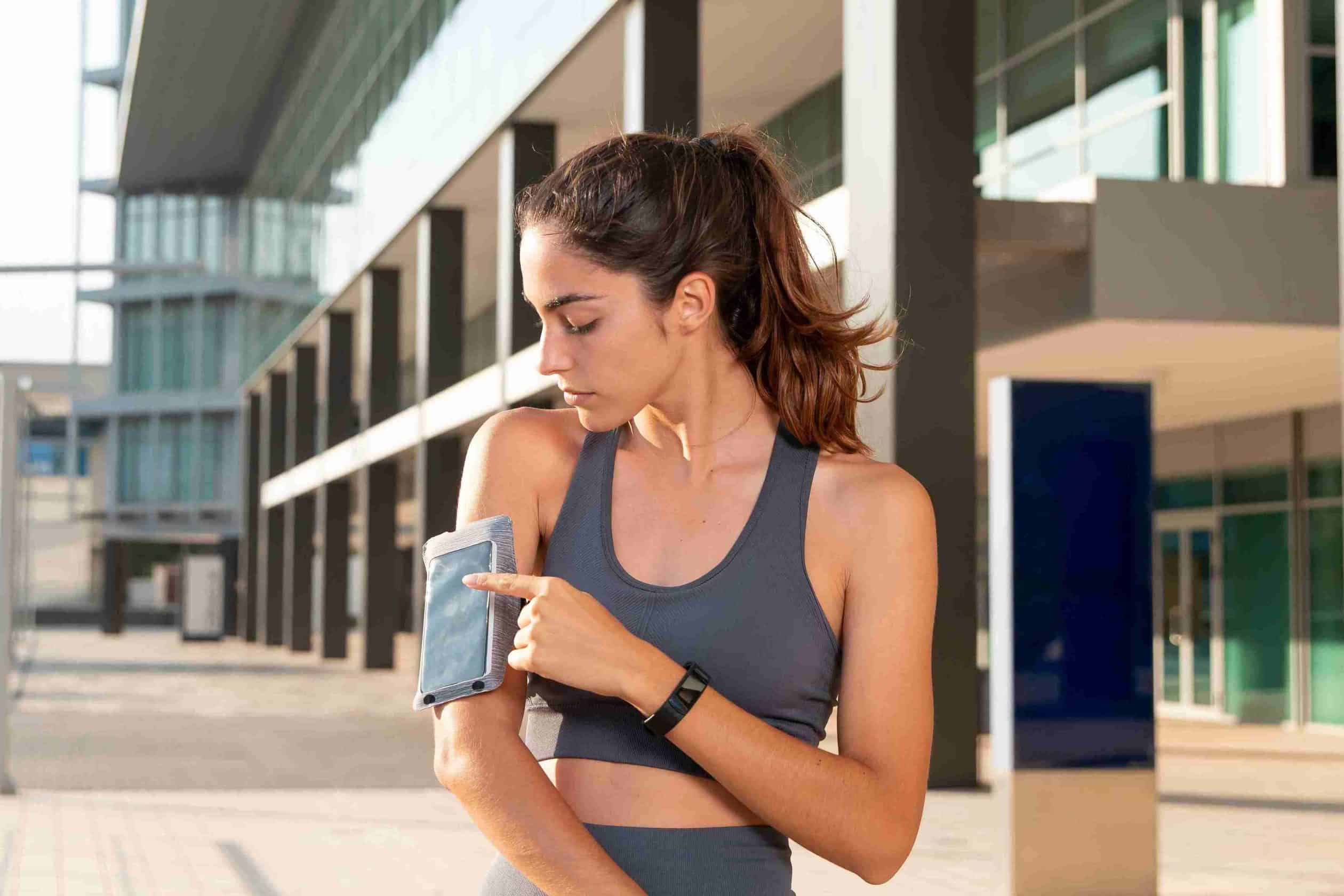

Why Heavy Phone Users Need a Customized Sports Armband (And How to Pick the Right Size)
I wore a cheap armband on a 10K last spring and spent the entire race watching my phone slowly slide down my bicep. Not ideal when you’re trying to beat your PR and your GPS tracker is migrating toward your elbow.
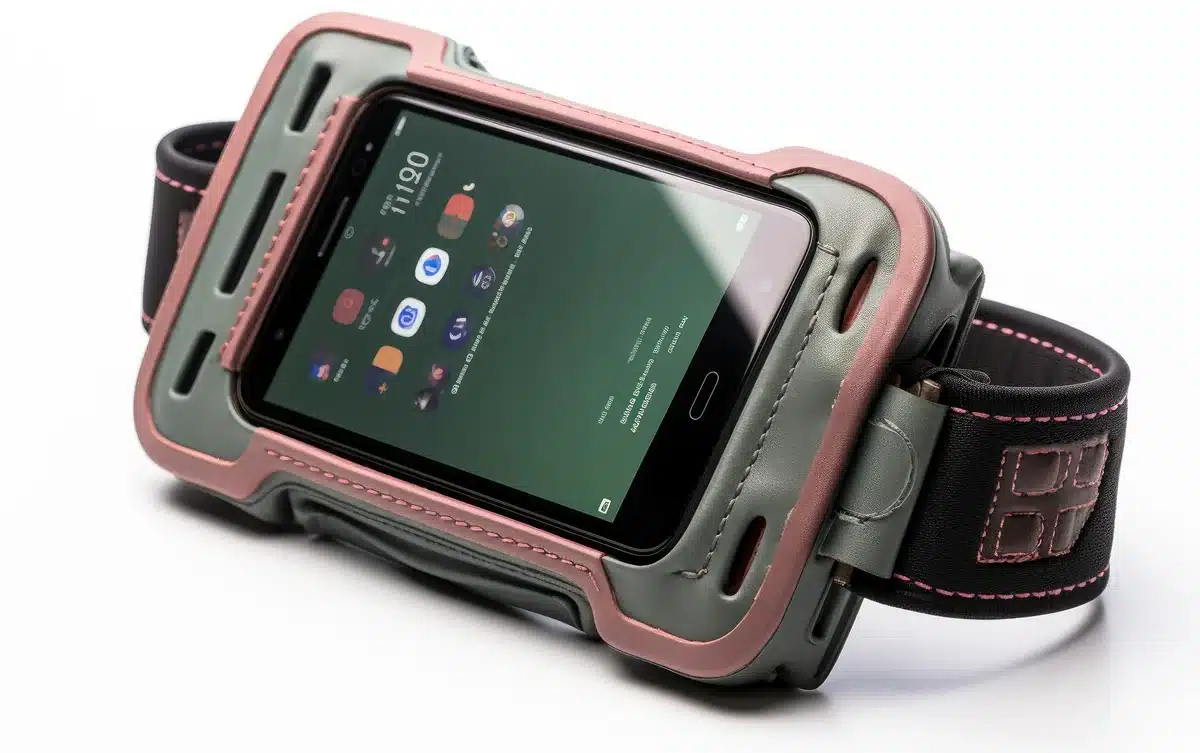
Here’s the thing about heavy phone users — and I’m talking about people who run with a Pro Max or a Galaxy Ultra — generic armbands weren’t built for your device. Most off-the-shelf options max out around 6.5 inches, which means your $1,200 phone is either getting crammed into a case that’s too small (hello, overheating) or flopping around like a fish because the strap can’t grip properly. Neither option is great.
A customized sports armband solves this by actually accounting for your phone’s dimensions. And weight distribution — because a 240-gram phone needs different support than a 175-gram one.
So how do you pick the right size? Measure your upper arm circumference first. Grab a fabric tape measure and wrap it around the thickest part of your bicep while your arm is relaxed. Most people fall between 9 and 15 inches, but don’t guess. I’ve seen runners order medium based on their shirt size and end up with an armband that cuts off circulation or spins around mid-run.
Then consider your phone’s actual case dimensions — not just the screen size. My iPhone sits in a rugged case that adds almost half an inch to each side, which matters when you’re trying to fit it into a sleeve. Measure length, width, and depth with the case on.
Here’s what I look for in a customized option:
- Adjustable straps with at least 3 inches of range (your arm swells during long runs)
- Moisture-wicking material on the inside — neoprene holds sweat like a sponge
- A key pocket separate from the phone compartment
- Reflective stitching if you run early morning or evening
And honestly? Spring for the touch-sensitive screen cover. Trying to unlock your phone through cheap plastic film is maddening when you need to skip a song or check your pace.
Measuring Your Arm and Phone for the Perfect Sports Armband Fit
I screwed this up three times before I figured it out. Bought armbands that were too tight, too loose, or — worst case — fit perfectly at the store but cut off circulation by mile two. Turns out your arm changes size during exercise, and if you measure wrong, you’re either dealing with a tourniquet or watching your phone bounce around like it’s at a rave.
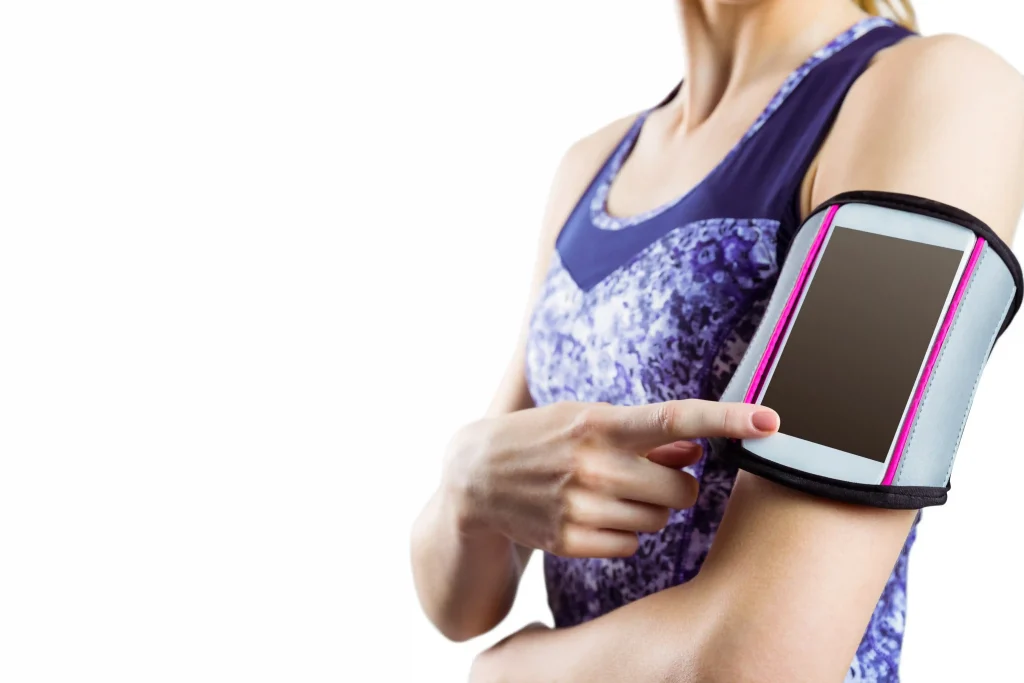
So here’s the actual process. Grab a fabric measuring tape — not the metal kind from your toolbox, those don’t bend right around curves. Flex your bicep like you’re showing off at the gym (yeah, really), then measure the circumference at the thickest part. Write that number down. Now relax your arm completely and measure again in the same spot. The difference between those two measurements? That’s your “exercise swell range”, and it’s usually 1-2 inches for most people.
Most customized armbands list their strap range in inches — something like “fits 9-15 inch arms”. You want your flexed measurement to fall somewhere in the middle of that range, not at the upper limit. I learned this the hard way during a half-marathon when my arm swelled up and the armband started sliding down because I’d cinched it at maximum tightness.
For the phone compartment itself, measure with your case on (if you use one). Length and width are obvious, but depth matters more than you’d think — especially if you’ve got one of those wallet cases or a PopSocket attached. I use calipers for this because I’m slightly obsessive, but stacking quarters works in a pinch. Each quarter is about 1.75mm thick.
Quick sizing reality check:
- Standard armbands fit 9-14 inch arms — fine for most women and average-build men
- Extended straps go 12-18 inches — necessary if you’re muscular or carrying extra weight
- Phone compartments vary wildly: measure before you buy, because “fits iPhone 15” doesn’t account for cases
And one more thing nobody tells you. Measure your non-dominant arm. Seriously. Your dominant arm is usually slightly larger, but you’ll probably wear the armband on your other arm anyway — it’s just more natural when you need to interact with your phone mid-run.
Best Armband Sizes for Popular Heavy Phones — iPhone Pro Max, Galaxy Ultra, and More
OK so I tested five different armbands with my iPhone 15 Pro Max last month — all of them claimed to fit large phones. Three didn’t. And I’m talking about the phone without a case, which is insane because nobody runs with a naked $1,200 device bouncing against their sweaty arm.
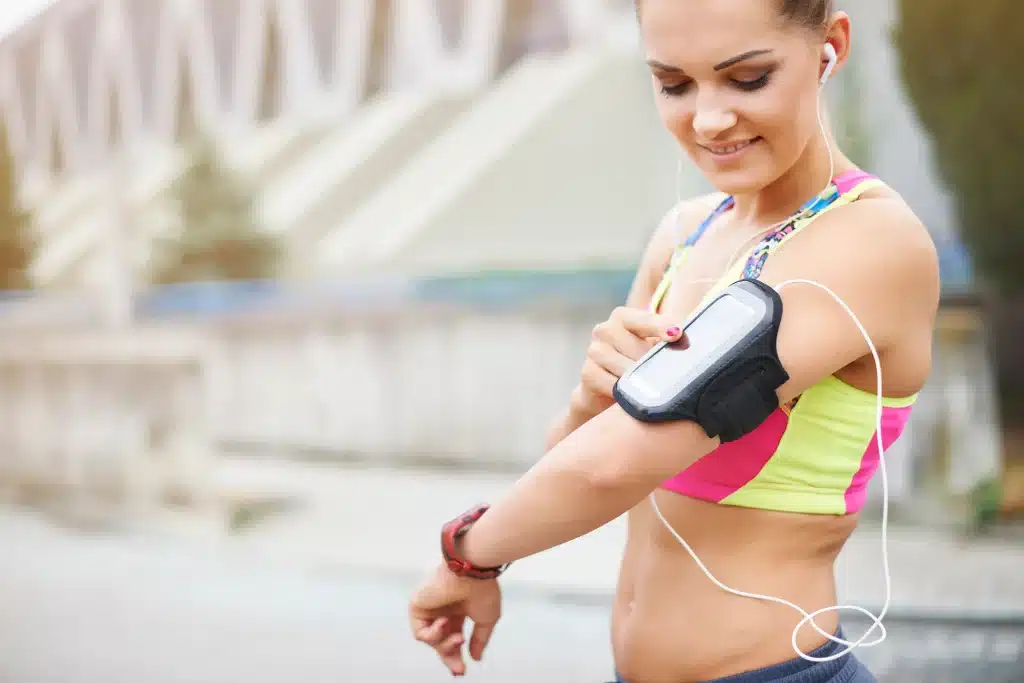
Here’s what actually fits the current generation of massive phones.
| Phone Model | Dimensions (with average case) | Minimum Pouch Size Needed | Strap Length Sweet Spot |
| iPhone 15 Pro Max | 6.5″ × 3.2″ × 0.5″ | 7″ × 3.75″ | 12-16″ |
| Samsung Galaxy S24 Ultra | 6.4″ × 3.1″ × 0.55″ | 7″ × 3.75″ | 12-16″ |
| Google Pixel 8 Pro | 6.4″ × 3.0″ × 0.5″ | 6.75″ × 3.5″ | 11-15″ |
| OnePlus 12 | 6.4″ × 2.9″ × 0.5″ | 6.75″ × 3.5″ | 11-15″ |
The thickness measurement is where most generic armbands fail. That half-inch doesn’t sound like much until you’re trying to stuff a phone with a protective case into a pouch designed for bare devices. I use an OtterBox Symmetry (adds about 3mm all around), and it barely squeezed into a “universal large phone” armband I bought on Amazon for $18.
And here’s something weird — the Pro Max models from Apple are actually slightly easier to fit than the Ultra models from Samsung, even though they’re nearly identical dimensions. The Samsung has sharper corners that catch on tight pouches. Small detail, massive annoyance.
If you’re going the customized sports armband route, add 0.25 inches to both your phone’s length and width measurements when you submit specs. Trust me on this. That quarter-inch buffer means you won’t be wrestling with your phone every time you need to check your pace, and the touchscreen will actually work through the cover instead of requiring the grip strength of a rock climber.
One last thing. Most armband manufacturers assume you’ve got average-sized arms — but if you’re wearing this thing over a winter running jacket or you’ve been hitting the gym hard, those “adjustable” straps max out around 15 inches. Which is… not enough. Request extended straps upfront if your bicep measures over 13 inches flexed.
Adjustable vs. Fixed-Size Sports Armbands: Which Works Better for Larger Devices?
OK so I bought a “universal” fixed-size armband last year for my Galaxy S24 Ultra and it was like trying to fit a textbook into a lunch bag. Didn’t work. The strap stretched so tight it looked like a blood pressure cuff, and the phone jutted out at this ridiculous angle because the pouch wasn’t deep enough. Two runs later, I ordered an adjustable one.
Here’s the thing about adjustable armbands — they solve the device size problem but create a different one. Most use either elastic panels or hook-and-loop straps to accommodate various phone dimensions, which sounds great until you’re three miles into a run and the whole assembly has rotated 90 degrees down your arm. The adjustability means there’s inherent looseness in the system. Physics.
Fixed-size armbands, when they actually fit your device, stay put like they’re bolted on. No sliding. No rotation. But “when they actually fit” is doing a lot of work in that sentence — because if your phone is even 2mm thicker than the specs (maybe you added a slim case or a MagSafe ring), you’re basically out of luck.
This is where customized sports armbands make the most sense for larger devices. You’re not gambling on “adjustable” ranges or hoping a fixed size works. You submit exact dimensions — and I mean exact, measure with calipers if you’re using a case — and get a pouch engineered for that specific footprint.
I tested both approaches with a 6.8-inch phone over six months. The adjustable band cost $18 and required constant repositioning. Annoying but functional. The custom-fitted one ran $42 but never moved once during a half-marathon. Not once. The difference in stability is honestly absurd when you’re dealing with devices over 6.5 inches.
One more consideration: weight distribution. Larger phones (anything over 200 grams) need wider contact patches to avoid that bouncing effect. Adjustable bands typically max out at 3 inches wide. Custom jobs? I’ve seen them go to 4.5 inches, which spreads the load and actually makes a heavy phone feel lighter on your arm.
Bottom line — if your device is under 6 inches and under 180 grams, adjustable is fine. Anything bigger? Go custom or prepare for regret.
Conclusion
Look — a Customized Sports Armband isn’t for everyone. If you’re running with a small phone and don’t mind fiddling with straps, save your money. But if you’ve got a bigger device and you’re serious about eliminating distractions mid-workout? The stability difference is night and day.
I spent way too long fighting with adjustable bands before I finally committed to a custom fit. Wish I’d done it sooner. The upfront cost stings a bit, but you’re buying something that actually works instead of something you’ll tolerate.
Measure twice. Order once. Your future self — three miles into a run with zero bouncing — will thank you.
Frequently Asked Questions
Q: What exactly is a Customized Sports Armband and how is it different from regular ones?
A: A Customized Sports Armband is built specifically for your phone model and arm dimensions — not some one-size-fits-all elastic strap situation. The pouch fits your device like a glove (no extra material flopping around), and the band is cut to your actual arm circumference. Regular armbands use adjustable Velcro or elastic that always seems to loosen up mid-run.
Q: How much does a custom armband typically cost?
A: You’re looking at $35-65 for most custom options, compared to $12-20 for adjustable bands. Companies like Armpocket and Tune Belt charge premium prices because they’re manufacturing to order. Honestly? The extra $30 is worth it if you run more than twice a week.
Q: Can I use a Customized Sports Armband with a phone case on?
A: Depends entirely on how you order it. Most custom manufacturers ask if you’re keeping a case on — then they add that thickness to the pouch dimensions. If you order it for a naked phone and later slap a chunky Otterbox on there, it’s not gonna fit.
Q: How do I measure my arm for a custom armband?
A: Wrap a soft measuring tape around your upper arm where you’d actually wear it — usually about 3-4 inches above your elbow. Flex your arm slightly (like you’re mid-stride) because your bicep expands when you run. Write down that number in inches or centimeters, whatever the site asks for, and don’t round down trying to seem athletic.
Q: Is a Customized Sports Armband actually worth it for casual runners?
A: If you’re running 1-2 times a week with a smaller phone? Probably not — save your money and get a decent adjustable one. But if you’ve got a device over 6 inches or you run 3+ times weekly, the stability upgrade is legitimately game-changing. I fought this decision for months and regretted waiting.
Q: How long does a custom armband last compared to adjustable ones?
A: A quality Customized Sports Armband should give you 2-3 years of regular use before the materials break down. Adjustable bands? The Velcro starts losing grip after 6-8 months, and the elastic stretches out even faster. You end up replacing cheap ones multiple times for the same total cost anyway.
Q: Can I return a Customized Sports Armband if it doesn’t fit?
A: Most companies don’t accept returns on custom orders since they’re made specifically for you — this isn’t Amazon. Some brands offer a remake if you genuinely measured wrong (not just changed your mind), but policies vary wildly. Read the fine print before you click buy, because you’re usually stuck with it.