
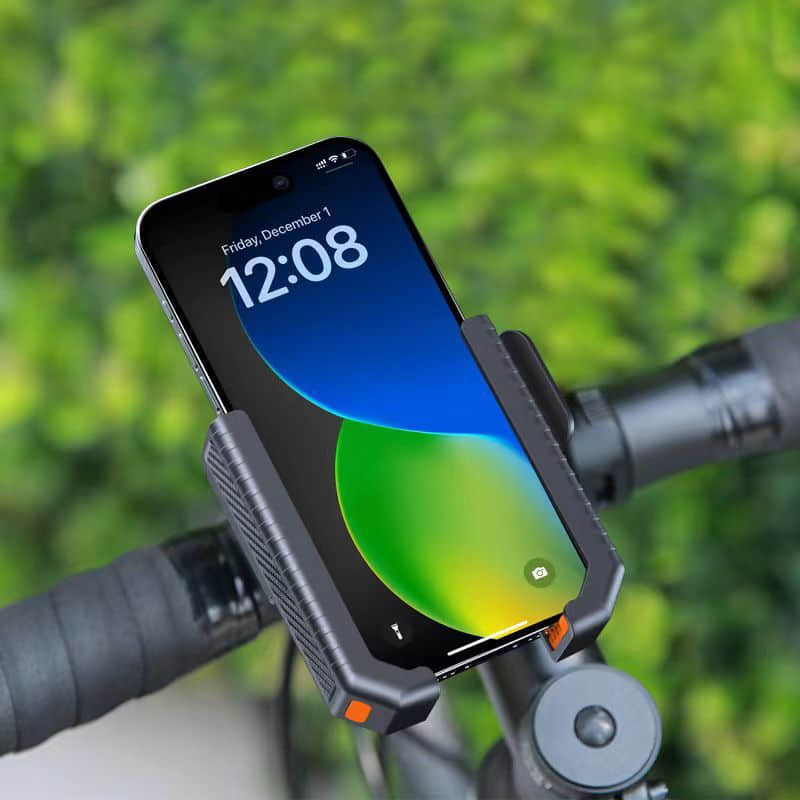

What to Look for in a Foldable Bike Phone Holder Before You Commit to a Supplier
Procurement decisions for a foldable bike phone holder rarely hinge on a single spec. What separates a defensible sourcing choice from a costly one is knowing which criteria actually translate into product performance at scale — and which ones look impressive on a spec sheet but fall apart under real-world conditions.
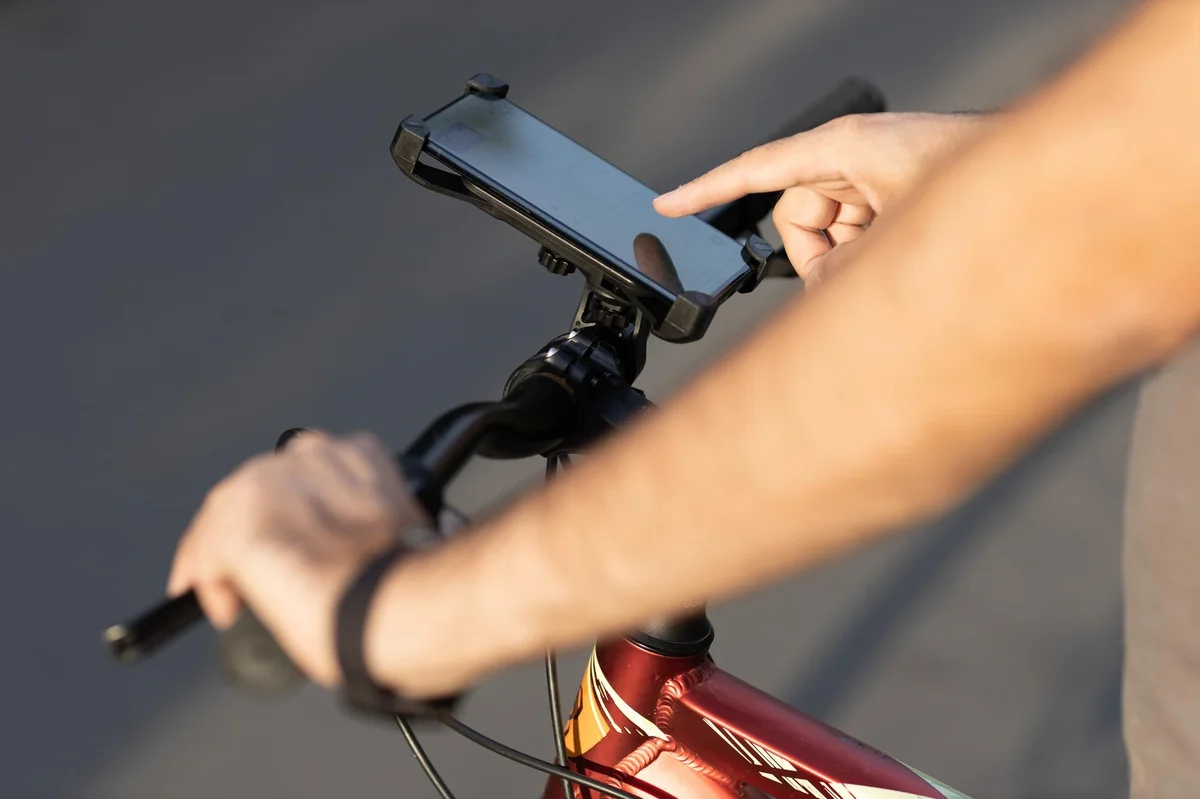
Start with the folding mechanism itself. The hinge or pivot point is the component under the most cumulative stress, especially for products sold into cycling markets where vibration and repeated use are constants. Ask suppliers for cycle-count testing data — how many open/close cycles the mechanism is rated for before structural fatigue sets in. If a supplier can’t provide that, that’s a signal worth taking seriously.
Material selection matters more than most buyers initially expect. Polycarbonate and ABS composites are standard, but the grade and UV stabilization treatment will determine how the product holds up in outdoor retail environments or heavy seasonal use. For a compact bicycle mount, weatherproofing isn’t a luxury — it’s a baseline requirement, particularly for buyers targeting markets with variable climates or outdoor lifestyle retail channels.
Compatibility range is another commercial variable. A foldable bike phone holder that accommodates only a narrow band of device widths creates customer service friction down the line. Buyers sourcing for wholesale or private-label distribution should confirm the adjustable clamp range covers current flagship device dimensions — and leaves room for the next product cycle.
- Clamp retention force: verify grip security at the specified phone weight range, not just at minimum load
- Mounting interface: confirm compatibility with standard handlebar diameters (22mm and 31.8mm are the common benchmarks)
- Folded dimensions: critical for packaging efficiency and per-unit freight cost
- Surface finish durability: matte coatings and rubberized grips tend to degrade faster under repeated handling — request sample aging data
- Certifications: RoHS compliance is a baseline for EU-bound orders; additional CE or REACH documentation may be required depending on destination market
Suppliers with structured OEM/ODM workflows — the kind that support custom specifications from prototype through export-ready production — will generally have cleaner answers to these questions. That responsiveness at the technical inquiry stage tends to reflect how the relationship holds up once an order is in production.
Structural Integrity vs. Compact Bicycle Mount Design: Where Buyers Get It Wrong
The tension between structural integrity and compact bicycle mount design is where procurement decisions quietly go wrong — not at the spec sheet stage, but months later, when return claims start arriving from distribution partners. Buyers often optimize for one at the expense of the other, and the foldable bike phone holder category makes that trade-off particularly unforgiving.
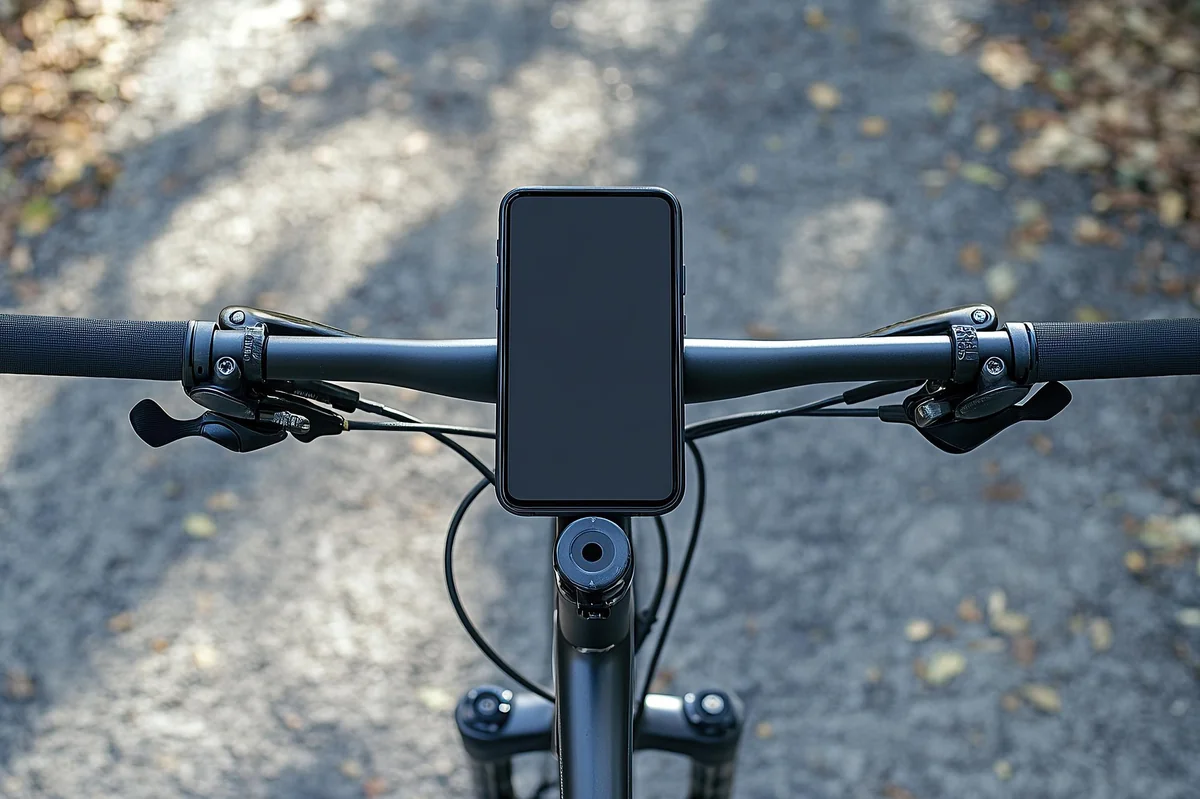
A mount that folds down efficiently for packaging will, almost by definition, involve moving parts. Hinges, pivot joints, locking tabs — each one is a potential failure point under road vibration. The real procurement question isn’t whether a design is compact or sturdy. It’s whether the engineering behind the folding mechanism has been tested to a meaningful cycle count, and whether that data is available on request.
Most suppliers can quote a tensile load figure for the clamp. Fewer can provide documented hinge fatigue data — how many open/close cycles before the locking mechanism degrades, and what the failure mode looks like when it does. That gap in documentation is worth flagging early in supplier conversations, because it separates manufacturers running structured QC protocols from those relying on visual inspection at the line level.
There are specific design trade-offs worth understanding before finalizing a specification:
- Single-axis fold vs. multi-axis fold: single-axis designs are mechanically simpler and generally more durable, but offer less packaging compactness; multi-axis designs compress further but introduce more joint complexity
- Locking mechanism type: tool-free thumb locks are convenient for end users but tend to wear faster than screw-tightened collars under repeated vibration
- Material at the fold point: glass-fiber reinforced nylon outperforms standard ABS at pivot joints, particularly in outdoor temperature cycling conditions
- Grip retention under vibration: phone-clamping arms should maintain rated grip force after the folding joint has been actuated repeatedly — these two performance attributes are rarely tested together in factory QA
For buyers sourcing a foldable bike phone holder at scale, the practical move is to request a pre-production sample specifically stress-tested at the fold point — not just the clamp. Suppliers with genuine OEM/ODM depth, like those supporting export-ready production across multiple destination markets, will typically accommodate that kind of targeted sample protocol without friction. Those that can’t often signal a manufacturing process that hasn’t been stress-tested beyond basic assembly checks.
Material Grade, Clamp Mechanism, and Phone Compatibility Ranges That Actually Matter
Material selection at the component level — not just the housing — is where procurement decisions either hold up or fall apart in the field. For a foldable bike phone holder, the three materials that appear most frequently across production tiers are ABS plastic, polycarbonate (PC) blends, and aluminum alloy, each carrying distinct trade-offs that matter differently depending on end-use conditions.
| Material | Typical Use Case | Key Trade-Off | Procurement Consideration |
|---|---|---|---|
| ABS Plastic | Budget-tier, urban cycling | Lower UV resistance; degrades faster in outdoor exposure | Acceptable for short product cycles; verify UV stabilizer additive |
| PC/ABS Blend | Mid-range, mixed-use | Better impact resistance but cost-sensitive to resin quality | Request material spec sheet; blends vary widely by supplier |
| Aluminum Alloy | Premium, off-road or high-vibration use | Heavier; anodizing quality affects corrosion resistance | Confirm alloy grade (6061 vs. generic); inspect anodizing thickness |
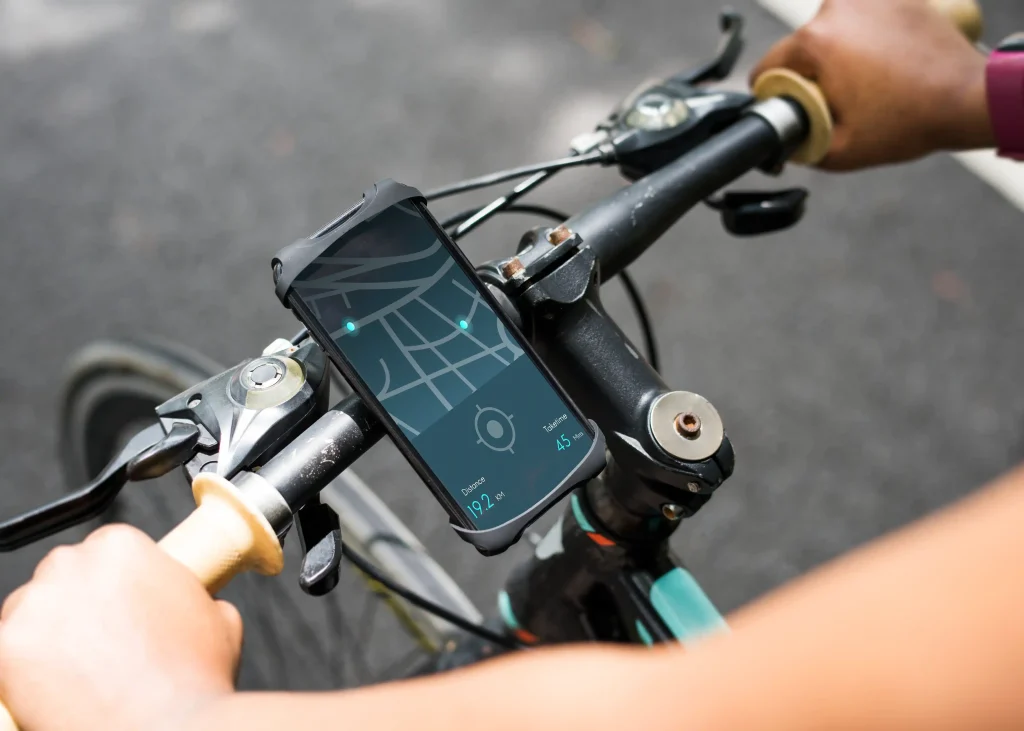
Clamp mechanism design is equally consequential. Spring-loaded arms — the most common configuration — vary substantially in spring tension rating and arm travel distance. A compact bicycle mount destined for large-format phones (above 6.5 inches) needs arm travel wide enough to seat the device without stress on the clamping pads, and spring tension calibrated to hold without cracking a case under sustained vibration. These two parameters are almost never listed on a standard product data sheet, which means buyers need to ask explicitly or specify them in a purchase order template.
Phone compatibility ranges deserve more scrutiny than they typically receive at the sourcing stage. Stated width ranges — say, 55mm to 90mm — often reflect the mechanical maximum, not the functional optimum. Devices at the outer edge of that range may clamp unevenly across the arm length, creating torque that compounds at the fold joint over time. For buyers placing volume orders across mixed SKUs, the safer procurement move is to define a target device profile range and validate fit at both ends during sample review — not assume the printed spec covers real-world variation.
Suppliers with structured OEM/ODM workflows, like Shuowei, can typically adjust arm geometry or spring tension to a buyer’s specified device profile — but that kind of customization requires early engagement in the product development phase, not a last-minute change request. Build that conversation into the RFQ process from the start.
Supplier Qualification Criteria for Foldable Bike Phone Holder Orders at Scale
Qualifying a supplier for a foldable bike phone holder program at volume is a different exercise than approving a sample for a small trial run. The stakes shift considerably when order quantities climb — lead time failures, inconsistent QC, or a supplier who can’t scale production without dropping tolerances will surface fast, and the cost lands on the buyer.
Start with manufacturing scope, not pricing. A factory quoting aggressively on a compact bicycle mount order but lacking in-house tooling for the fold mechanism is a risk. That joint is the product’s single most failure-prone component — if the supplier outsources its fabrication and has no direct QC authority over it, that’s a structural gap worth probing during the audit phase.
Certifications matter, but context matters more. CE and RoHS compliance are baseline expectations for most European and UK retail channels. For North American distribution, material safety documentation and any applicable CPSC-relevant testing records belong in the supplier file before the first commercial order ships. Ask for test reports tied to the specific SKU — not generic factory-level certificates that may not reflect the actual foldable bike phone holder configuration being ordered.
- Confirm the factory’s stated MOQ reflects production reality, not just a number used to win the inquiry
- Request documented lead times for both standard and customized configurations — these often differ significantly
- Verify QC checkpoints: incoming materials, in-process fold mechanism assembly, and pre-shipment inspection stages
- Assess OEM/ODM capability by asking for evidence of past spec-customized programs, not just catalog products
- Clarify packaging and export documentation standards early — errors here cause customs delays that erode margin
Suppliers with structured B2B workflows — Shuowei operates this way — typically maintain clearer separation between project coordination and production, which makes communication during a scaled run more reliable than dealing with factories where one person handles everything from quoting to shipping.
Reorder reliability is the criterion that gets underweighted in initial qualification. A foldable bike phone holder that performs well in the first batch but arrives with tolerance drift in the third shipment creates downstream warranty exposure. Build repeat-order consistency checks into the supplier scorecard from the start — not as an afterthought once problems appear.
Conclusion
The foldable bike phone holder market isn’t short on options — it’s short on buyers who know what to actually look for before committing to a supplier or a SKU.
Get the mount mechanism and the folding hinge right, and everything downstream — rider trust, return rates, reorder confidence — tends to follow. Get them wrong, and no amount of good packaging saves you. Tolerance consistency across batches matters more than a perfect sample, so build that into your qualification process from day one, not after the third shipment shows up soft.
Do the spec work upfront. It’s less exciting than browsing catalogs, but it’s where the margin actually lives.
Frequently Asked Questions
Q: What is a foldable bike phone holder and how is it different from a standard mount?
A: A foldable bike phone holder includes a hinged clamp mechanism that collapses flat when not in use — so it doesn’t snag on bags, clothing, or other gear when you’re off the bike. Standard mounts are fixed or semi-rigid; they hold position well but add permanent bulk to your handlebar setup whether you need them or not. The folding function sounds minor until you’re actually storing or transporting the bike regularly.
Q: How do I know if a foldable bike phone holder will fit my handlebars?
A: Most foldable bike phone holders are designed around a standard handlebar diameter range — typically 22mm to 32mm — but that range isn’t universal across every model, so check the spec sheet before buying. Road bike bars, MTB bars, and e-bike handlebars can vary enough to cause a loose or incompatible fit, especially with cheaper clamp designs that don’t adjust smoothly across the full stated range.
Q: Why does the folding hinge wear out so quickly on some models?
A: The hinge is almost always where tolerance problems show up first. If the pivot point is made from low-grade zinc alloy or the tolerances between the hinge plates are loose from the factory, repeated folding cycles accelerate play in the joint — and once there’s play, vibration does the rest. Buyers sourcing at volume should request hinge cycle test data (typically rated in open/close cycles) rather than relying on general durability claims.
Q: Is a foldable bike phone holder safe to use at high speeds or on rough terrain?
A: It depends almost entirely on the mount mechanism, not the folding function itself. A well-engineered foldable bike phone holder with a positive-lock hinge and a secure clamp base performs comparably to a fixed mount — the fold doesn’t introduce meaningful instability when it’s properly locked into the open position. Problems arise when the locking mechanism is stiff to engage, so riders skip fully locking it, and then wonder why the phone shifts on a gravel descent.
Q: How much should a decent foldable bike phone holder cost?
A: At retail, the functional range sits somewhere between mid-single digits and the low-to-mid twenties — anything below that floor tends to cut corners on the hinge or the phone clamp spring tension. For B2B buyers sourcing OEM or wholesale, unit costs shift significantly with volume, material spec, and customization requirements; a supplier like Shuowei that handles custom specifications can help buyers align cost targets with realistic material choices rather than guessing from a catalog price.
Q: Can I use a foldable bike phone holder with a phone case on?
A: Most can — but the phone clamp’s maximum width is the number that actually matters here, not the product title. Bulky rugged cases or battery cases can push a phone past the clamp’s rated opening, which forces the arms to over-extend and weakens their grip over time. Check the stated phone width range (in millimeters, not just “fits most phones”) before assuming compatibility.
Q: How long should a foldable bike phone holder last with regular use?
A: A well-made unit — solid hinge tolerances, UV-stabilized materials, quality clamp springs — should hold up through at least a few seasons of regular riding without meaningful degradation. The failure points to watch are the hinge play developing over time, the phone clamp losing spring tension, and UV exposure causing the plastic components to become brittle; all three are material and tolerance problems, not design ones, so batch consistency from your supplier matters as much as the initial sample quality.
Q: What materials are foldable bike phone holders typically made from?
A: The body is usually ABS plastic or a PC/ABS blend — the latter handles impact and UV exposure better. Metal components (clamp hardware, hinge pins, handlebar mount) are typically zinc alloy or aluminum; zinc is cheaper and heavier, aluminum costs more but cuts weight noticeably. Silicone or rubber padding on the phone contact points is standard and worth verifying, since bare plastic-on-glass contact is a scratch risk that generates returns.