


The E-Bike Phone Holder Specs Suppliers Quietly Cut Corners On
Procurement teams get burned on this more than almost any other accessory category. Not because the specs are complicated — they’re not — but because the gap between what a supplier quotes and what actually ships is wide enough to drive a cargo container through.

The clamp torque rating is the first place corners get cut. A spec sheet might list “360-degree rotation with locking mechanism” without specifying the resistance force at the pivot point. In practice, that means a mount that holds your phone at a 45-degree angle for the first week, then slowly droops to portrait mode every time the rider hits a pothole. For any buyer sourcing an electric bicycle mount at volume, this is a warranty return waiting to happen — and the supplier who shipped you a vague spec sheet is not the one eating that cost.
Vibration dampening is the other silent killer. E-bikes generate a specific vibration frequency profile that’s different from road bikes or motorcycles — the motor engagement creates micro-oscillations that standard phone holder testing doesn’t replicate. So when you’re evaluating suppliers and you read something like “shock-resistant silicone grip,” ask them what standard they tested to. IK ratings? MIL-STD-810? Or just someone in the factory shaking the unit by hand? The answer tells you everything.
Then there’s UV degradation. Polycarbonate housings that aren’t UV-stabilized will chalk and crack within one riding season in high-sun markets. Nordic buyers — and anyone who’s gone deep into Discover Why Nordic Countries Love Minimalist product design — already understand that durability-per-cycle matters more than upfront unit cost. That logic applies here too.
- Clamp jaw width tolerance (stated ±0.5mm vs. actual manufacturing variance)
- Ball joint locking force (measured in Nm, not just “secure” or “firm”)
- UV stabilizer grade in the polymer compound
- IP rating scope — does it cover the mount body only, or the locking mechanism too?
- Drop-test height and surface type used during QC
And this is exactly where sourcing support matters. Suppliers like Shuowei Technology — whose team Shuowei Technology Participated in HK Global sourcing events to connect with international buyers — can provide documented QC checkpoints against buyer-specified criteria rather than factory defaults. That’s a different conversation than just hitting an MOQ. The e-bike phone holder category looks simple on the surface. It isn’t.
Why Vibration Resistance Is the First Spec to Verify With Any Electric Bicycle Mount Supplier
Vibration is the spec that separates a usable e-bike phone holder from an expensive liability — and most buyers don’t ask about it until they’ve already placed a first order and gotten a warranty complaint back from their customer. That’s a painful way to learn.
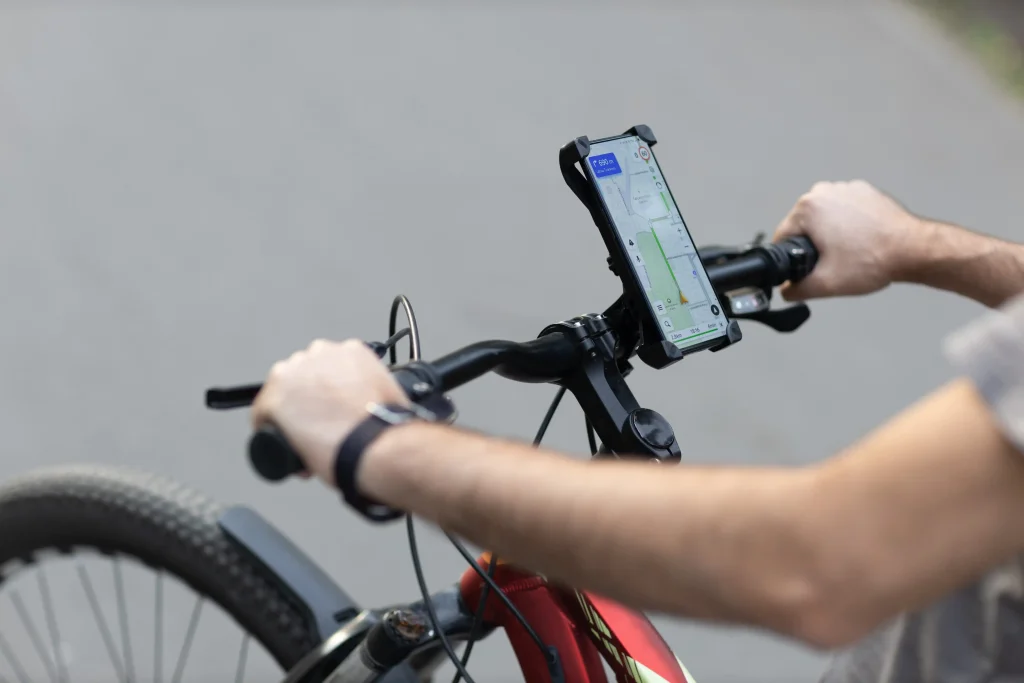
Here’s the mechanical reality: e-bikes generate a fundamentally different vibration profile than conventional bicycles or motorcycles. The motor assist system creates low-frequency resonance through the frame, layered on top of the standard road-surface vibration you’d expect. That combination — particularly in the 15–30 Hz range — is what fatigues plastic retention clips and loosens ball joints over time. A mount that passes a basic drop test can still fail catastrophically at 800km of road use if the polymer compound wasn’t selected with cyclic stress in mind.
So when you’re evaluating an electric bicycle mount supplier, the first question isn’t about price per unit. It’s this: what vibration test standard did you design to?
The answers you’ll hear vary wildly. Some factories reference MIL-STD-810 loosely (without specifying which method or duration). Others cite internal QC standards that amount to “we shook it and it seemed fine.” Neither is acceptable for a B2B buyer putting product in front of end customers. What you want to see is a documented test protocol — specific Hz range, amplitude in mm, test duration in hours, and the pass/fail threshold used. If a supplier can’t produce that on request, that tells you something.
Actual numbers to benchmark against:
- Vibration frequency range tested: 10–50 Hz minimum for e-bike applications
- Amplitude: ±1.5mm displacement at peak test frequency
- Duration: minimum 4 hours sustained per axis (X, Y, Z)
- Post-test jaw retention check: phone should not shift more than 0.3mm from original position
- Locking mechanism torque re-check: ball joint should retain ≥85% of initial locking force
And this is where supplier documentation depth actually matters. The kind of buyers who find value in resources like the Ultimate Guide: How to Choose the right mount supplier already understand that spec sheets are just the starting point — the real audit happens when you ask for test reports and the factory either produces them or stalls. Suppliers who have built export-oriented QC workflows, the type that come up when you look into how Shuowei Technology Participated in HK Global sourcing events, tend to have this documentation structured and ready because international buyers demanded it from them early.
One more thing worth flagging (and this gets missed constantly): vibration resistance specs should be verified at the mount-to-handlebar interface, not just the phone-to-mount interface. Both joints fail. Both need testing. A supplier who only tests one of them is giving you half a picture.
How Clamping Force and Jaw Width Get Misrepresented in Bulk Orders
Clamping force is where bulk orders go quietly wrong. Not catastrophically — you won’t get a single shipment where every unit is broken. It’s subtler than that. What actually happens is the spec sheet says “clamping range: 55–90mm” and a meaningful percentage of units in a large run clamp inconsistently across that range, usually at the wider end where spring tension is hardest to control in high-volume tooling.
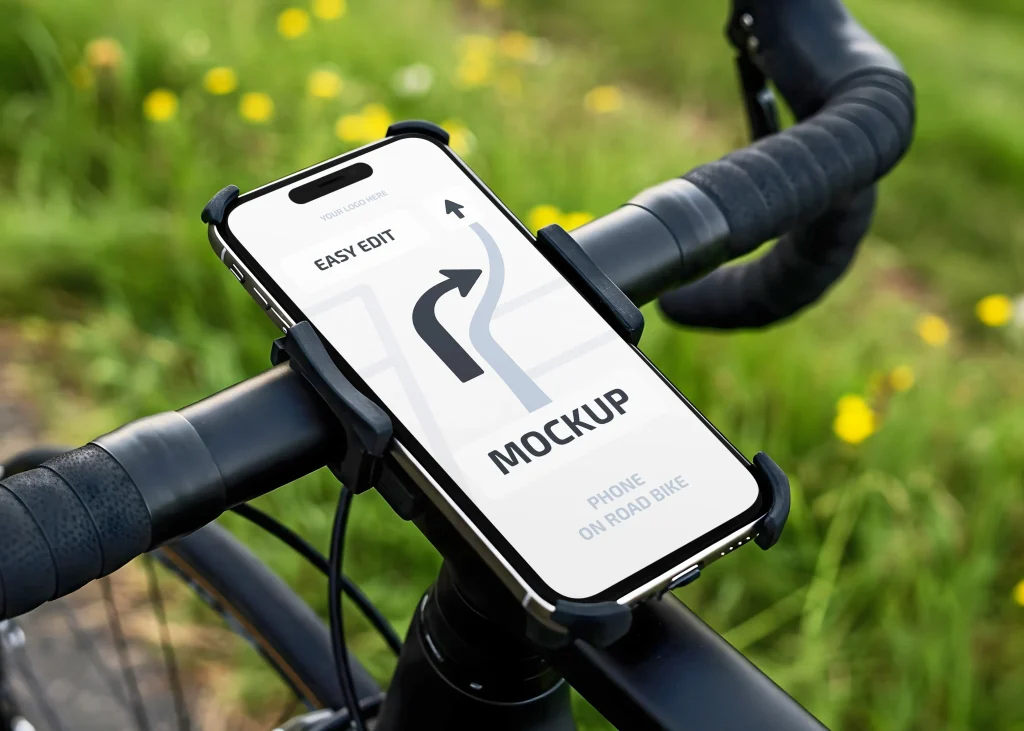
So here’s the misrepresentation pattern that shows up constantly in e-bike phone holder procurement: the supplier measures jaw width at the fully open static position, not under load. Those are two different numbers. An arm that opens to 90mm in free air might only reliably grip a 82mm device before the spring force drops below the threshold needed to hold through road vibration. Buyers who’ve worked through the Ultimate Guide: How to Choose the right mount supplier already know to ask for dynamic grip force measurements — but most don’t get them without pushing hard.
And jaw width variance between units in the same batch? That’s real. Tolerances of ±3–4mm across a 500-unit run aren’t unusual when a factory is running molds that have seen heavy use without maintenance. That kind of variance matters enormously for an electric bicycle mount application, where a phone sitting slightly off-center in a jaw can shift the center of gravity enough to cause clip-out on rough terrain.
The comparison problem is also worth naming directly (because buyers get burned by this more than anything else): suppliers who’ve participated in sourcing events — the kind of structured international exposure you see when Shuowei Technology Participated in HK Global sourcing fairs — tend to document clamping specs to export-grade standards because international buyers pushed for it early. Suppliers who haven’t been through that kind of scrutiny often don’t have the test data at all, just the number on a sheet.
What to ask for specifically:
- Grip force in Newtons at minimum and maximum jaw width, measured under load
- Unit-level jaw width tolerance documentation from the most recent production run
- Clamping retention test results after simulated vibration (not just static hold)
- Mold maintenance records if you’re ordering above 1,000 units
Blunt truth: a spec that looks fine on paper can hide 8–12% unit-level variance in practice. That’s not acceptable for any serious e-bike phone holder program.
The Material Grade Problem: What “Aluminum Alloy” Actually Means in Supplier Catalogs
“Aluminum alloy” means almost nothing. Seriously — it’s one of the most abused phrases in supplier catalogs, and for e-bike phone holder procurement specifically, it can be the difference between a product line that holds up at 40 km/h on rough terrain and one that develops micro-fractures after three months in the field.
Here’s the actual breakdown. Aluminum alloys are graded by series — 6061, 6063, 7075, and so on. A catalog that just says “aluminum alloy construction” without specifying the series is, bluntly, telling you nothing. 6063 is softer, easier to extrude, cheaper to process, and shows up constantly in decorative trim applications. 6061-T6 is what you want for structural load-bearing components in a vibrating mount environment. The difference in yield strength is roughly 276 MPa vs. 214 MPa — not trivial when you’re clamping a 250g phone to a handlebar that’s absorbing road shock continuously.
So when a supplier quotes you on an electric bicycle mount and the spec sheet just reads “high-quality aluminum alloy,” push back immediately. Ask for the alloy series, the temper designation, and — if you can get it — the material certification from their upstream supplier. Some manufacturers, particularly those who’ve participated in export-focused sourcing events (Shuowei Technology Participated in HK Global sourcing fairs, for instance, which tends to push suppliers toward tighter documentation standards), will have this on file. Many won’t.
The temper designation matters almost as much as the series. T6 means the alloy has been solution heat-treated and artificially aged — that’s what gives 6061 its structural integrity. T4 or unspecified temper from the same base alloy will be measurably weaker. Not catastrophically. But enough.
- Request alloy series and temper designation in writing before sampling
- Ask whether the alloy certification covers the full batch or just incoming raw stock
- Check whether the anodizing spec references wall thickness — thin anodize on soft alloy is a common cost-cut
- For orders above 500 units, request a material test report (MTR) from the supplier’s aluminum source
And if a supplier can’t produce any of that? That’s your answer right there.
Conclusion
The alloy series and temper designation aren’t just technical footnotes — they’re the difference between a mount that holds your phone through a pothole-riddled trail and one that fails you at the worst possible moment. For any e-bike phone holder you’re sourcing at volume, get that documentation in writing before you approve a sample. Full stop.
Suppliers who can’t produce a material test report or specify T6 temper aren’t necessarily cutting corners on purpose — but the end result is the same for your customer.
Push for the paperwork. It costs you nothing to ask, and it tells you everything you need to know about who you’re actually dealing with.
Frequently Asked Questions
Q: What size phone does an e-bike phone holder actually fit?
A: Most e-bike phone holders on the market are designed to clamp phones between 55mm and 100mm wide — which covers everything from a compact iPhone SE up to a large-screen Android like the Samsung Galaxy S25 Ultra. If you’re running a chunky case, measure your phone with the case on before you buy, because “universal” is doing a lot of heavy lifting on some of those product listings.
Q: How do I stop my phone from vibrating out of the mount on rough trails?
A: The real culprit is usually a mount with loose clamping tension or a handlebar attachment that’s under-torqued — so start there before blaming the product. Rubber-lined clamps and a secondary retention strap (some mounts include one, many don’t) make a significant difference on gravel or singletrack. Quad-lock style twist-lock systems genuinely outperform basic clamp designs on rough terrain — it’s not even close.
Q: Is an e-bike phone holder worth it if I already have a GPS unit?
A: Depends entirely on what you’re using your phone for on the ride. A dedicated GPS unit wins on battery and sunlight readability — but if you’re using your phone for Strava, music, or navigation apps that your GPS doesn’t run, a quality e-bike phone holder still earns its place on the bars. They’re not mutually exclusive.
Q: How much should I expect to pay for a decent e-bike phone holder?
A: Honestly, anything under $15 is a gamble — you’re likely getting thin alloy or straight-up plastic that won’t survive a season of real use. The $25–$50 range is where build quality starts getting serious, especially mounts with 6061-T6 aluminum construction. For premium systems like Quad Lock or SP Connect, budget $60–$90 once you factor in the phone case adapter.
Q: Can I use a regular bike phone mount on an e-bike?
A: You can, but e-bikes generate more vibration than acoustic bikes — particularly hub-motor and mid-drive setups under load — so a standard mount will wear faster and may not hold as securely. Look for an e-bike phone holder that specifically mentions vibration damping or anti-shake features; that language usually signals the manufacturer actually tested it under motor-assist conditions rather than just slapping a new label on an existing product.
Q: Why does my phone screen keep going dark when it’s mounted on my e-bike?
A: That’s your phone’s auto-lock kicking in — nothing to do with the mount itself. Go into your display settings and extend the screen timeout, or enable “Keep screen on while charging” if you’re running a mount with a built-in USB-C or wireless charging port. Some riders just enable the navigation app’s screen-awake override and let that handle it.
Q: How long does an e-bike phone holder last before it needs replacing?
A: A well-made aluminum mount — proper alloy, not mystery metal — should last several years of regular use without structural issues. The parts that actually wear out are the rubber grips and the clamping mechanism; those can degrade in 12–18 months depending on UV exposure and how often you’re mounting and dismounting. Sourcing from suppliers who document their material specs (6061-T6 temper, for instance) is the fastest way to filter out mounts that’ll disappoint you by month six.
Q: What handlebar diameter does an e-bike phone holder fit?
A: Most mounts are designed for 22mm or 25.4mm bars — the two most common sizes on e-bikes — and many include a shim adapter to cover both. Fat-bar setups at 31.8mm are increasingly common on e-MTBs, so double-check the spec sheet before ordering, especially if you’re buying in bulk for resale and your customers are on performance builds.