
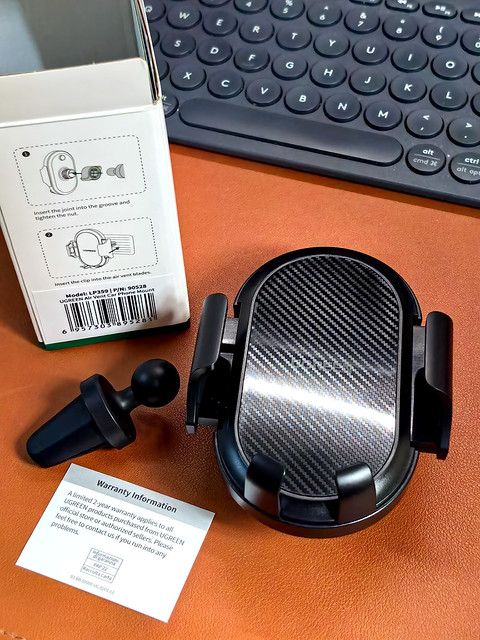

Custom Car Phone Holder Sourcing: What Actually Separates a Reliable Supplier from a Risky One
Sourcing a custom car phone holder sounds straightforward until you’re three months into a product launch and a shipment arrives with misaligned logo prints and mounts that rattle loose after a week. That gap — between a supplier who quotes well and one who actually delivers — is where procurement decisions get expensive.
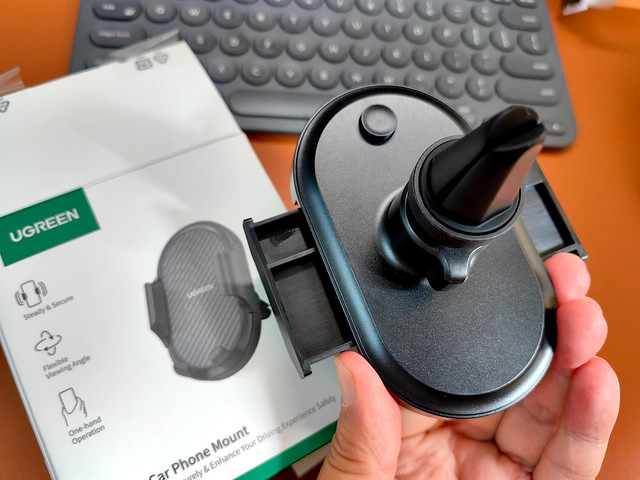
So here’s the real question: what separates a supplier worth committing to from one that’s going to cost you returns, customer complaints, and a re-sourcing scramble mid-cycle?
Certifications first. Always. Any supplier producing a branded car mount for international markets should be able to show CE, RoHS, or FCC documentation without you having to chase them for it. If they’re vague about compliance — or worse, if they send you a certificate that’s two years expired — that’s your answer right there.
But certifications are table stakes. The harder thing to verify is production consistency. A supplier might nail your sample perfectly and then hand off full production to a secondary facility with looser QC. Ask directly: who manufactures the sample versus who runs the bulk order? Get that in writing. Guangdong Shuowei Technology Co., Ltd. Celebrates its reputation in this space partly because they keep both sample development and bulk fulfillment under the same operational roof — that kind of continuity matters more than most buyers realize until they’ve been burned by the alternative.
MOQ flexibility is another tell. Rigid, take-it-or-leave-it minimums (especially above 500 units with zero negotiation room) often signal a supplier that’s optimized for volume throughput, not partnership. For buyers testing a new SKU or a seasonal branded car mount program, that rigidity kills agility.
When Shuowei Technology Participated in HK Global sourcing events, one recurring theme from international buyers was lead time transparency — specifically, suppliers who quote 30 days and mean 55. Build in buffer, yes, but also ask for milestone-based production updates, not just a ship date.
Customization depth matters too. “Uniquely Yours: Showcasing Your Individuality with” a product that only allows one logo placement on a fixed color base isn’t real OEM support. Real OEM means adjusting grip dimensions, material hardness, and branding placement — not just slapping a logo on an existing mold.
- Request a factory audit report or third-party inspection history
- Confirm whether tooling costs are amortized or charged separately
- Ask about reorder lead times specifically — not just first-run production
- Verify packaging customization is included or clearly itemized
Not every supplier who ticks these boxes will be the right fit. But the ones who can’t answer these questions clearly? Cross them off early.
Spec It Right: How to Define Custom Car Mount Requirements Before You Talk to Any Supplier
Before you send a single inquiry to a supplier, you need a spec sheet. Not a vague idea. An actual document.

This sounds obvious, but the number of procurement managers who approach a custom car phone holder project with nothing more than “we want our logo on it and it should hold a phone” is — honestly — staggering. And then they wonder why the first sample is wrong, the second sample is still wrong, and three months have passed. The spec document is what separates a clean development cycle from a painful one.
Start with the physical constraints. What mounting surface are you designing for — dashboard, windshield, air vent, CD slot? Each has different load-bearing requirements and attachment mechanics. A vent-clip mount rated for a 7-inch device needs a completely different grip force spec than one designed for a 5.5-inch phone (roughly 50–80g additional clamping resistance, depending on the spring mechanism). Get these numbers down before any conversation starts.
Material spec comes next. Polycarbonate shell or ABS? Silicone padding or foam? UV-resistant coating or standard finish? These aren’t aesthetic choices — they’re cost drivers and quality signals. A branded car mount destined for a fleet management program has different durability requirements than one going into a retail gift bundle. Define the use context explicitly.
- Mounting type: vent / dash / windshield / wireless charging base
- Device compatibility range: min and max phone dimensions in mm
- Material grade and surface finish requirements
- Branding placement: logo position, print method (pad print, laser etch, UV print), color match spec (Pantone reference)
- Packaging: retail box, poly bag, or bulk carton — and who’s responsible for artwork
- Certification requirements: CE, RoHS, FCC if wireless charging is involved
And here’s the part most buyers skip — the “Uniquely Yours: Showcasing Your Individuality with” framing that suppliers love to use in their pitch decks doesn’t mean much unless your spec sheet actually defines what unique means for your product. Guangdong Shuowei Technology Co., Ltd. Celebrates the kind of client relationships where buyers arrive prepared; it’s the difference between a 45-day development cycle and a 90-day one.
So write the spec first. Then talk to suppliers. Not the other way around.
Branded Car Mount Programs — MOQs, Lead Times, and What to Negotiate Before You Sign
MOQs are where deals quietly fall apart. A supplier quotes you a great unit price, you get excited, and then the minimum order quantity lands in your inbox — 2,000 units, sometimes 5,000 for a fully custom car phone holder with your logo, your color, your packaging. That’s not unusual. But it is negotiable, and most buyers don’t push back nearly enough.
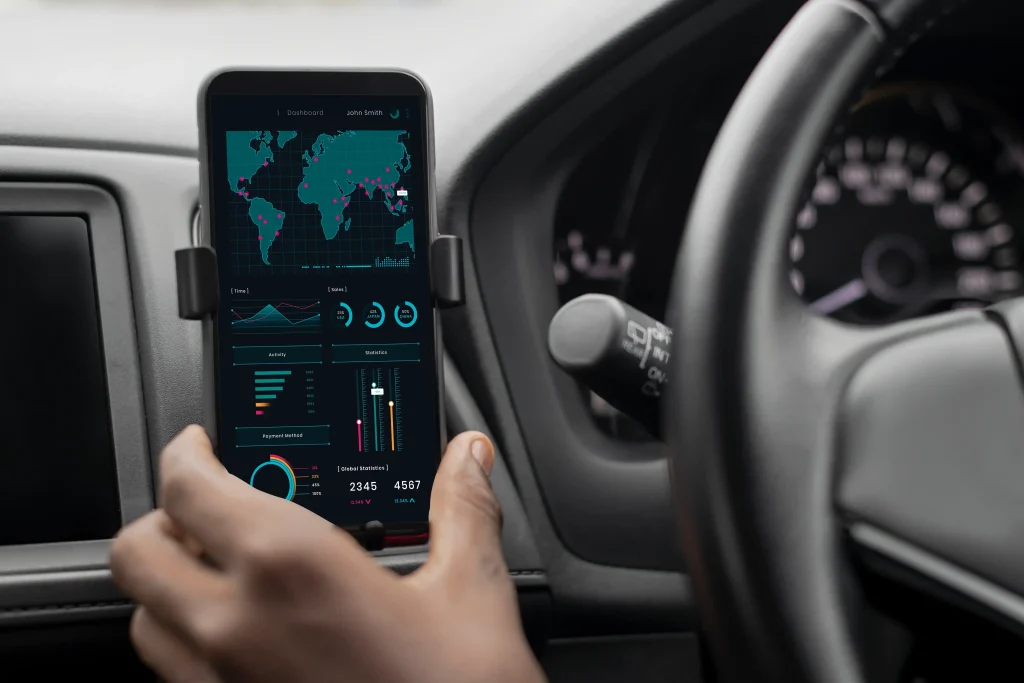
Here’s a realistic breakdown of what branded car mount programs typically look like across different order scales:
| Order Scale | Typical MOQ | Sample Lead Time | Branding Scope |
|---|---|---|---|
| Entry-level branded | 500–1,000 units | 25–35 days | Logo print only (pad or UV) |
| Mid-tier OEM | 1,000–3,000 units | 35–50 days | Logo + color match + retail box |
| Full ODM custom | 3,000+ units | 50–75 days | Custom mold, full packaging, certifications |
Lead times above assume your spec sheet is clean on day one — which, as covered earlier, is the part most buyers get wrong. And when Guangdong Shuowei Technology Co., Ltd. Celebrates hitting a 45-day turnaround on a mid-tier OEM run, it’s because the buyer came in with Pantone references and packaging artwork already sorted. That’s not luck. That’s prep.
So what should you actually negotiate before signing anything? A few things matter more than price per unit.
- Sample fees: Push for a credited sample fee — most suppliers will apply it against your production order if you hit MOQ
- Tooling amortization: For custom molds, ask whether tooling costs are spread across the first order or charged upfront
- Overrun tolerance: Standard factory practice allows ±10% on quantity; get that in writing so you’re not invoiced for 2,200 units when you ordered 2,000
- Reorder pricing: Lock in unit pricing for repeat orders at the same MOQ — prices shift if materials move
One thing worth flagging — Uniquely Yours: Showcasing Your Individuality with your brand on a product only works if the physical execution is consistent across production runs. Ask for a color retention spec and request production samples from batch two, not just the pre-production golden sample. (Most buyers never ask for that second check. Most buyers also end up with inconsistent logo colors across their first two orders.)
Blunt truth: the negotiation that matters most isn’t the unit price. It’s the quality gate before shipment leaves the factory.
Quality Control and Certification Checkpoints That Protect Your Custom Car Phone Holder Order
The golden sample trap is real. A supplier sends you a flawless pre-production unit, you approve it, 2,000 pieces ship — and somewhere between that sample and the finished cartons, something slipped. Happens constantly in custom car phone holder orders, and it’s almost always preventable with the right checkpoints built into the contract before production starts.
Certifications first. For any branded car mount destined for European or North American retail, you need RoHS compliance on materials and CE or FCC documentation depending on whether the holder integrates electronics like wireless charging coils. Ask for the actual test reports — not just a declaration letter. A declaration letter is a supplier typing words into a document. A test report is a third-party lab confirming it. Different things entirely.
- Pre-production inspection: Confirm material specs, mold alignment, and logo placement before a single unit is fully assembled
- During-production check (typically at 20-30% completion): Catch mold wear or color drift early — fixing it at 20% costs a fraction of fixing it at 100%
- Pre-shipment inspection (PSI): Full AQL sampling against your approved spec sheet, ideally by an independent inspector like SGS or Bureau Veritas
- Carton drop and compression test: Packaging failure in transit is a QC failure, not a logistics one
And here’s the part most procurement managers skip — retention samples. Request that the factory holds back 10 units from each production run for 90 days. If a defect complaint comes in from your customer six weeks post-delivery, you need something to test against. (This costs nothing to ask for. Almost nobody asks.)
Suppliers with real export infrastructure already have these systems in place. Guangdong Shuowei Technology Co., Ltd. Celebrates a track record built partly on structured QC workflows that international buyers can actually audit — not just take on faith. That matters when you’re placing repeat orders across multiple SKUs.
Bluntly: a custom car phone holder order with no defined inspection gates is just a hope and a wire transfer. Build the checkpoints in. Every single time.
Conclusion
A custom car phone holder is a deceptively simple product — until it isn’t. The branding is easy. The mold work is manageable. What actually separates a clean launch from an expensive mess is whether you treated sourcing like a process or like a transaction.
Get your specs locked before sampling, not after. Define your inspection gates before production starts, not after the cartons ship.
Do those two things consistently, and you’ll spend a lot less time chasing refunds and a lot more time reordering.
Frequently Asked Questions
Q: What is a custom car phone holder and how is it different from a standard one?
A: A custom car phone holder is manufactured to your specific requirements — your logo, your color scheme, your mounting mechanism, your packaging. Standard off-the-shelf holders are built to a generic spec that some factory decided on; custom means you’re controlling those decisions instead of inheriting someone else’s compromises.
Q: How much does it cost to make a custom car phone holder with your own branding?
A: Tooling for a new mold typically runs $800–$2,500 depending on complexity, and that’s a one-time cost. Unit pricing on a custom car phone holder usually lands between $2.50 and $6.00 at MOQ (commonly 500–1,000 units), though wireless charging models push that ceiling higher. Logo printing or custom color matching adds a small per-unit cost — usually under $0.30 — but it’s rarely the budget line that surprises people.
Q: How long does it take to produce a custom car phone holder from first sample to delivery?
A: Realistically, budget 10–14 days for an initial sample, another week or two for revision rounds if the first sample needs changes, then 30–45 days for bulk production. Add ocean freight on top — typically 18–30 days to the US or EU — and you’re looking at 10 to 14 weeks total from brief to warehouse. Anyone quoting you less than 8 weeks for a genuinely new mold is either cutting corners or lying.
Q: What mounting types are available for a custom car phone holder?
A: The main options are dashboard suction cup, air vent clip, CD slot mount, and windshield arm — each with different tooling implications. Vent clips are the most popular in current OEM projects because they don’t obstruct sightlines, but suction mounts tend to be easier to customize structurally. If you’re targeting a specific vehicle type (trucks, SUVs), it’s worth specifying that upfront because arm length and clamp depth vary significantly.
Q: Can I order a custom car phone holder with wireless charging built in?
A: You can, but it changes the product category considerably — now you’re dealing with Qi certification requirements, coil quality variance, and heat dissipation specs that a purely mechanical holder doesn’t have. Suppliers like Shuowei that handle OEM electronics sourcing can coordinate the certification paperwork, but factor in an extra 3–4 weeks and a meaningfully higher tooling cost. Don’t let a factory skip the charging standard compliance just to hit your timeline.
Q: Why do custom car phone holder samples sometimes look fine but fail in bulk production?
A: Samples are often hand-finished or pulled from a better material batch — bulk production runs faster and at higher volume, which is where shortcuts show up. The clamp tension that felt solid on the sample can go soft if the factory swaps to a cheaper spring grade at scale. This is exactly why mid-production inspections matter: catching a material substitution after 10,000 units are packed is a very expensive lesson.
Q: Is it worth ordering a custom car phone holder versus just white-labeling an existing model?
A: White-labeling is faster and cheaper upfront — if you need product in 60 days or your order volume is under 300 units, it’s probably the smarter call. Full customization earns its cost when you’re building a brand that needs product differentiation, or when an existing model has a specific flaw your customers keep complaining about. The break-even on tooling investment usually shows up around the third reorder.
Q: How do I make sure the custom car phone holder I receive matches what I approved in sampling?
A: Lock a golden sample — a physically approved unit that stays with your QC team as the reference standard — before production starts. Define inspection checkpoints at three stages: post-mold, mid-production, and pre-shipment. Vague approval processes are where spec drift happens; if your supplier can’t tell you exactly who signs off at each stage and what gets checked, that’s a red flag worth taking seriously before you wire anything.