
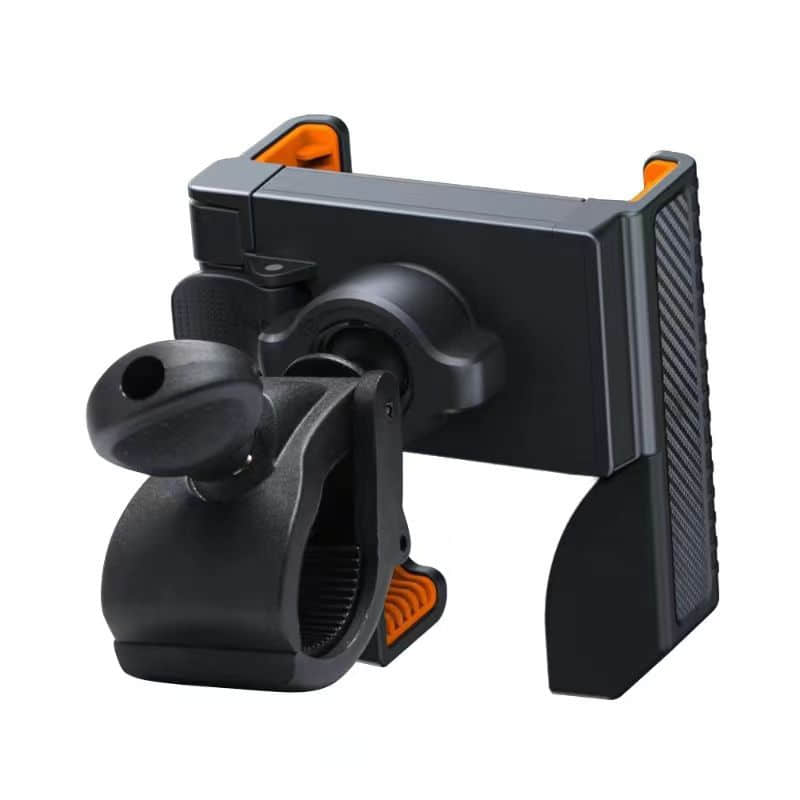

What Actually Determines Bicycle Phone Holder Durability (And Why Buyers Keep Getting It Wrong)
Procurement teams evaluating a sturdy bicycle mount for the first time tend to focus on the obvious: clamp diameter, maximum load rating, maybe a few photos of the finished product. What gets overlooked — consistently — are the structural decisions made much earlier in the supply chain, before the unit ever reaches a warehouse or a retail shelf. Those decisions are what actually determine whether a product holds up across thousands of use cycles or fails at the hinge after six months in the field.
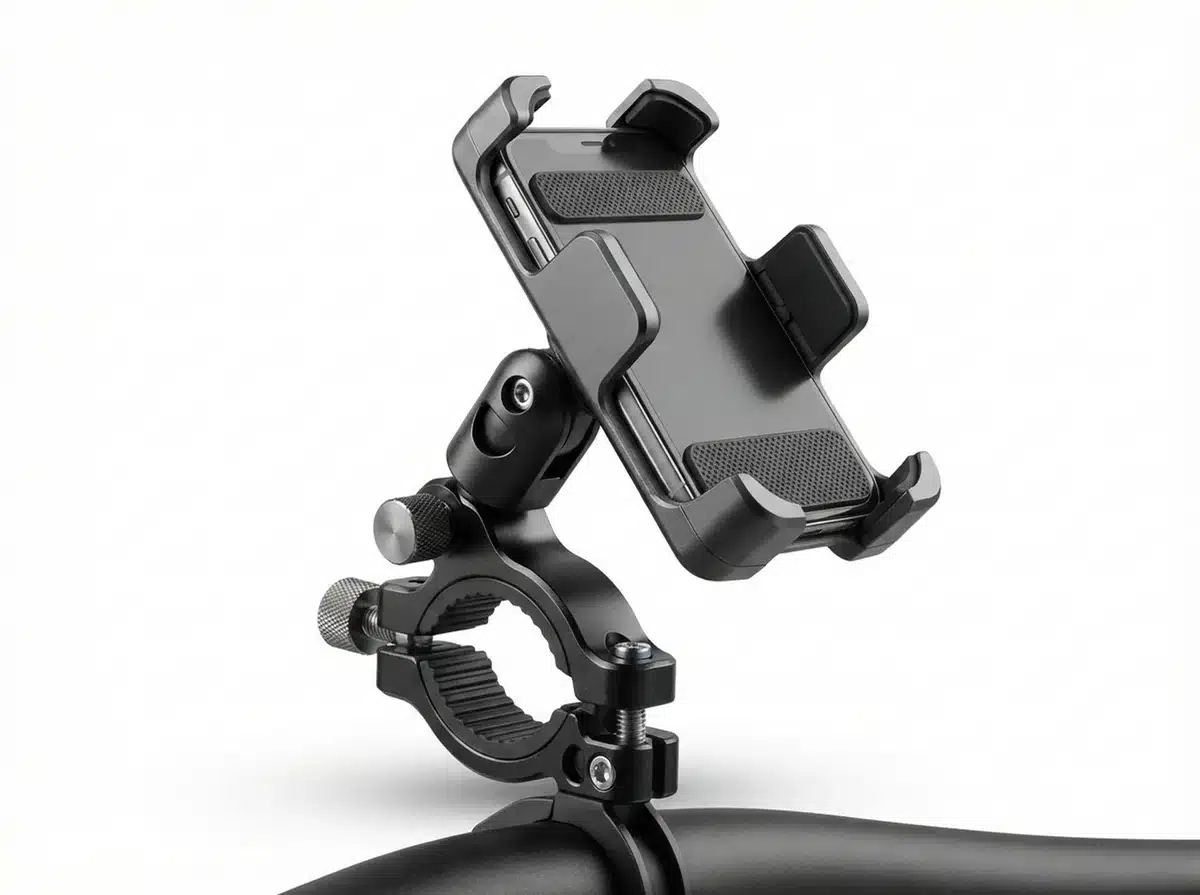
Material selection is the first place things go wrong. Die-cast zinc alloy and glass-fiber reinforced nylon are not interchangeable, even when a spec sheet lists similar tensile ratings. Zinc alloy resists deformation under sustained clamping pressure; reinforced nylon absorbs vibration more effectively but can creep under prolonged UV exposure. Neither is universally superior — the application environment dictates which is appropriate. A supplier who can’t articulate that trade-off clearly is worth questioning.
Then there’s the fastening system. Bike holder durability in real-world conditions has less to do with the body material than with how the mount interfaces with the handlebar and how that interface is secured. Rubber gaskets, torque-rated bolts, and anti-rotation tabs are small details that rarely appear in a product brief — but their absence shows up in field returns. Buyers sourcing at volume should request assembly cross-sections or tolerance documentation, not just finished product photography.
| Failure Point | Common Cause | What to Check at Sourcing Stage |
|---|---|---|
| Clamp slippage | Insufficient rubber lining or undertorqued hardware | Ask for gasket material spec and bolt torque rating |
| Hinge cracking | Thin wall sections in injection-molded components | Request wall thickness specs at stress points |
| Corrosion at joints | Mixed metals without galvanic isolation | Confirm hardware and bracket material compatibility |
| UV degradation | No UV stabilizer in polymer formulation | Verify UV resistance additive in material datasheet |
Suppliers with genuine OEM/ODM capability — the kind that manage customized specifications rather than just repackaging stock SKUs — tend to have answers to these questions on hand. That transparency is itself a signal. When a manufacturer can walk a buyer through wall thickness tolerances or explain their quality control protocol at the injection stage, the conversation about sturdy bicycle mount performance becomes grounded in something verifiable, not just marketing copy.
Material Grade vs. Marketing Claims: Reading Between the Lines
Marketing language in the bicycle mount category has a well-worn playbook: “aircraft-grade aluminum,” “military-spec hardware,” “premium alloy construction.” These phrases circulate across product listings and supplier catalogs with enough frequency that they’ve lost most of their meaning — and for procurement managers sourcing at volume, that ambiguity carries real commercial risk.
The gap between a claim and a verifiable specification is where buyer exposure lives. “Aircraft-grade aluminum” is not a single material — it spans multiple alloy series with significantly different tensile strength, corrosion resistance, and machinability profiles. A bracket built from one alloy and a bracket built from another may look identical in a product photo, yet perform very differently under sustained load or outdoor exposure. The same logic applies to steel: “high-strength steel” without a grade reference tells a procurement team almost nothing actionable.
What actually matters — and what separates a defensible purchase decision from a gamble — is whether a supplier can produce material datasheets, hardness ratings, or third-party test reports on request. For a sturdy bicycle mount, the minimum useful documentation typically includes:
- Alloy designation or steel grade (e.g., series number or EN/ASTM standard reference)
- Tensile and yield strength figures relevant to the mount’s load-bearing geometry
- Surface treatment specification — anodizing thickness, coating adhesion class, or plating standard
- Salt spray or corrosion resistance test results, particularly for mounts destined for outdoor or maritime markets
Bike holder durability is ultimately a material traceability question as much as a design one. A bracket that passes visual inspection at the factory gate can still underperform in the field if the base material was substituted mid-production run — a known risk in high-volume OEM environments where cost pressure is constant.
Suppliers with genuine specification control tend to flag these distinctions proactively rather than waiting to be asked. When a manufacturer can reference a specific alloy grade in conversation, tie surface treatment to an expected service life, and back both claims with test documentation, that’s a procurement signal worth taking seriously. Vague material language, by contrast, rarely improves under scrutiny.
Vibration Resistance and Clamping Force: The Two Tests That Matter Most
Two performance criteria separate a genuinely sturdy bicycle mount from one that merely looks the part on a spec sheet: how it handles sustained vibration, and whether its clamping force holds across real operating conditions. Both are measurable. Both are regularly under-tested in supplier qualification processes — and that gap is where field failures tend to originate.

Vibration resistance matters because bike mounts don’t operate in static environments. Fleet applications, bike-share deployments, cargo configurations — all of them expose a bracket to continuous low-frequency vibration that gradually works fasteners loose, fatigues joint interfaces, and degrades clamping geometry over time. The relevant question for procurement isn’t whether a mount passed a factory drop test. It’s whether the supplier has conducted cyclic vibration testing that simulates actual use-case frequencies, and whether that data is documented and available on request.
Clamping force is the second axis. A mount that exerts insufficient or uneven clamping pressure creates micro-movement at the contact point — which accelerates wear on both the bracket and the frame or rail it’s attached to. Too much force, applied through a poorly calibrated mechanism, risks surface damage or deformation. The specification window is narrower than it looks, and it varies by tube diameter, frame material, and mounting orientation. Suppliers who offer adjustable clamping configurations with defined torque ranges are worth prioritizing over those quoting a single generic figure.
For procurement teams assessing bike holder durability at the supplier level, the most useful approach is to request vibration test reports and clamping load documentation as part of the initial qualification package — not as an afterthought. If a manufacturer can’t produce these, or offers only internal reports without third-party verification, that’s a specification gap that won’t resolve itself after an order is placed.
- Ask for cyclic vibration test data referenced to a recognized standard, not just pass/fail results
- Confirm clamping force specifications are stated per tube diameter range, not as a single blanket figure
- Request sample units for independent load testing before committing to volume production
- Verify that test conditions in the documentation reflect your end-use environment, not a controlled lab optimum
Suppliers with genuine engineering depth — the kind that can walk through test methodology rather than just email a certificate — tend to be the ones whose products hold up when conditions in the field diverge from the spec sheet ideal.
Bike Holder Durability Under Real-World Stress: What the Testing Process Should Look Like
Durability claims on a spec sheet are easy to make. What separates a genuinely sturdy bicycle mount from one that fails six months into a deployment is whether the supplier can show you a structured, repeatable testing process — not just a certificate issued at the end of it.
Bike holder durability testing should cover at minimum three stress categories: mechanical load under static conditions, fatigue under repeated dynamic cycling, and environmental degradation over time. Each tells a different story. A mount that holds 10kg without flex in a static pull test may still develop micro-fractures in the clamping collar after 50,000 vibration cycles — and that failure mode only shows up if the supplier is actually running cyclic fatigue protocols, not just a one-time load check.
Environmental conditioning matters more than buyers typically weight it at the sourcing stage. UV exposure, salt spray, and thermal cycling affect polymer components and plated metal hardware differently, and a mount specified for outdoor fleet use needs documented resistance across all three. Ask specifically whether the supplier tests finished assemblies or only raw material samples — the distinction is significant, because adhesive bonds, fastener coatings, and overmolded components introduce failure points that material-level data won’t capture.
- Request test reports showing load-to-failure values, not just confirmation that a unit passed a minimum threshold
- Confirm that vibration test frequencies reflect the actual use environment — road surface profiles differ from off-road or cargo-carrying applications
- Ask whether thermal cycling tests cover the temperature range your end-use geography requires
- Verify that environmental tests were conducted on production-equivalent samples, not pre-production prototypes
Suppliers with serious manufacturing infrastructure — the type that handles OEM programs for multiple international markets — tend to maintain in-house test rigs rather than relying entirely on third-party lab visits. That in-house capability means faster iteration when a design change is needed and more transparent access to raw test data during supplier qualification. It’s the difference between a partner who can explain why a component survived a test and one who can only confirm that it did.
Conclusion
A sturdy bicycle mount lives or dies on what happens before it ever ships — the material spec, the weld quality, the test data behind the claim. Shiny certifications mean nothing if the supplier can’t tell you what load the component actually failed at, or whether the vibration profile they tested against has anything to do with your roads.
So ask harder questions during qualification. Not “did it pass?” but “what did the raw numbers look like?” Suppliers who can answer that without hesitation are the ones worth building a supply relationship with.
The hardware is almost secondary at that point. Get the process right, and the product tends to follow.
Frequently Asked Questions
Q: What makes a bicycle mount “sturdy” — and how do I actually verify that before buying?
A: A sturdy bicycle mount earns that label through material grade, weld or bond quality, and documented load testing — not through marketing copy. Ask the supplier for the actual failure load from their test data, not just a pass/fail certification result. The difference between a mount that holds and one that doesn’t usually shows up in those raw numbers, not on the product page.
Q: How much weight can a sturdy bicycle mount typically handle?
A: Load capacity varies widely depending on the application — phone mounts, cargo racks, and camera brackets are all different animals — but a well-engineered sturdy bicycle mount for everyday accessories typically handles anywhere from 1 to 5 kg before dynamic stress (road vibration, sudden braking) starts to matter. Static load ratings tell only part of the story; the vibration fatigue spec is what separates durable mounts from ones that crack after a few hundred kilometers.
Q: Why does my bicycle mount keep loosening on rough roads?
A: Vibration works like a slow-motion impact on any fastener — and if the mount wasn’t designed with a locking mechanism (nylon-insert nuts, thread-locking compound, or a ratchet clamp), it will back out over time. The fix isn’t always tightening harder; over-torquing on aluminum handlebars can damage the bar before it solves the loosening problem. Look for mounts with anti-vibration design features built in rather than relying on friction alone.
Q: Is it worth paying more for a sturdy bicycle mount, or are budget options just as good?
A: Budget mounts often cut corners on the alloy grade or skip vibration testing entirely — which is fine until you’re on a gravel descent and your phone hits the road at 30 km/h. A properly spec’d sturdy bicycle mount costs more upfront because the material and process controls behind it cost more to run. For low-stakes use on smooth pavement, a cheaper option might genuinely be fine; for anything involving rough terrain or carrying valuable equipment, the price gap is worth it.
Q: How do I choose the right clamp diameter for a bicycle mount?
A: Handlebar diameters aren’t standardized the way you’d hope — common sizes include 22.2 mm (standard), 25.4 mm (older MTB), and 31.8 mm (modern oversized). Measure your bar before ordering, because a mount clamped to the wrong diameter will either strip the hardware or — worse — feel secure until it isn’t. Many quality mounts ship with shim adapters to cover multiple sizes, which is worth checking for in the product spec.
Q: Can I use a sturdy bicycle mount on an e-bike without damaging the handlebars?
A: E-bike bars see more sustained vibration from the motor drivetrain, so the torque spec on your clamp matters more than it would on a standard bike. A sturdy bicycle mount designed for e-bike use will typically specify a maximum torque value — follow it, especially on carbon or alloy bars where over-clamping causes invisible micro-damage that shows up later as a crack. If the mount spec sheet doesn’t mention e-bike compatibility, that’s a question worth asking the supplier directly.
Q: How long should a quality bicycle mount last before needing replacement?
A: A well-made mount — proper alloy, correct surface treatment, no stress-concentration design flaws — should outlast most of the bikes it gets mounted to under normal conditions. The weak points are typically the fasteners (which can corrode) and any rubber or silicone padding (which degrades with UV exposure over a few seasons). Inspect the clamp hardware annually; the mount body itself rarely fails before the consumable components around it do.
Q: What certifications should I look for when sourcing a sturdy bicycle mount from overseas suppliers?
A: CE marking covers basic safety and material compliance for the European market; CPSC guidelines apply for U.S.-bound products. But certifications are a floor, not a ceiling — a sturdy bicycle mount supplier worth working with can tell you what test standard they used, what the actual load profile looked like, and whether the certification was product-specific or applied to a broader component family. Suppliers who can answer those questions without hesitation (the kind of detail-oriented approach that separates strong B2B partners from catalog-flippers) are generally the ones running tighter quality control across the board.