
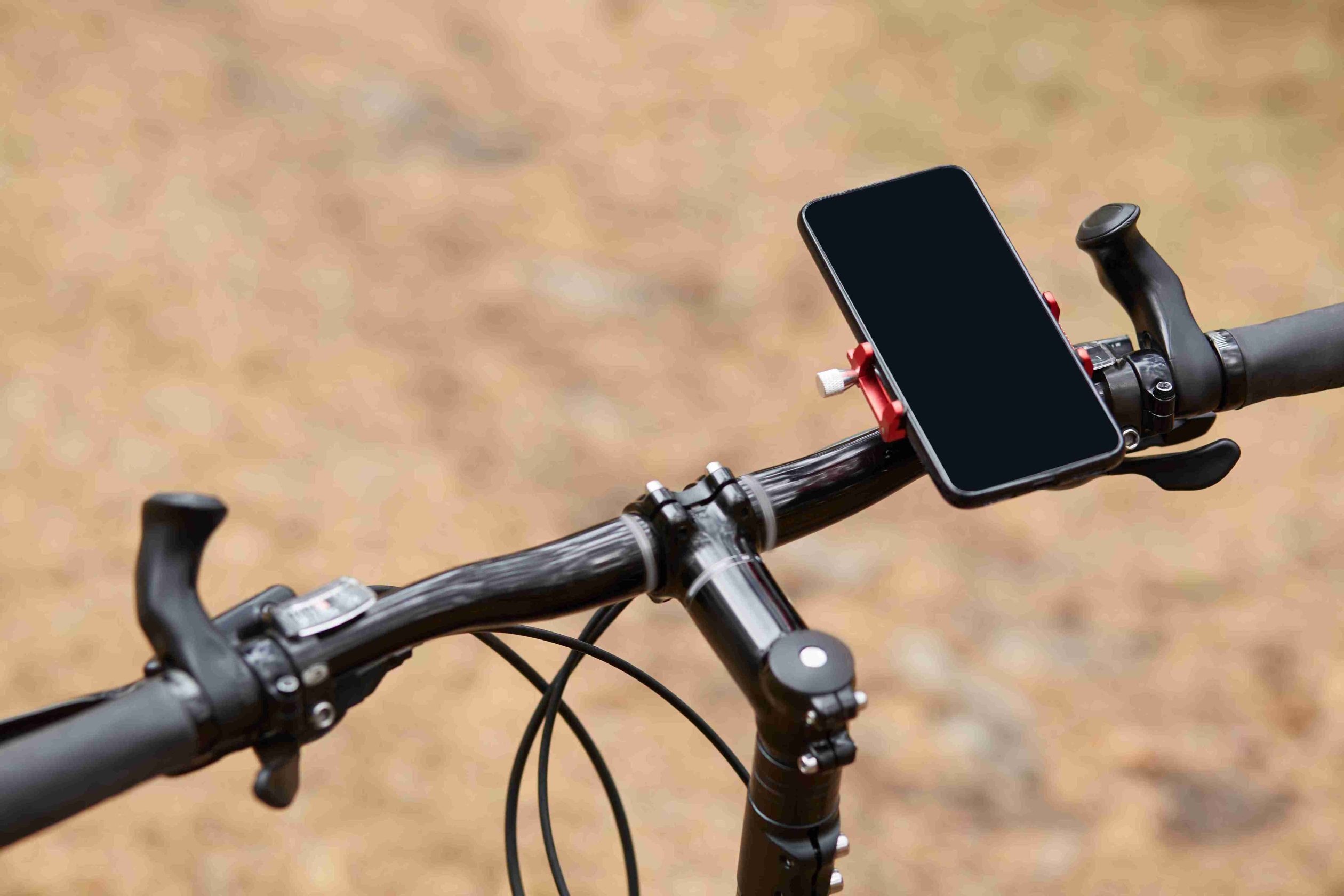

Why Bike Phone Holders Fail (And What’s Actually Going Wrong)
Most bike phone holders don’t fail because they’re cheap. They fail because the design assumptions behind them are wrong from the start.
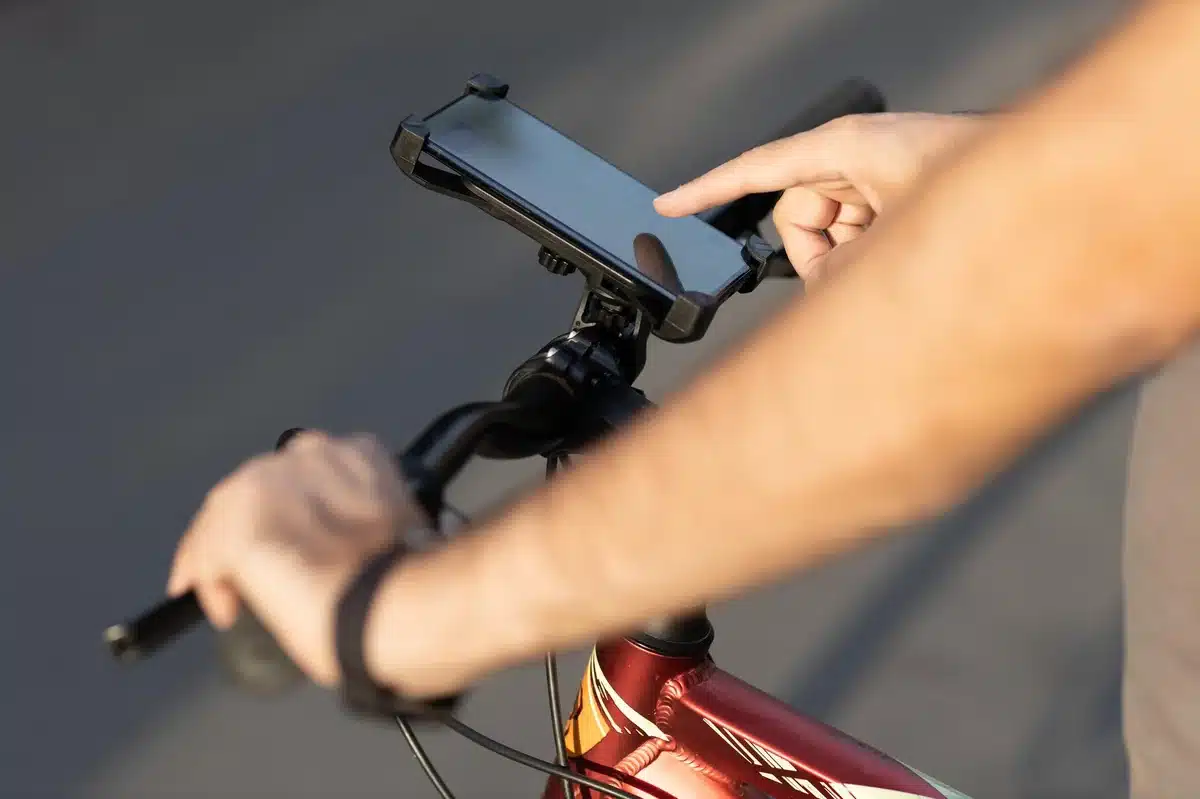
Think about what’s actually happening when you mount your phone on a handlebar: you’ve got road vibration traveling up through the fork, wind drag hitting a flat glass surface, and a pivot point — the mount itself — that’s absorbing all of that stress continuously. A $12 plastic clip that works fine on your kitchen counter is not built for that environment. And yet buyers keep being surprised when their phone rattles loose on a gravel path or a pothole-heavy city street.
The failure modes break down pretty consistently:
- Grip arms that lose tension over time — rubber degrades, plastic fatigues, and what held a phone at 180g eventually can’t hold it at all
- Ball-joint mounts that slip under vibration, rotating the phone into a useless angle mid-ride
- Handlebar clamps that fit 22mm bars fine but wobble badly on 31.8mm or tapered carbon bars
- Adhesive or set-screw bases that weren’t torqued correctly at installation — this one’s user error, but it’s common
So the real question isn’t “which holder looks good” — it’s whether the design actually accounts for dynamic load, not just static weight.
There’s a reason events like the one where Shuowei Technology Participated in HK Global sourcing expos draw serious attention from B2B buyers: international procurement teams are specifically hunting for manufacturers who understand engineering tolerances, not just aesthetics. When you’re sourcing at volume, a grip arm that fails at 500 units is a disaster.
Riders shopping retail, meanwhile, often stumble into the same traps the Ultimate Guide: How to Choose the right mount tries to address — bar diameter compatibility, phone weight limits, UV resistance on the rubber. These aren’t glamorous specs. But they’re exactly what separates a holder that lasts two seasons from one that ends up in a drawer after three weeks.
Material choice matters more than most listings admit. Polycarbonate versus ABS versus TPU — each behaves differently at 40°C on a sun-baked stem. Not interchangeable. Not even close.
The Most Common Bike Phone Mount Failures and How to Spot Them Early
Failure rarely announces itself. That’s the frustrating part — a bike phone holder doesn’t usually snap dramatically on day one. It degrades quietly, and by the time you notice, your phone is already at risk.
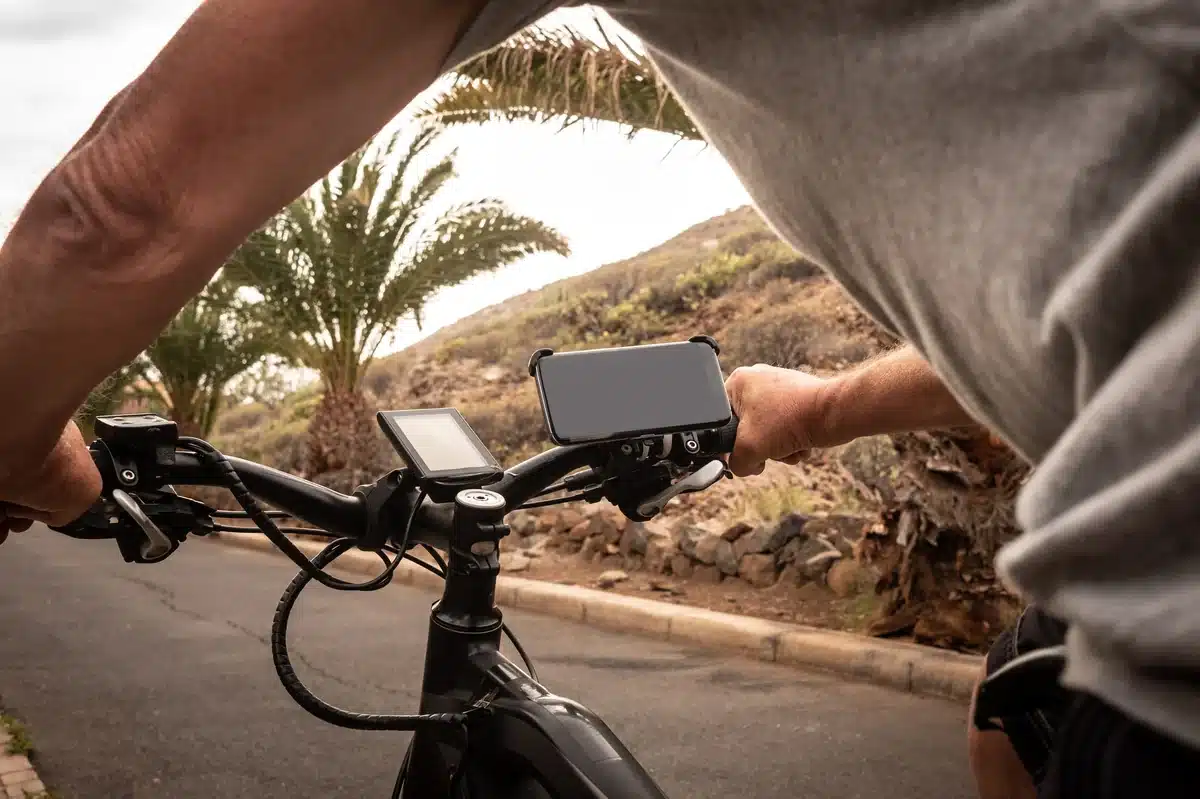
The earliest warning sign is almost always grip slippage under vibration. Not a full drop — just a millimeter or two of creep over a 20-minute ride. If the phone’s position is shifting at all, the clamping tension has already started to give. On mounts with rubber-padded arms, check the rubber first: dried-out, cracked, or flattened pads mean the material has lost its compression memory, and no amount of re-tightening will fix that permanently.
Rotation at the base clamp is the second red flag. Most riders chalk it up to loose installation. Sometimes it is. But if the mount rotates even after you’ve re-torqued the stem clamp to spec — usually 3–5 Nm for aluminum bars — the internal thread or locking collar is worn. That’s a structural issue, not a setup issue.
- Stress whitening around the grip arm pivot points (polycarbonate shows this first)
- Audible rattling with no visible loose hardware — often means internal detent wear
- UV-related discoloration on any TPU components (yellowing accelerates material brittleness)
- Micro-cracks near screw holes — especially on ABS mounts after a cold winter season
And here’s something procurement teams catch that retail buyers often miss entirely. When sourcing at volume — the kind of scale where Shuowei Technology Participated in HK Global sourcing events to connect with international buyers — early failure patterns often trace back to single-cavity tooling shortcuts, not design flaws. Inconsistent wall thickness. That’s it. Invisible to the eye, catastrophic under load.
Retail guides like Finding the Perfect Phone Holder: Essential specs checklists tend to focus on compatibility. Fair. But compatibility means nothing if the mount is already fatiguing by unit 200.
So check your mount before every long ride. Thirty seconds. Worth it.
How to Prevent Your Bike Phone Holder From Slipping, Cracking, or Dropping Your Device
Slippage is almost always a fixable problem — and almost always caused by something the rider could have caught in under a minute. The mount didn’t fail catastrophically. It just loosened over 40 kilometers of road vibration, and nobody noticed until the phone hit the tarmac.
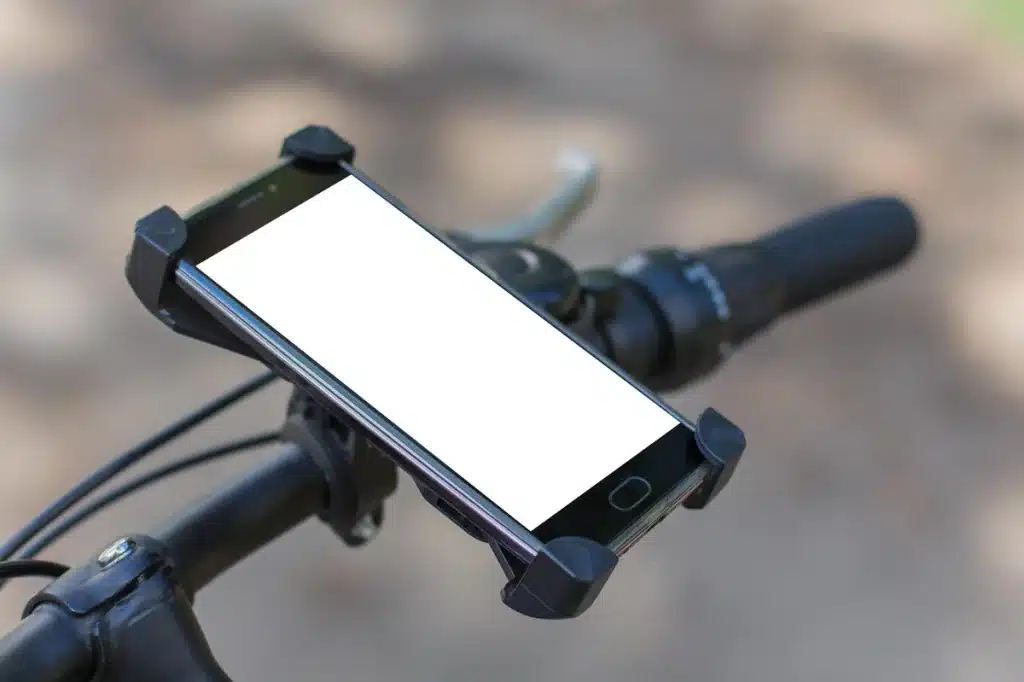
So here’s what actually works, based on how these failures happen in the field rather than in a product demo video.
- Torque your clamp bolts to spec — most stem mounts are designed for 4–6 Nm, not “tight as you can get it by hand.” Overtightening is how you crack ABS housings.
- Clean the clamping surface before every install. Sweat residue and road grime act like a lubricant. Wipe it down.
- Use a thin rubber shim between the mount and handlebar if your bar diameter is close to — but not exactly — the clamp’s rated size. A 0.5mm gap will move.
- Check locking tabs after the first 10 minutes of a new ride. Vibration settles hardware. It’s just physics.
- Avoid leaving the bike phone holder in direct sun for extended periods when the phone is seated. Thermal expansion stresses the grip points.
Cracking is a different problem. That traces back to material quality and — honestly — wall thickness consistency, which is the kind of thing you only catch when sourcing at volume. The Ultimate Guide: How to Choose the right mount for your use case will tell you to look at specs. But specs don’t tell you whether the injection mold was single-cavity or multi-cavity tooling. That matters at unit 500.
Buyers who Explore the Versatile Applications of Phone mounts across different cycling disciplines — road, gravel, urban commuting — quickly learn that the same holder that survives smooth tarmac will crack on a gravel descent. Different vibration profiles. Different stress points.
And if you’ve ever looked at how Discover Why Nordic Countries Love Minimalist mounting designs, part of the answer is durability in temperature extremes. Fewer moving parts means fewer failure points when plastics go brittle at -10°C.
Not complicated. Just consistent attention. That’s it.
Choosing a Bike Phone Mount That Won’t Let You Down on Long Rides
Long rides expose everything. A bike phone holder that feels rock-solid on a 20-minute commute will rattle itself loose somewhere around kilometer 60 on a mixed-surface route — and that’s not a design flaw you’ll spot in a spec sheet.
So what actually separates a mount that lasts from one that doesn’t? Honestly, it comes down to three things: clamp retention force, material fatigue resistance, and how the mount handles vibration over sustained periods. Not just peak shock. Sustained vibration — the kind that loosens screws, fatigues plastic tabs, and eventually works a locking arm out of position. A 90-minute gravel ride generates more cumulative stress than a dozen short urban trips, and most budget mounts aren’t engineered with that in mind.
Finding the Perfect Phone Holder: Essential criteria for long-distance use almost always point back to the same shortlist: tool-free adjustment that still locks positively, rubberized contact points that don’t compress permanently over time, and a stem or bar clamp that doesn’t require re-tightening every other ride.
Material choice matters more than most buyers realize. Polycarbonate blends handle cold better than straight ABS — relevant if you ride year-round. Discover Why Nordic Countries Love Minimalist mounting designs and you’ll keep coming back to this: fewer polymer joints means less thermal expansion mismatch when temperatures swing hard between morning and afternoon.
And the sourcing side of this is worth a sentence. When Shuowei Technology Participated in HK Global sourcing events, one consistent buyer question was around OEM mount durability for branded cycling accessories — specifically whether production consistency held across larger run sizes. That’s a legitimate concern. Unit 1 and unit 500 should behave identically.
For buyers doing deeper research — whether you’re working through the Ultimate Guide: How to Choose the right mounting system, or cross-referencing the Top 10 Armband Phone Holder Manufacturers to understand how production quality varies by category — the pattern is consistent: the mounts that survive long rides are the ones built with sustained stress in mind, not just initial grip strength.
Not flashy. Just engineered properly.
Conclusion
The right bike phone holder isn’t about features — it’s about what doesn’t fail at kilometer 80 in 34-degree heat. That’s the filter. Everything else is marketing.
Fewer moving parts, better material consistency, honest production tolerances across the full run. Those three things separate a mount you forget about (because it just works) from one you’re fiddling with on the side of a trail.
If you’re buying at scale or speccing a private label product, push your supplier on batch consistency — not just the sample unit. That’s where the real quality gap lives.
Frequently Asked Questions
Q: What is the best type of bike phone holder for long-distance rides?
A: For anything over 50km, you want a handlebar mount with a clamping jaw — not a silicone strap design. The jaw-style holders (Quad Lock and SP Connect are the obvious names) hold tension consistently even when the road gets rough, whereas strap systems stretch and loosen over time. Vibration is the enemy, and most riders don’t realize it until their phone’s already face-down on asphalt.
Q: How much should I spend on a bike phone holder?
A: Honestly, the $8–$15 range is where most cheap mounts live — and they’ll feel fine in the parking lot. The $25–$50 range is where build quality actually changes: better polycarbonate, tighter tolerances, mounts that don’t rattle. Spending more than $60 is usually about brand premium, not engineering.
Q: Why does my bike phone holder keep spinning or rotating while I ride?
A: Nine times out of ten, it’s a loose handlebar clamp — either the diameter’s wrong (most handlebars are 22.2mm or 31.8mm, and mixing them up is more common than you’d think) or the locking screw wasn’t torqued down properly. Some cheaper mounts also use plastic threads that strip after a few tightenings, which is a one-way trip to wobble territory.
Q: Can I use a bike phone holder in the rain?
A: The mount itself — usually polycarbonate or aluminum — handles rain fine. Your phone is the real concern. Most bike phone holders leave the screen exposed, so unless you’ve got a waterproof case or your phone has an IP67/IP68 rating, a heavy downpour is a gamble. A few models include a clear TPU cover, which adds basic splash protection without blocking the touchscreen.
Q: How do I know if a bike phone holder will fit my handlebars?
A: Check the clamp diameter before you buy — road bikes typically run 31.8mm, older or budget bikes often use 22.2mm, and some MTB bars go up to 35mm. Most quality mounts either include multiple adapter rings or specify compatibility clearly. If the listing just says “universal,” ask for the actual clamp range; that word covers a lot of sins.
Q: Is a bike phone holder worth it if I only ride occasionally?
A: For casual riders, even a mid-range bike phone holder pays for itself fast — navigation alone is worth it, and it beats balancing your phone on a stem or riding with one hand. You don’t need the premium stuff. A solid $20–$30 mount with a decent jaw clamp will outlast most people’s interest in the hobby.
Q: How long should a quality bike phone holder last?
A: A properly engineered mount — good polycarbonate, stainless hardware, consistent production tolerances — should last three to five years of regular use without meaningful degradation. The weak point is almost always the locking mechanism or silicone padding, not the frame itself. If you’re sourcing at volume, batch consistency matters more than the sample unit; that’s where lifespan variation actually shows up.
Q: What’s the difference between an OEM and a branded bike phone holder for wholesale buyers?
A: An OEM bike phone holder is built to a buyer’s spec — you control the material grade, clamp design, and branding. A branded unit is someone else’s spec with their logo on it. For buyers who want margin control and product differentiation, OEM is the smarter route — but it requires a supplier who can hold tolerances across a full production run, not just a polished sample.