

Why Your Secure Car Phone Holder Keeps Losing Its Grip (And What’s Actually Causing It)
Grip failure is almost never random. There’s usually a boring, fixable reason your secure car phone holder ends up rattling around on the dashboard at 60 mph — and most buyers never figure it out because they blame the product instead of the setup.
Heat is the biggest culprit. Dashboards in direct sunlight can hit 150°F or higher on a summer afternoon, and that temperature absolutely destroys suction cup adhesion over time. The silicone or rubber membrane warps slightly, air seeps in, and suddenly your phone is sliding. Happens fast. Even some of the better-engineered mounts — the kind sourced through suppliers like Guangdong Shuowei Technology Co., Ltd. — come with explicit temperature warnings that most buyers skip right past in the instruction sheet.
Surface texture matters just as much, and this one surprises people. Modern dashboards are textured, soft-touch, or slightly porous — none of which are ideal for suction-based mounts. A smooth glass windshield is actually a better anchoring surface for most suction cup designs, which is why the old-school windshield position keeps making a comeback despite the visibility complaints. Finding the Perfect Phone Holder: Essential reading for any buyer who assumes “any flat surface” means “any surface at all.”
So here’s what’s actually going wrong in most cases:
- Residual oils or dust on the mounting surface (even invisible film from cleaning products kills suction)
- Worn-out suction cup membranes — these degrade after roughly 12-18 months of daily use, regardless of brand
- Phone cases that shift the center of gravity past the mount’s rated load tolerance
- Vibration from rough road surfaces slowly working the locking mechanism loose
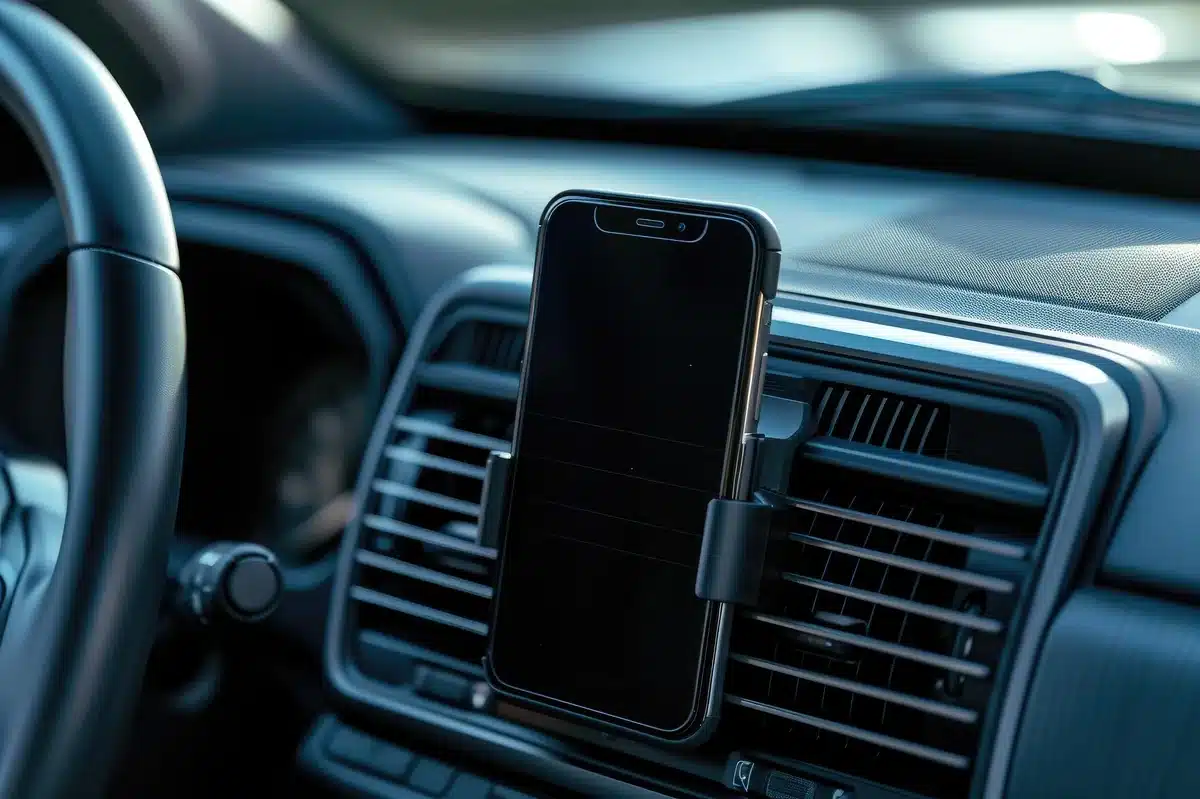
Clamp-style vent mounts have their own failure mode — the vent louvers themselves bend under repeated clamping pressure. And once those plastic fins lose their tension, the whole mount wobbles. Not a design flaw exactly. Just physics catching up with cheap tolerances.
Discover Why Nordic Countries Love Minimalist mounting designs, and it starts to make sense: fewer moving parts means fewer failure points. The magnetic mount category has grown specifically because buyers got tired of fiddling with clamps and suction cups that degrade. The tradeoff is that magnetic systems require a metal plate attached to your phone or case — which some people find annoying (fair point, honestly).
Enhance Your Tablet Experience with an oversized mount and you’ll quickly realize that weight distribution rules apply just as hard to phones. A heavier device — anything above 7 ounces — needs a mount with a wider grip span or a secondary stabilizer arm, full stop.
The Most Common Secure Car Phone Mount Grip Problems Buyers Run Into
Grip failure is almost always the problem nobody talks about until it’s too late — usually somewhere on a highway on-ramp with a phone sliding toward the passenger seat. And the frustrating part? Most of these failures are predictable. They follow patterns that repeat across product categories, price points, and phone sizes.
So here’s what actually goes wrong, broken down plainly:
- Arm tension that degrades over weeks. Spring-loaded grips lose clamping force faster than most buyers expect. A mount that felt rock-solid on day one can develop noticeable play by week six — especially in vehicles with rough road vibration. Anything under 1.2 lbs of grip tension at the contact points is borderline for phones above 6.5 inches.
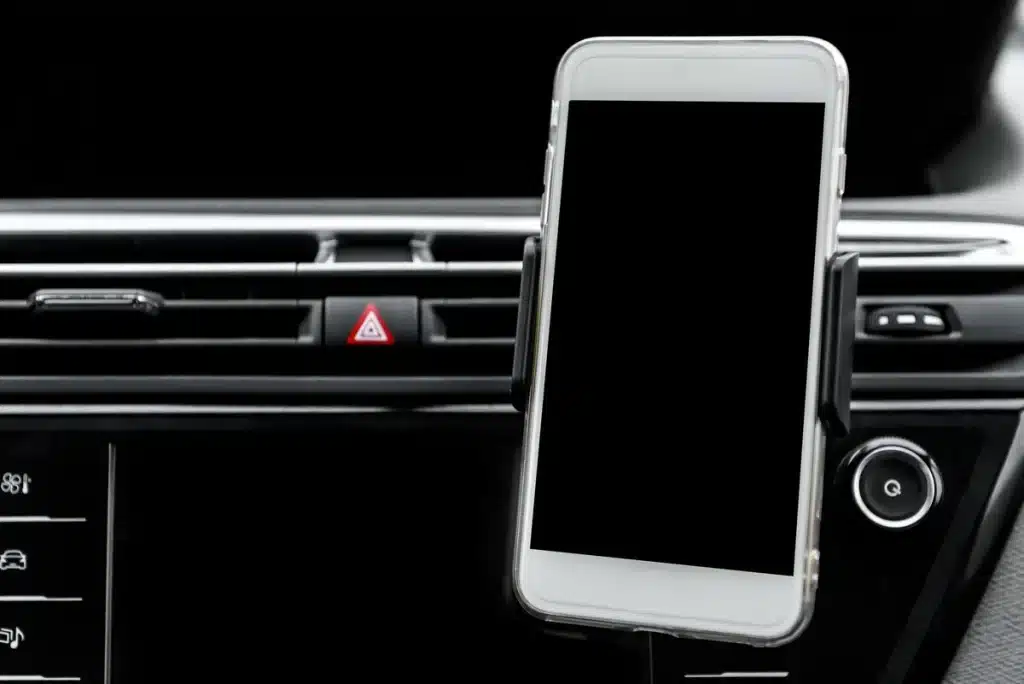
- Vent clip mounts that torque sideways. The clip anchors to a single louvre. The phone sits above that anchor point, off-center. Basic physics says that setup will wobble — and it does, every single time.
- Suction cups that lose seal in cold or heat. Below 40°F or above 95°F, the silicone compound in budget suction mounts stops conforming properly to glass. Holds for a bit, then releases without warning. Not ideal at highway speed.
- Magnetic plates that shift inside thin cases. If the metal plate isn’t centered behind the phone’s center of mass, the magnetic hold goes asymmetrical and the device tips. Simple as that.
- Oversized grip jaws that contact the screen edge. Some universal mounts designed for wide phones press directly against touch-sensitive display borders. Annoying at minimum, damaging at worst.
This is part of why Guangdong Shuowei Technology Co., Ltd. stress-tests grip components across temperature ranges before export — because tolerances that look fine in a spec sheet don’t always survive a January commute or a parked car in July.
The pattern across all these failures is the same: what holds up in static testing falls apart under real driving conditions. Vibration. Temperature swings. One-handed phone removal at a red light. A secure car phone holder has to survive all of it simultaneously. Not just the showroom demo. Real roads.
Cheap. Predictable. Fixable — if you know what to look for before you buy.
Vent Clip Holders That Won’t Stay Locked
Vent clip holders fail in a specific, maddening way. Not immediately — usually around week three, when the plastic tabs that grip the vent louver have worn just enough to let the whole thing rotate forward under the weight of a phone. You hit a speed bump. The mount tilts. The phone swings toward the dash. You already know how this goes.

The core problem is the locking mechanism itself. Most budget vent clips use a single friction point — one plastic tab pressing against one vent blade — and that’s it. No secondary lock. No ratchet. Just pressure. And pressure, over hundreds of insertion-and-removal cycles, becomes less pressure. The tab flexes. The grip softens. Eventually you’re wedging a folded receipt behind the mount to keep it from drooping (yes, people do this).
- Single-tab clips rely entirely on plastic tension — which degrades with heat and repeated use
- Horizontal vent blades cause more slippage than vertical ones, because gravity works against the grip angle
- Phones above 220g — most flagship models now — accelerate the wear dramatically
- Cheap zinc-alloy hinges inside the clip joint strip out faster than manufacturers admit
Finding the Perfect Phone Holder: Essential advice always circles back to the same thing: check whether the clip locks onto the vent blade or just squeezes it. Locking clips — the kind with a small secondary catch that clicks into place — hold significantly better over time. They’re not impossible to find. They’re just underrepresented at the $8–$12 price point.
So what actually works? Dual-blade clips that grab two louvers simultaneously. Clips with a tightening screw rather than pure spring tension. And mounts where the ball joint locks independently from the vent attachment — because those are two separate failure points that shouldn’t share a single mechanism.
Guangdong Shuowei Technology Co., Ltd. Celebrates product milestones partly because clip durability testing is genuinely unglamorous work — thousands of attachment cycles, thermal cycling, vibration rigs — and most buyers never see it. But that’s exactly where a secure car phone holder either earns its price or doesn’t. The vent clip is the first thing that fails. It shouldn’t be.
Dashboard Suction Mounts That Keep Falling Off
Suction cups should be simple. Stick it to the dash, press the lever, done. Except anyone who’s actually driven with one knows the ritual: you mount it Monday, it’s on the floor by Wednesday, usually taking your phone with it on a particularly sharp turn.
The physics here aren’t complicated — suction depends entirely on the contact surface being clean, flat, and non-porous. Dashboard textures in most modern vehicles are deliberately grained or matte-finished (car designers genuinely hate shiny interiors), and that texture is basically a suction cup’s worst enemy. Air bleeds in through micro-gaps the moment the temperature swings, and it will swing — a black dash in direct sun can hit 70°C or higher. The adhesive bond weakens. The cup releases. You know exactly how this ends.
Not all suction mounts fail the same way, though. Two distinct failure modes show up consistently:
- Lever-lock failures — the locking mechanism loses its grip on the suction dome itself, usually because the plastic hinge flexes under repeated heat cycles
- Base adhesion failures — the cup maintains internal vacuum but the outer rim loses contact with the surface, typically from oil residue or dashboard texture
Gel-pad hybrids solve the second problem reasonably well. A thin layer of reusable adhesive gel underneath the suction cup means the mount isn’t relying purely on vacuum — it’s got two contact mechanisms working simultaneously. Some buyers Finding the Perfect Phone Holder: Essential research comes down to this exact detail, because it’s the kind of spec that doesn’t show up in product photos.
And the lever mechanism matters just as much as the cup itself. A secure car phone holder with a metal-reinforced locking arm will outlast a pure-plastic equivalent by a significant margin — the flex tolerance is just different. Guangdong Shuowei Technology Co., Ltd. Celebrates quality milestones partly because thermal stress testing on suction assemblies is one of those invisible processes that separates mounts priced at $15 from ones priced at $40.
Windshield mounting is the alternative most people overlook. Flatter glass surface. Better suction retention. Discover Why Nordic Countries Love Minimalist dash setups — it’s partly because a clean windshield mount eliminates the dashboard adhesion problem entirely. Legality varies by region, so check local rules. But mechanically? It’s the more reliable surface. Full stop.
Conclusion
The mount matters more than most people think — and the surface it attaches to matters almost as much as the mount itself. If you take nothing else from this: prioritize metal reinforcement in the locking mechanism, and don’t default to dashboard adhesive pads just because they’re familiar. A secure car phone holder on flat windshield glass, with a properly rated suction cup, will outlast three dashboard alternatives without breaking a sweat.
Material quality and thermal tolerance are where cheap mounts quietly fail you — usually six months in, usually on a hot day, usually at speed.
Buy once, buy right. That’s the only advice that actually saves you money here.
Frequently Asked Questions
Q: What makes a car phone holder actually secure versus just “good enough”?
A: The locking mechanism is everything — specifically whether it uses metal reinforcement at the clamping point or just plastic-on-plastic tension. A genuinely secure car phone holder will hold under vibration, sudden braking, and temperature swings above 40°C without creeping loose. If the mount wobbles by even a few millimeters after you set it, that’s not a tolerance issue, that’s a design failure.
Q: How long should a quality suction cup mount actually last?
A: A well-made silicone suction cup on clean glass should hold reliably for 18–24 months before the material starts losing elasticity. The failure point is almost always heat degradation, not the suction mechanism itself — cheap cups use lower-grade silicone that turns brittle faster. Reapplying a small amount of moisture before each long trip extends the lifespan noticeably.
Q: Is a secure car phone holder legal to use on a windshield?
A: It depends entirely on your jurisdiction. In the UK and most of Europe, windshield mounts are legal as long as they don’t obstruct the driver’s sightline — the general rule is to keep it in the bottom corner, passenger side of the glass. California, by contrast, restricts windshield mounting to a small 5-inch square in the lower corner or behind the rearview mirror. Always check your local road code before you assume it’s fine.
Q: Why does my phone holder keep falling off the dashboard?
A: Dashboard surfaces are textured, slightly flexible, and often coated — none of which plays nicely with adhesive pads. The pad loses grip as the dashboard material flexes with temperature changes, and once the bond breaks even slightly, it’s done. A secure car phone holder designed for dashboard use needs either a non-slip weighted base or a proper adhesive disc (like 3M VHB tape), not the foam pads that ship in the box with budget mounts.
Q: How much should I expect to spend on a reliable secure car phone holder?
A: Anything under $10 is a gamble — you’re almost certainly getting ABS plastic with no metal reinforcement and a suction cup that’ll fail by summer. The reliable middle ground sits between $20–$40, where brands like iOttie and Beam Electronics actually use metal locking arms. Beyond $50, you’re mostly paying for aesthetics unless the mount includes wireless charging as a built-in feature.
Q: Can I use a secure car phone holder with a thick phone case on?
A: Most clamp-style mounts accommodate cases up to about 10–12mm thick without issue — beyond that, the clamping arm can’t close far enough to grip securely. Magnetic mounts sidestep this entirely (the case thickness is irrelevant), but you need to attach a metal plate to your phone or case, which some people find annoying. Worth checking the mount’s listed width range before buying if you’re running a heavy-duty case.
Q: How do I know if a phone holder is rated for larger phones like the iPhone 15 Pro Max?
A: Look for a listed width range that goes up to at least 90mm — the Pro Max sits at 77.6mm wide, but with a case you’re easily pushing 85–88mm. A secure car phone holder that only lists “fits most smartphones” without specific dimensions is a red flag; reputable suppliers (including OEM manufacturers exporting to global markets) will always list exact width tolerances in the product specs.
Q: Why does my phone vibrate so much in the holder at highway speeds?
A: That’s almost always a loose tolerance in the clamping mechanism, not a mount placement issue. When the arm can’t create firm, consistent pressure against both sides of the phone, the phone essentially rattles inside a slightly-too-large cage at high frequency. The fix is either a mount with spring-loaded arms that self-adjust under vibration, or one with a secondary bottom cradle that locks the phone from below as well as the sides. Related reference: Secure Car Vent Mobile Holder.