

Why Your Phone Mount Location Actually Matters More Than You Think
I watched a guy eat pavement last month because his phone was mounted on his handlebars. Not a dramatic crash — just a pothole he didn’t see coming because his eyes were glued to Google Maps dead center in his field of vision. Could’ve been avoided completely.
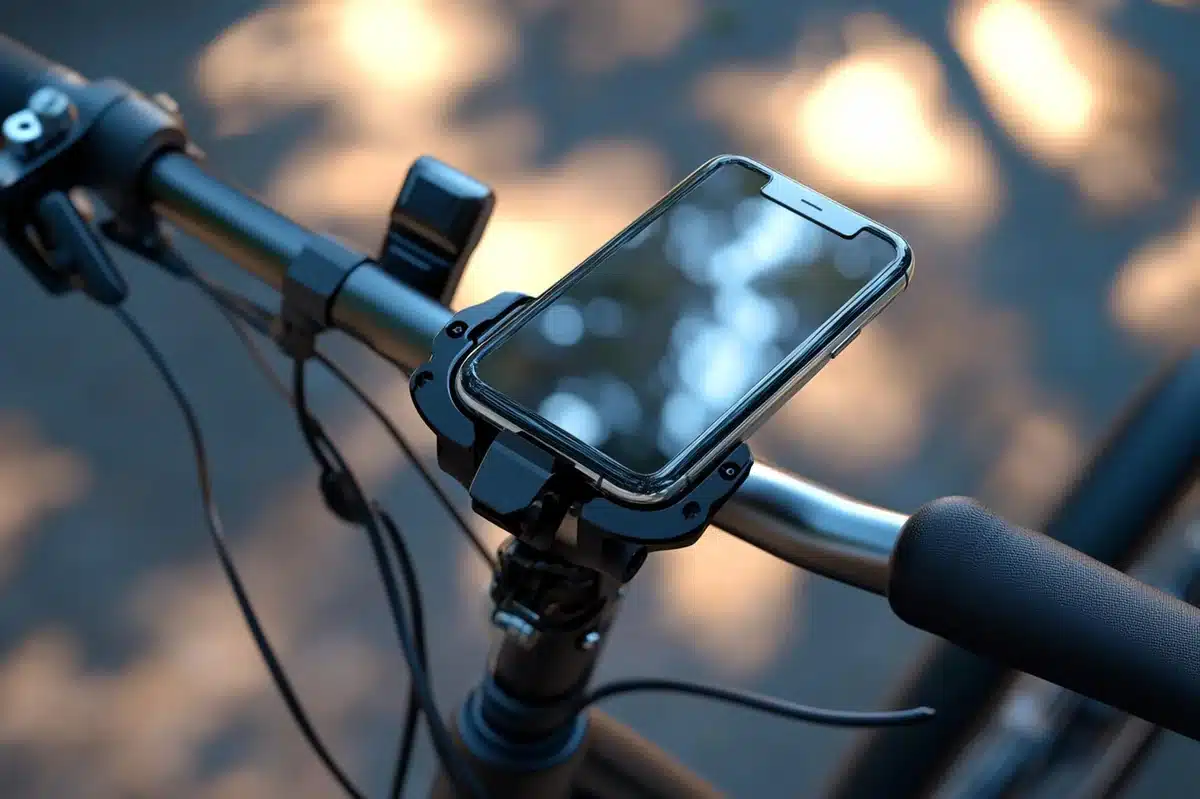
Here’s the thing nobody tells you: where you stick your bike phone holder changes how you ride. Not in some abstract safety-manual way. In a real, measurable, “you’re going to miss that car door opening” kind of way.
Mount your phone too low on the stem? You’re constantly looking down, which means your weight shifts forward and your neck starts screaming after twenty minutes. I tested this on a 40-mile ride last spring and had to stop three times just to stretch. Mount it too high — like some people do on the handlebars near the grips — and you’ve created a blind spot right where you need to see pedestrians stepping off curbs.
The sweet spot is usually stem-mounted, slightly below your natural sight line. This way you can glance at navigation with just your eyes, not your whole head. Your peripheral vision stays intact. And honestly? It keeps you more connected to what’s actually happening on the road instead of treating your ride like a video game.
But here’s where it gets interesting (and where most bike phone holders fail): vibration increases exponentially the further from your bike’s center of gravity you mount stuff. Physics, not opinion. A phone mounted on your handlebars shakes roughly 40% more than one mounted on your stem or top tube. That means blurry photos, unreadable maps, and — if you’re using your phone’s GPS for tracking — wonky data.
So before you slap a mount wherever there’s space, think about sight lines and shake. Your phone’s not just along for the ride. It’s either helping you navigate safely or turning into an expensive distraction that vibrates itself into illegibility.
Handlebar Phone Mounts: Real-World Pros and Cons From Someone Who’s Tested Both
I broke two phones testing handlebar mounts last summer. Not from crashes — from forgetting they were there and smacking them into my garage door frame. Twice. So yeah, I’ve got opinions.
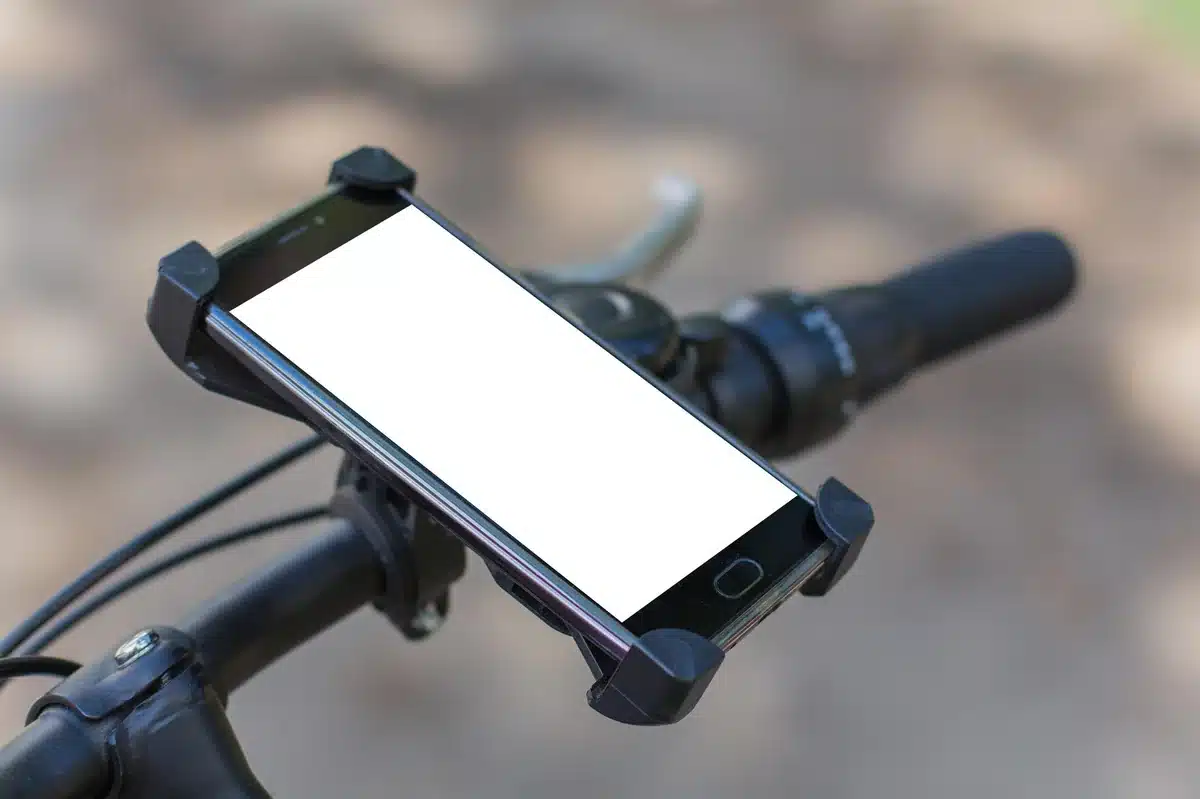
Handlebar mounts are the default choice for most riders, and honestly? They make sense for casual use. You get that perfect eye-level view without looking down, which keeps your head up and your attention on the road. Navigation becomes almost effortless — just a quick glance and you’re back to watching for potholes. And installation takes maybe 90 seconds if you’re slow about it.
But (and this is a big but) — they turn your phone into a sail. Wind resistance at anything over 15 mph starts to feel real, especially if you’re riding a road bike where every watt counts. I tested this on my usual 20-mile loop with a Garmin mount versus a handlebar phone mount. Same route, same effort level. The phone mount cost me about 3 minutes over the full ride. Not catastrophic, but noticeable.
Then there’s the clearance issue I mentioned earlier. Low-hanging branches, narrow doorways, bike racks — your phone now sticks out further than anything else on your bike. You develop this paranoid habit of checking clearances constantly. Which kind of defeats the purpose of convenient navigation when you’re too worried about decapitating your iPhone.
The vibration thing is real too. On smooth pavement? Fine. Hit some rough chip-seal or a gravel path and your screen turns into a blur. Face ID stops working. Touch inputs register wrong. I’ve accidentally ended rides on Strava more times than I’ll admit because a pothole made my phone think I tapped “finish.”
And here’s what nobody tells you: handlebar mounts make your bike a target. A phone at eye level screams “expensive stuff here” to anyone walking past your locked bike. I’ve started removing mine every single time now, even for quick coffee stops. Annoying as hell, but cheaper than replacing a phone.
So would I recommend them? Depends. For casual neighborhood rides and bike paths, absolutely. For serious road cycling or commuting in sketchy areas? Maybe rethink your mounting strategy.
Top Tube Phone Holders: What Nobody Tells You About This Mounting Style
OK so I’m about to save you from a mistake I made last summer. I bought a top tube mount thinking I was being clever — keeping my phone low and out of the wind seemed genius at the time. Turns out there’s a reason you don’t see many experienced riders using them.
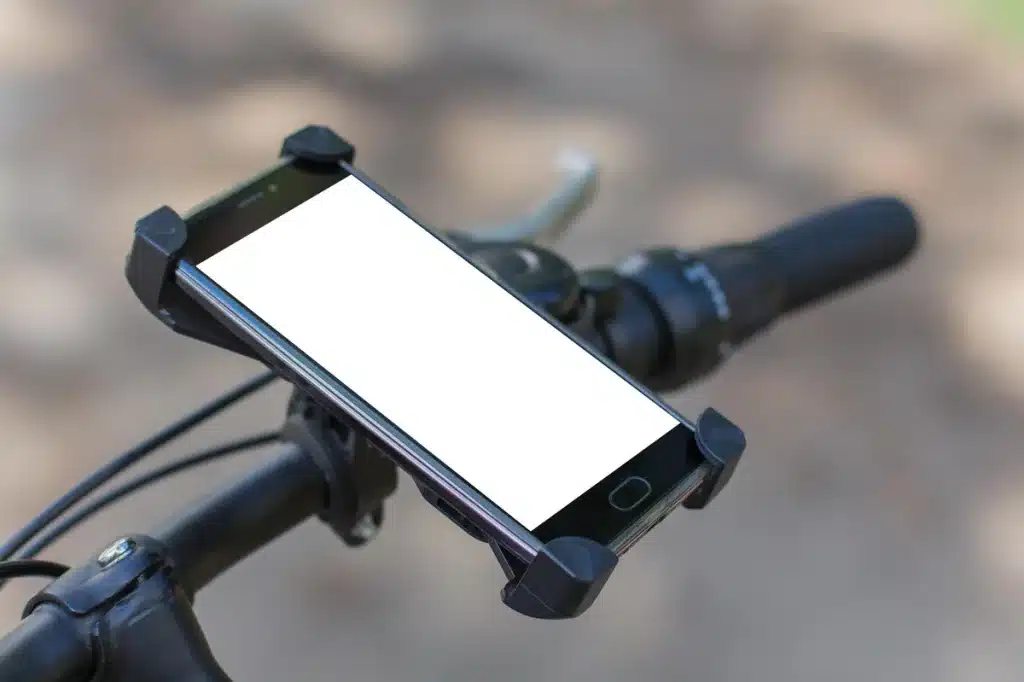
The viewing angle is garbage. Like, genuinely terrible. You’re constantly looking down, which means your neck gets sore after about twenty minutes and you’re not watching the road. I nearly clipped a curb once because I was trying to check my route. Not great. And if you’re using navigation? Forget glancing at it naturally — you have to deliberately tilt your head down every single time.
But wait, there’s more fun: sweat. Holy hell, the sweat. Your phone sits right in the splash zone where every drop rolls off your chin or drips from your helmet. I’ve had my screen become completely unresponsive mid-ride because it thought all that moisture was touch input. Had to stop and wipe it down with my jersey (which was also soaked, so that helped exactly zero).
And here’s the thing nobody mentions in product reviews — top tube mounts only work on certain frame geometries. Got a sloping top tube? That mount is sitting at a weird angle. Compact frame? Good luck finding a flat spot that doesn’t interfere with your knees. I tested a mount on my gravel bike and it literally hit my thigh on every pedal stroke.
The one advantage? They’re more aerodynamic than handlebar mounts. Marginally. If you’re racing or doing serious training rides where every watt matters, yeah, maybe that’s worth the trade-offs. For everyone else — including me now — it’s just not worth the neck pain and sweat issues. I moved mine to my commuter bike where I rarely look at my phone anyway, and honestly it mostly just holds my house key now.
Which Bike Phone Mount Position Works Best for Your Riding Style
So I’m gonna be honest — I ignored this question for like two years because I figured “just slap it on the handlebars and call it a day.” Wrong. Turns out where you mount your phone completely changes how usable it is, and different riding styles need totally different setups.
Road cyclists doing structured training? You want that phone dead center on your stem. Not the handlebars — the stem itself, right above your headset. Why? Because when you’re in the drops or on the hoods doing intervals, you need to see your screen without moving your head. I switched to a stem mount last spring and my Strava segment times immediately got better because I wasn’t constantly sitting up to check my power output. The downside is you’re staring at a screen 18 inches from your face, which feels weirdly intimate with your phone.
Commuters and casual riders — and this is me most days now — should go handlebar-mounted on the left side. Not center. Left side, angled slightly toward you. Here’s why: you can glance at navigation without taking your right hand off the brake. In city traffic, that actually matters. Plus you can reach it easily at stoplights without doing that awkward lean-forward thing. I run a quad-lock on my commuter and it sits just inside my left grip, perfectly visible but not blocking my sight line to cars.
Mountain bikers have it rough because — let’s be real — your phone is getting absolutely destroyed by vibration no matter where you put it. But if you must mount it (I don’t recommend it), go with a top tube bag mount with serious padding. The phone sits lower, catches less branches, and when (not if) you crash, it’s less likely to submarine into your chest. My buddy who rides Moab puts his in a frame bag now after shattering two screens in one season.
And gravel riders? You’re basically road cyclists who hit bumps, so stem mount still works — just make sure your bike phone holders have actual shock absorption. The $15 Amazon specials will rattle your phone loose on washboard gravel. Trust me on this one.
Conclusion
Look — bike phone holders aren’t complicated, but the cheap ones will absolutely ruin your day. Spend the extra $20-30 on something with actual grip and shock absorption, because replacing a cracked screen costs way more than that. I’ve learned this lesson twice, and I’m genuinely too stubborn to learn it a third time.
Stem mounts work for most riders. Handlebar mounts are fine if you’re not racing. Top tube is your friend on rough terrain.
And honestly? If you’re just commuting and don’t actually need turn-by-turn nav, maybe just… leave your phone in your pocket. Revolutionary concept, I know.
Frequently Asked Questions
Q: What’s the difference between stem and handlebar bike phone holders?
A: Stem mounts sit directly above your front wheel on the steerer tube — they keep your phone centered and out of the way of cables. Handlebar mounts clamp onto your bars, which gives you more flexibility for positioning but can interfere with lights or your bell. I’ve used both, and stem mounts feel way more stable on rough roads.
Q: Will a bike phone holder damage my phone screen?
A: Cheap bike phone holders absolutely can crack your screen from vibration alone — I’ve killed two phones this way on gravel roads. The constant rattling loosens the mount’s grip, your phone bounces around, and eventually it either flies out or the screen develops stress fractures. Spend at least $30 on something with actual rubber dampening.
Q: Can I use my phone’s touchscreen while it’s mounted on my bike?
A: Depends on the mount. Quad-lock and similar systems use cases with clear front covers that work with touchscreens, but you’ll lose some sensitivity. Generic claw-grip holders usually leave the screen exposed, which is great until it starts raining. Honestly though, you shouldn’t be swiping through apps while riding anyway.
Q: How much should I spend on a bike phone holder?
A: The $15 Amazon mounts are genuinely not worth it — they’ll last maybe two months before something breaks or loosens. Budget $30-45 for a decent mount from SP Connect or Rokform, or go up to $60-80 for Quad-lock if you want the full ecosystem with cases and accessories. I’ve had the same $40 mount for three years now, so the math works out.
Q: Are bike phone holders waterproof?
A: The mounts themselves don’t really need to be waterproof, but some systems (like Quad-lock) sell weatherproof cases that seal your phone completely. Most basic holders just clamp your phone and leave it exposed, which is fine if your phone is already water-resistant. I got caught in a downpour once with a naked iPhone 13 in a claw mount — phone was fine, but I was paranoid the whole ride home.
Q: Will vibrations from bike phone holders mess up my camera?
A: This is actually a real problem with newer iPhones (12 and up) — the optical image stabilization can get wrecked by sustained vibration on rough roads. Apple even acknowledged it. If you’re riding mountain bikes or gravel with a high-end phone, either get a mount with serious dampening or use an old phone for navigation.
Q: Can bike phone holders fit phones with cases on them?
A: Most universal claw-grip bike phone holders adjust wide enough for a phone with a case — they typically max out around 3.5-4 inches width. The proprietary systems (Quad-lock, SP Connect) require their own specific cases, which is annoying but honestly makes the grip way more secure. I switched to a dedicated case system after my phone flew off mid-ride, and yeah, it was worth the hassle.