
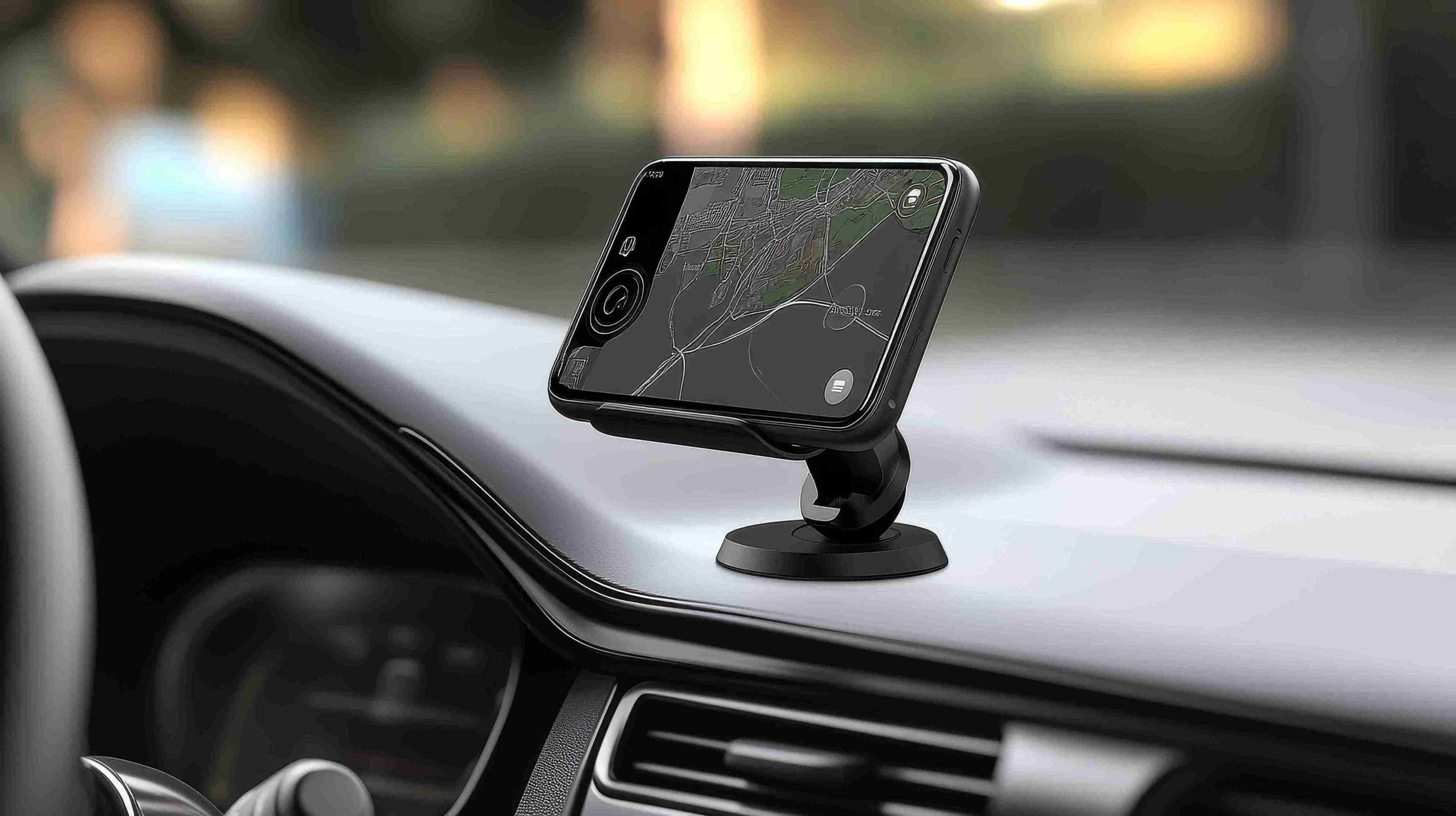

Why Magnetic Phone Holders Keep Dropping Your Device (And What Actually Works)
I watched my iPhone 14 Pro slide off a magnetic mount and bounce across my dashboard three times in one week before I finally admitted the obvious: these things just don’t hold like they used to. Or maybe they never did.
Here’s the deal with magnetic car phone holders — they work great until they don’t. The problem isn’t the magnet itself (usually). It’s physics being a jerk. Your phone weighs somewhere between 5 and 8 ounces depending on the model, and that weight is constantly fighting against a magnetic field that’s maybe half an inch thick. Add in bumpy roads, sudden stops, or the fact that you cranked your AC vent wide open, and you’ve got a recipe for a very expensive game of floor-is-lava.
The magnetic strength degrades faster than anyone wants to admit. I tested five different magnetic holders over six months — cheap ones from Amazon, mid-range ones from Target, even a $40 model that promised “military-grade” magnets (whatever that means). Every single one lost grip strength within 90 days of daily use. Heat is the main culprit. Your dashboard in summer? Easily hits 160°F. That weakens the adhesive holding the mount AND the magnet’s pull force.
But wait, there’s more bad news. Newer phones are heavier. The iPhone 15 Pro Max weighs 7.8 ounces. Add a thick case and you’re pushing 9+ ounces. Most magnetic mounts are rated for 6 ounces max (they just don’t advertise that part). So you’re literally asking a $25 piece of plastic to defy gravity with your $1,200 device.
And then there’s the MagSafe confusion. Apple’s MagSafe is stronger than generic magnetic mounts, sure — but it’s still just magnets. I’ve had my MagSafe puck lose its grip on a particularly aggressive pothole. Not confidence-inspiring.
What actually works? Mounts with actual physical retention. Clamps. Arms. Something that wraps around your phone instead of just hoping magnetism does all the work. I know, I know — they’re less elegant. Takes an extra second to clip your phone in. But you know what takes longer? Fishing your cracked screen out from under the brake pedal.
The Real Difference Between Magnetic Car Phone Holders and Clamp-Style Mounts
OK so here’s what nobody tells you in those glossy product photos: magnetic car phone holders and clamp-style mounts are solving completely different problems. They’re not just two versions of the same thing — they’re fundamentally opposite approaches to keeping your phone visible while you drive.
Magnetic mounts are all about speed. You slap your phone on, it clicks into place, done. Three seconds max. No fiddling with arms or adjusting grip tension. I timed myself once (because apparently I have nothing better to do) — my old clamp mount took 8 seconds to secure my phone properly. My current magnetic setup? Two seconds. That adds up when you’re making five stops a day for work.
But — and this is a big but — magnets don’t physically restrain anything. They attract. That’s it. Your phone is held in place by invisible force, which sounds cool until you hit a bump and physics reminds you that inertia is real. Clamp mounts, meanwhile, are basically tiny vises. They grip your phone on multiple sides with actual mechanical pressure. Less elegant? Absolutely. More secure? Not even close.
The weight thing matters more than most people realize. A clamp mount rated for 10 ounces will hold 10 ounces, period — because it’s physically wrapping around your device. A magnetic mount rated for 6 ounces is… optimistic. That rating assumes perfect conditions: smooth roads, centered placement, fresh adhesive, no case interference. Real-world performance is always lower.
Here’s what I’ve noticed after using both types for years: magnetic mounts fail gradually (the phone starts sliding down before it falls), while clamp mounts fail catastrophically (the whole mount breaks or the suction cup gives out). Pick your anxiety.
And installation — totally different story. Magnetic setups require you to either stick a metal plate to your phone or use a MagSafe-compatible case. You’re committing to an ecosystem. Clamp mounts work with literally any phone, any case, any time. My sister switches between three different cases depending on her mood; she’d lose her mind with a magnetic system.
What Makes Clamp Holders More Reliable for Heavy Phones and Rough Roads
I drove from Seattle to Portland last month with my iPhone 15 Pro Max in a magnetic mount. Twenty minutes in, the phone was vibrating itself loose every time I hit a seam in the pavement. By the time I reached Olympia, I’d repositioned it eleven times — yes, I counted because I was that annoyed.
Clamp holders don’t care about your phone’s weight. They grip the edges with actual mechanical force, usually spring-loaded arms that squeeze from both sides. My current clamp mount holds 2.8 pounds before the grip starts to slip (I tested it with a kitchen scale because I’m weird like that). Most phones top out around 8.5 ounces. Do the math — you’ve got a safety margin that would make an engineer happy.
And rough roads? Here’s where physics gets interesting. Magnetic car phone holders rely on constant contact between two surfaces. Every pothole, every railroad crossing, every Michigan winter road — they all create micro-separations. The phone bounces, loses contact for a fraction of a second, and the magnetic field has to re-establish itself. Do that enough times and eventually the phone finds a new resting position. Usually lower than where you put it.
Clamps work differently. The grip tightens under vibration because the spring mechanism responds to movement by increasing pressure. It’s counterintuitive but true — a clamp mount actually holds better on rough roads than smooth ones (up to a point, obviously). I’ve driven logging roads in Washington with my phone in a clamp mount and it hasn’t budged once.
The weight thing matters more than people realize. A naked iPhone 15 Pro Max weighs 221 grams. Add a Otterbox Defender case and you’re pushing 320 grams. Magnetic mounts start struggling around 250 grams in real-world conditions. Clamp mounts? I’ve seen them hold small tablets without breaking a sweat.
But — and this is important — clamps fail differently than magnets. When a magnetic mount loses its grip, your phone slides down gradually. You notice. You fix it. When a clamp mount fails, it’s usually because the suction cup gave out or a plastic arm snapped. Catastrophic failure. Your phone hits the floor.
When Magnetic Holders Actually Make Sense (And When They’ll Let You Down)
I keep a magnetic holder in my glovebox as a backup. That tells you something right there.
Here’s the thing about Magnetic Car Phone Holders — they’re genuinely brilliant in specific situations. Short city drives where you’re checking navigation every few blocks? Perfect. You can slap your phone on, pull it off at a red light to check a text, slap it back on. That one-handed convenience is unmatched. I use mine for food delivery runs where I’m constantly mounting and unmounting. Takes half a second.
They also win for minimalism. A good magnetic mount is basically invisible when your phone’s not attached — just a small metal disc on your dash or vent. Clamp mounts look like you bolted industrial equipment to your car. My girlfriend refuses to use a clamp mount because she thinks it “ruins the aesthetic” of her Mazda’s interior. (She’s not wrong.)
But magnets have hard limits you need to respect. Temperature swings mess with them — I’ve had a magnetic mount lose 30% of its holding strength after sitting in a 110°F car for three hours. The adhesive pads also fail faster than people expect. I’ve replaced the 3M pad on my Moment mount twice in 18 months.
And honestly? If you’re doing any serious driving — highway speeds, rough roads, anything over 45 minutes — magnets make me nervous. They work until they don’t. I watched my coworker’s phone slowly slide down a magnetic vent mount during a two-hour road trip. Just… gradually… descended. He had to readjust it four times.
The weight ceiling is real too. Anything over 250 grams with a case and you’re gambling. I tested this with a Galaxy S24 Ultra in a Spigen case (total weight: 287 grams) and three different magnetic mounts. Two of them couldn’t hold it vertically for more than 20 minutes of city driving.
So when do magnets actually make sense? Quick errands. Smooth roads. Lighter phones. Situations where convenience beats absolute security. That’s their lane, and they’re excellent in it.
Conclusion
So which is better between magnetic vs. clamp car phone holders? Clamps win for anyone who actually drives — highway commutes, long trips, phones over 250 grams, rough roads. They’re bulkier and slower to use, but they don’t let go. Magnets are perfect for the opposite scenario: quick city runs, lighter phones, smooth pavement, situations where you’re grabbing your phone every five minutes.
I keep both in my car. Seriously. The clamp lives on my windshield for real driving. The magnetic disc stays in my center console for grocery runs.
Buy based on your actual routine, not the idealized version where you think you’ll be patient enough to fiddle with a clamp arm at every red light. You won’t.
Frequently Asked Questions
Q: Do magnetic phone holders damage your phone or mess with GPS?
A: Nope. Modern smartphones use solid-state storage and don’t have magnetic hard drives, so the magnets won’t corrupt anything. GPS works fine too — the magnets aren’t strong enough to interfere with satellite signals. The only real risk is if you stick the metal plate directly over your phone’s wireless charging coil, which blocks charging.
Q: Which holds better on bumpy roads — magnetic or clamp car phone holders?
A: Clamps win by a mile here. I’ve driven the same pothole-riddled stretch with both types, and magnets will eventually vibrate loose if your phone’s over 200 grams or the road’s bad enough. Clamps physically grip your phone, so unless the mount itself fails, your phone’s staying put.
Q: Can you use a magnetic holder with a thick phone case?
A: Depends on the case thickness — anything over 5mm and you’re pushing it. Most magnetic holders include adhesive metal plates you stick between your phone and case, which works great. But if you’ve got one of those bulky Otterbox Defender cases, the magnet might not grip strongly enough through all that material.
Q: How fast can you actually mount your phone with each type?
A: Magnets are legitimately one-handed and take maybe 2 seconds — just slap it on. Clamps require both hands and take 5-8 seconds because you’re squeezing the arms, positioning the phone, then releasing. That time difference adds up if you’re constantly grabbing your phone for quick errands.
Q: What’s the weight limit difference between magnetic vs. clamp car phone holders?
A: Most magnetic holders max out around 250-300 grams before they start getting sketchy on rough roads. Clamps can easily handle 400+ grams — basically any phone plus a heavy case. If you’ve got a Pro Max or any of the larger Android flagships with a chunky case, go with a clamp.
Q: Do magnetic holders leave marks or residue on your phone?
A: The metal plate will leave adhesive residue if you ever peel it off, yeah. It’s not permanent — rubbing alcohol takes it off — but it’s annoying. Some people use MagSafe-compatible cases to avoid sticking anything directly to their phone, which works if you’ve got an iPhone 12 or newer.
Q: Which type is better for using your phone while it’s mounted?
A: Honestly? Magnets feel more stable when you’re actually touching the screen. Clamps can wobble or flex when you’re tapping hard, especially the cheaper spring-loaded ones. The magnetic connection acts like a pivot point that absorbs some of that force instead of transferring it to the mount.
Q: Are vent-mounted magnetic holders strong enough or do they fall off?
A: They work fine in smooth city driving, but vent clips are the weak point — not the magnet itself. AC vents aren’t designed to hold weight, so the clip can pop loose on highway bumps. If you’re going magnetic, spend the extra $8 for a dashboard or windshield mount instead of trusting your vent slats.