
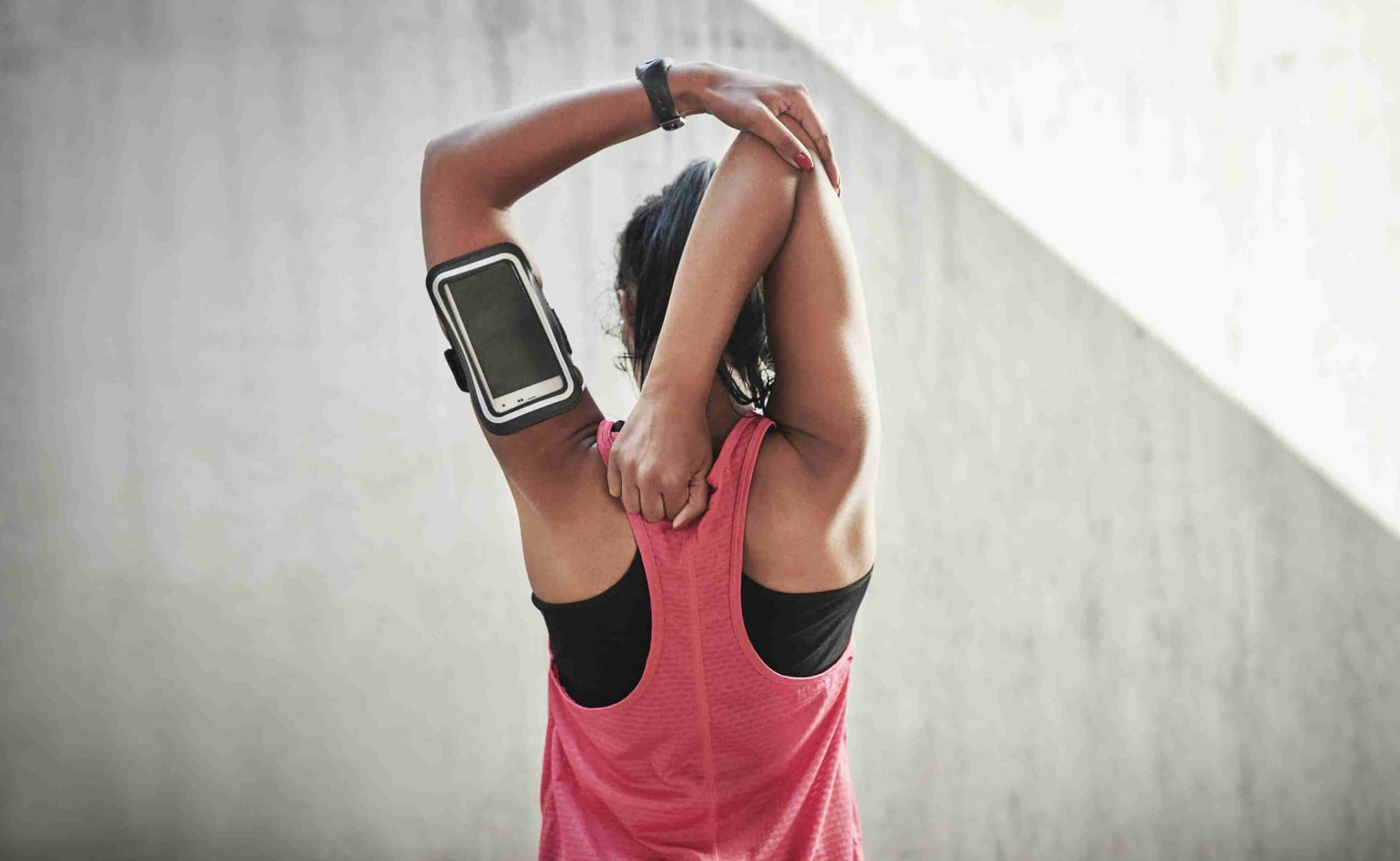

Why Your Running Armband Phone Holder Needs to Actually Stay Put
I was half a mile into a run last summer when my phone — mid-podcast, mid-stride — just… slid down my arm and smacked the pavement. The armband I’d bought on impulse didn’t grip worth a damn, and I learned a $900 lesson about what “secure fit” actually means.
Here’s the thing about a sports arm strap phone holder that nobody talks about until it’s too late: if it moves even a millimeter during your run, it’s going to drive you absolutely insane. Not eventually. Immediately. That tiny shift with every arm swing becomes this maddening rhythm that you can’t unhear, can’t unfeel, and suddenly you’re not thinking about your pace or your breathing — you’re thinking about ripping the stupid thing off and carrying your phone in your hand like some kind of savage.
The physics are simple. Your arm swings thousands of times during a typical 5K. If the strap isn’t genuinely locked in place, gravity and momentum team up to slowly work it loose. Sweat makes it worse (obviously). And if you’ve got the kind of arms that don’t fit the “standard” sizing most cheap armbands assume — too thin, too muscular, just differently shaped — you’re fighting an uphill battle from step one.
So what actually keeps one in place?
Three things, and they’re non-negotiable. First: adjustable straps with actual grip material, not just smooth neoprene that slides around. Second: a band width of at least 3-4 inches — those skinny single-strap designs might look sleek, but they rotate like a loose watch band. And third — this one surprised me — the weight distribution matters more than you’d think. If your phone sits too far from your arm or the holder itself is bulky, the whole thing acts like a pendulum.
I’ve tested probably a dozen different holders over the past three years (yeah, I’m that person), and the ones that actually stay put share these characteristics. The ones that don’t? They’re collecting dust in my closet, right next to that first one that committed phone-icide on the sidewalk.
What to Look for in a Sports Arm Strap Phone Holder Before You Buy
OK so I’m going to save you some money and frustration here — because I’ve wasted both learning this the hard way.

The first thing nobody tells you? Phone size compatibility isn’t just about whether your device “fits.” Sure, that $15 holder on Amazon says it works with phones up to 6.7 inches, but what they don’t mention is whether that measurement accounts for your case. I learned this when my iPhone 14 Pro with an Otterbox case turned a “universal fit” armband into a struggle every single time. The holder technically fit, but I had to wrestle the phone in and out like I was defusing a bomb. Not ideal when you’re sweaty and just want to start your run.
Material matters way more than you’d think — and I’m not just talking about the strap itself. The phone pocket material needs to be touch-sensitive enough that you can actually use your screen through it (some cheap ones feel like you’re poking a mattress), but also thick enough to absorb impact if you do fall. Neoprene and spandex blends usually nail this balance. Straight silicone? Too sticky and weird.
Water resistance is where companies love to play word games. “Sweat-resistant” is not the same as “water-resistant,” and neither means waterproof. If you run in actual rain or do water sports, look for an IPX4 rating minimum. Anything less is just marketing speak for “we added a thin coating that’ll wear off in three weeks.”
And here’s something I didn’t consider until I bought the wrong one twice: access points. Can you reach your headphone jack or charging port without removing the entire holder? Can you see your screen notifications, or is half of it covered by the plastic window frame? These seem like tiny details until you’re two miles into a run and realize you can’t skip the terrible song that just came on.
Reflective strips. If you run at dawn or dusk, this isn’t optional — it’s the difference between being visible and being a liability. Some holders integrate them naturally into the design. Others just slap on a sad little strip that peels off after a month.
How to Size Your Phone Armband the Right Way (Because Most People Get This Wrong)
I’ve watched at least a dozen people at my gym wearing armbands that slide down their bicep every thirty seconds. They keep yanking them back up between sets, looking annoyed, and I want to walk over and say: “Dude, you bought the wrong size.” But I don’t, because I made the exact same mistake with my first two sports arm strap phone holders.
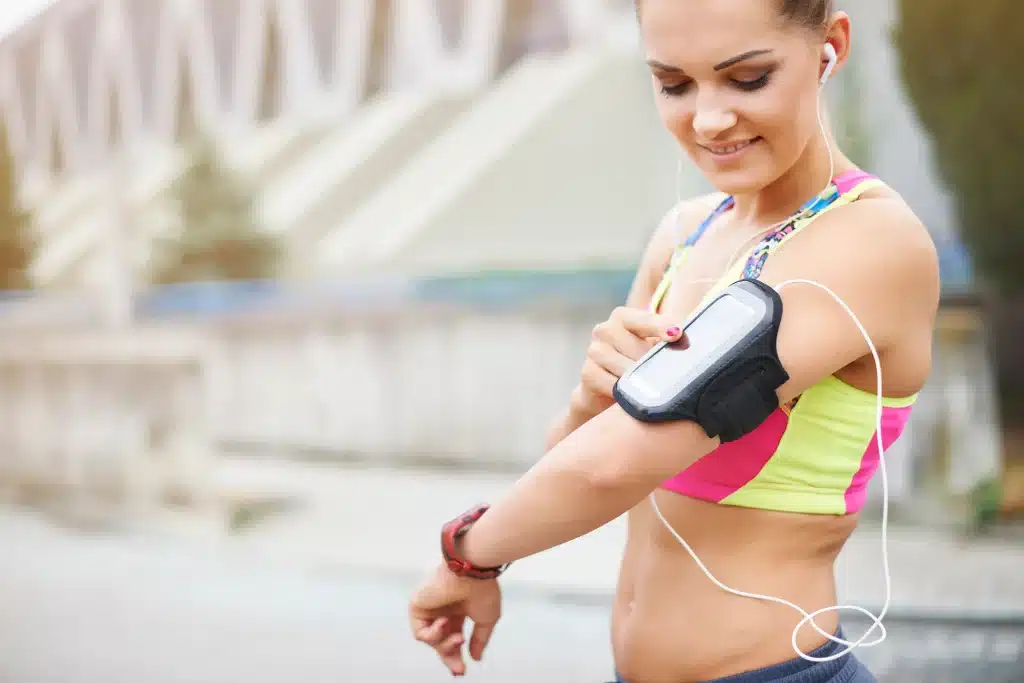
Here’s what nobody tells you — and what the product descriptions definitely won’t mention — sizing isn’t just about your arm circumference. It’s about WHERE on your arm you plan to wear it. Most people measure their bicep at its widest point, buy accordingly, then try to wear the thing halfway down their forearm where it’s three inches smaller. Physics doesn’t care about your optimism.
So measure the actual spot. Grab a soft measuring tape (or a piece of string and a ruler if you’re improvising) and wrap it around your arm exactly where you want the holder to sit during your workout. For most people, that’s about 2-3 inches above the elbow on the non-dominant arm. Write that number down. Now add half an inch — armbands compress slightly when you move, and you don’t want it cutting off circulation mid-run.
The sizing charts are usually garbage, honestly. “Medium fits 9-13 inches” sounds helpful until you realize that’s a four-inch range and your arm is right in the middle at 11 inches. In my experience, if you’re anywhere near the upper end of a size range, go up. A slightly loose armband can be tightened with the velcro or elastic adjustment. A too-tight one? You’re stuck with an expensive mistake.
And here’s the thing about adjustability that matters more than the marketing copy suggests: check how MUCH adjustment range the holder actually has. Some claim “universal fit” but only adjust by an inch or two total. The good ones — the ones I actually kept — have at least 3-4 inches of adjustment range, which means they work whether I’m wearing it over a bare arm in summer or over a long-sleeve compression shirt in winter.
One more thing. Try it on your arm before you load your phone into it. Seriously. If it feels uncomfortable or slides around when empty, adding 6 ounces of iPhone isn’t going to magically fix that.
The Best Arm Strap Materials for Workouts That Make You Sweat
I ruined a $35 armband on my third run with it. Not because it broke — because it turned into a disgusting, smell-retaining sweat sponge that I couldn’t bear to touch anymore, let alone strap to my arm. That’s when I learned that material choice isn’t just about durability or looks. It’s about what happens when you’re dripping.
Neoprene is everywhere in the armband world, and I get why. It’s stretchy, it’s cheap to manufacture, and it FEELS substantial when you pull it out of the package. But here’s what the product descriptions don’t tell you: neoprene is basically a wetsuit material. Which means it absorbs moisture. Then holds it. Then starts to smell like a gym locker that hasn’t been cleaned since 2026.
I tested neoprene for about six weeks of regular running — maybe 4-5 times a week, hour-long sessions. By week three, I had to start washing it after every single use or it would reek. Not ideal.
The sports arm strap phone holder options that actually worked for sweaty workouts? They used either perforated synthetic fabrics or silicone-based materials. Completely different experience.
Perforated lycra or polyester blends — the kind with those tiny laser-cut holes all over — dry out fast. Like, I could finish a run, toss the armband in my gym bag, and it would be dry (or at least not gross) by the time I got home. The ventilation actually works. Plus they’re machine washable without falling apart, which matters more than you’d think when you’re using something against your skin multiple times a week.
Silicone is the other winner, but with caveats. Pure silicone armbands don’t absorb anything — sweat just sits on the surface and eventually drips off. Sounds great, except that also means your arm gets slippery underneath, which can cause sliding issues. The hybrid designs work better: silicone on the inside (where your phone sits) with breathable fabric on the outside (against your arm). Best of both worlds, assuming the manufacturer actually engineered it properly and didn’t just slap two materials together randomly.
One thing I learned the hard way: avoid anything described as “soft cushioned padding” unless they specifically mention antimicrobial treatment. That padding? It’s usually foam. Foam plus sweat equals bacterial paradise. Not worth it.
Conclusion
So here’s what actually matters: get something with proper ventilation (neoprene or mesh hybrids), make sure it fits your actual arm size instead of trusting “universal”, and don’t cheap out if you’re running more than twice a week. A decent Sports Arm Strap Phone Holder should cost you $15-25 — anything under $10 is probably going to slide or fall apart after a month of real use.
And honestly? Test the return policy before you commit to marathon training with it.
Frequently Asked Questions
Q: What size phone fits in a Sports Arm Strap Phone Holder?
A: Most armbands handle phones up to 6.7 inches — that’s basically everything from an iPhone 15 Pro Max to a Samsung Galaxy S24 Ultra. If you’ve got something bigger (like a folding phone), you’re out of luck with standard options. Always check the actual interior dimensions, not just what they claim it “fits”.
Q: Can I use my phone’s touchscreen through the armband cover?
A: Depends entirely on the material quality. Good ones use TPU or clear vinyl that’s thin enough for Face ID and touch response — cheap ones use thick plastic that makes scrolling feel like poking through a shower curtain. Test this before you’re three miles into a run.
Q: How tight should a Sports Arm Strap Phone Holder be?
A: Snug enough that it doesn’t rotate when you swing your arm, but loose enough that you’re not cutting off circulation. If you see red marks after 10 minutes or your arm feels tingly, loosen it. The velcro should overlap by at least 2 inches for a secure fit without strangling your bicep.
Q: Do armbands work for small arms or just muscular people?
A: This is where “universal fit” becomes a joke. Most Sports Arm Strap Phone Holders are designed for 10-16 inch circumferences — if your arm is under 9 inches, the velcro won’t hold properly and the whole thing slides down. Look for adjustable models with extended straps or ones specifically marketed for smaller builds.
Q: Will sweat damage my phone in an armband?
A: Not if the seal is decent and your phone has basic water resistance (IP67 or better). But here’s the thing — moisture can still get trapped inside from humidity, especially on long runs. I wipe down the inside of my Sports Arm Strap Phone Holder after every sweaty workout, and I’ve never had an issue.
Q: Can I access my headphone jack or charging port while wearing it?
A: Most modern armbands have cutouts for charging ports, but headphone jacks? That’s becoming rare since everyone’s gone wireless. If you’re still using wired earbuds, make sure the product photos specifically show a 3.5mm opening — don’t just assume it’s there.
Q: How do I wash a Sports Arm Strap Phone Holder without ruining it?
A: Hand wash with mild soap and cold water, then air dry — never throw it in the washing machine because the velcro gets destroyed and neoprene can separate from backing material. I wash mine every 4-5 runs, takes maybe two minutes. Skip the fabric softener (it breaks down moisture-wicking properties).
Q: Is a Sports Arm Strap Phone Holder better than a running belt?
A: Totally depends on what bugs you more — something on your arm or around your waist. Armbands keep your phone more accessible for quick playlist changes, but belts distribute weight better if you’re also carrying keys and gels. I use an armband for 5Ks and shorter, belt for anything over 10 miles.