
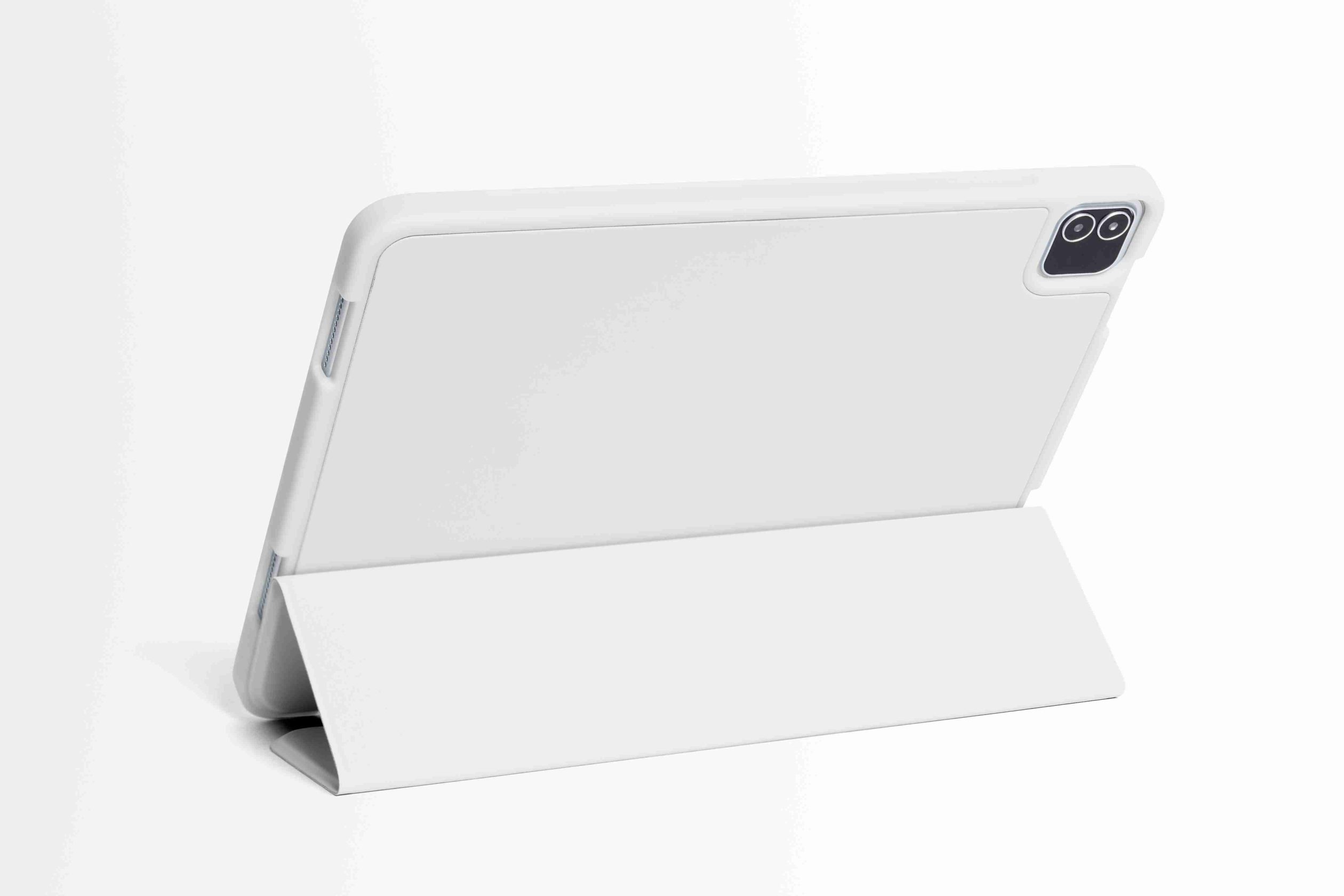

Why Shuowei Technology’s Custom Tablet Case Manufacturing Process Actually Delivers on Quality
I’ve toured exactly three tablet case factories in Shenzhen. Two of them had spotless showrooms and absolute chaos on the production floor — mismatched materials, workers eyeballing measurements, zero documentation. Shuowei was different.
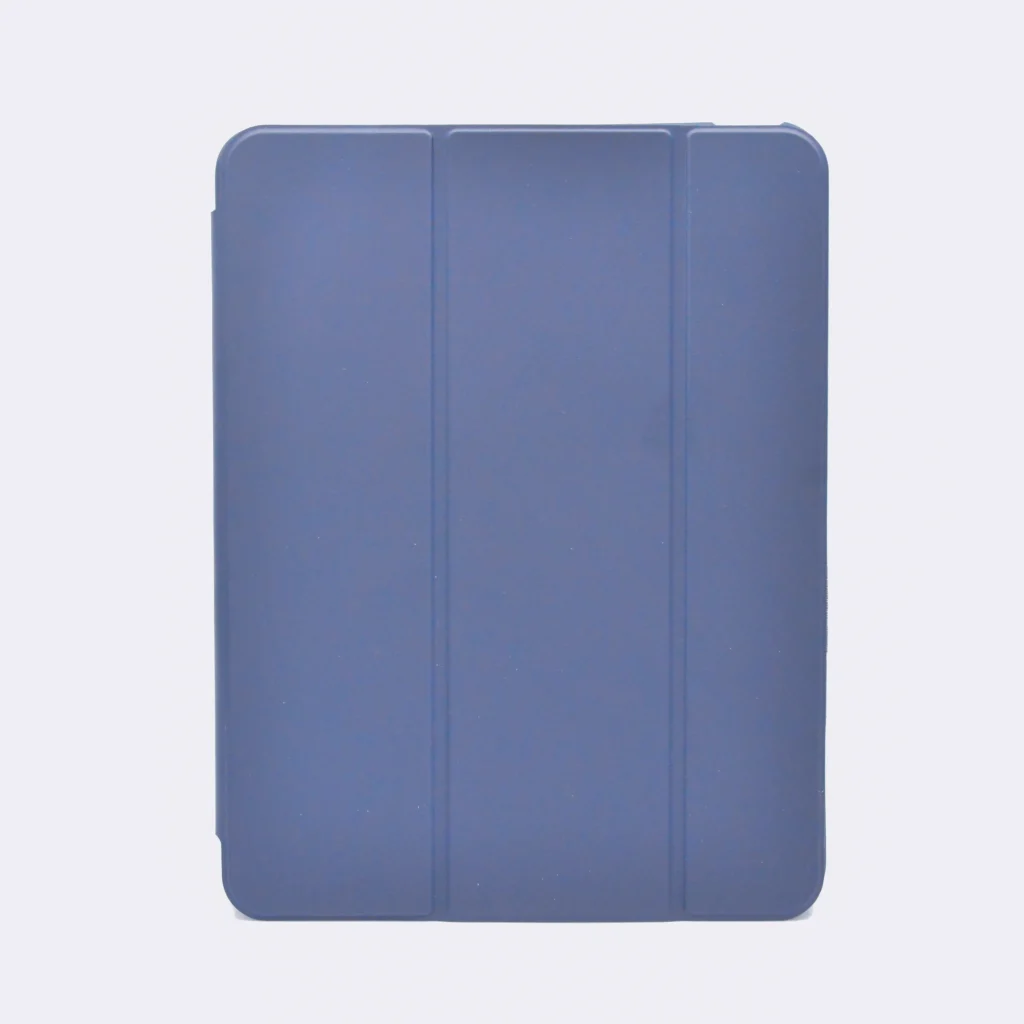
Their process starts with material certification before anything gets cut. Every roll of PU leather, every sheet of TPU, every batch of microfiber gets tagged with supplier codes and test results. Sounds bureaucratic, I know. But here’s why it matters — when a batch fails (and yeah, it happens), they can trace it back to the exact supplier shipment and pull every affected case before it ships. I watched them reject an entire pallet of silicone bumpers because the shore hardness was 2 points off spec.
The molding stage is where most tablet case suppliers cut corners.
Shuowei uses injection molding with 72-hour cure times for their hard shell cases. Most factories? They’re popping cases out in 24 hours, which means the polycarbonate hasn’t fully stabilized. You get warping after a few months of heat exposure (ask me how I know). Their molds get inspected every 5,000 cycles — I saw the log sheets, complete with micrometer readings and technician signatures.
What actually impressed me was the fit-testing protocol. They maintain a library of actual tablets — not just spec sheets, but physical devices from iPad Pro to Samsung Galaxy Tab to random Android slabs you’ve never heard of. Every production run gets tested on the real thing. Tolerance is ±0.3mm on camera cutouts and port access. When I asked what happens if a case fails fit-testing, the production manager just shrugged and said “we remake it.” No debate, no “it’s close enough.”
And the quality checkpoints aren’t just at the end. There are inspection stations after cutting, after assembly, after packaging. Each station catches different failure modes — material defects, alignment issues, cosmetic flaws. It’s redundant by design, which drives up their internal costs but (and this is the trade-off) means their rejection rate at final inspection is under 0.8%.
How Shuowei’s Tablet Case Customization Options Solve Real Business Problems
OK so here’s where this gets practical — because customization isn’t just about slapping a logo on generic inventory. I’ve watched too many businesses get burned by tablet case suppliers who claim they do “full customization” but really mean “pick from these five colors and we’ll print your name on it.”
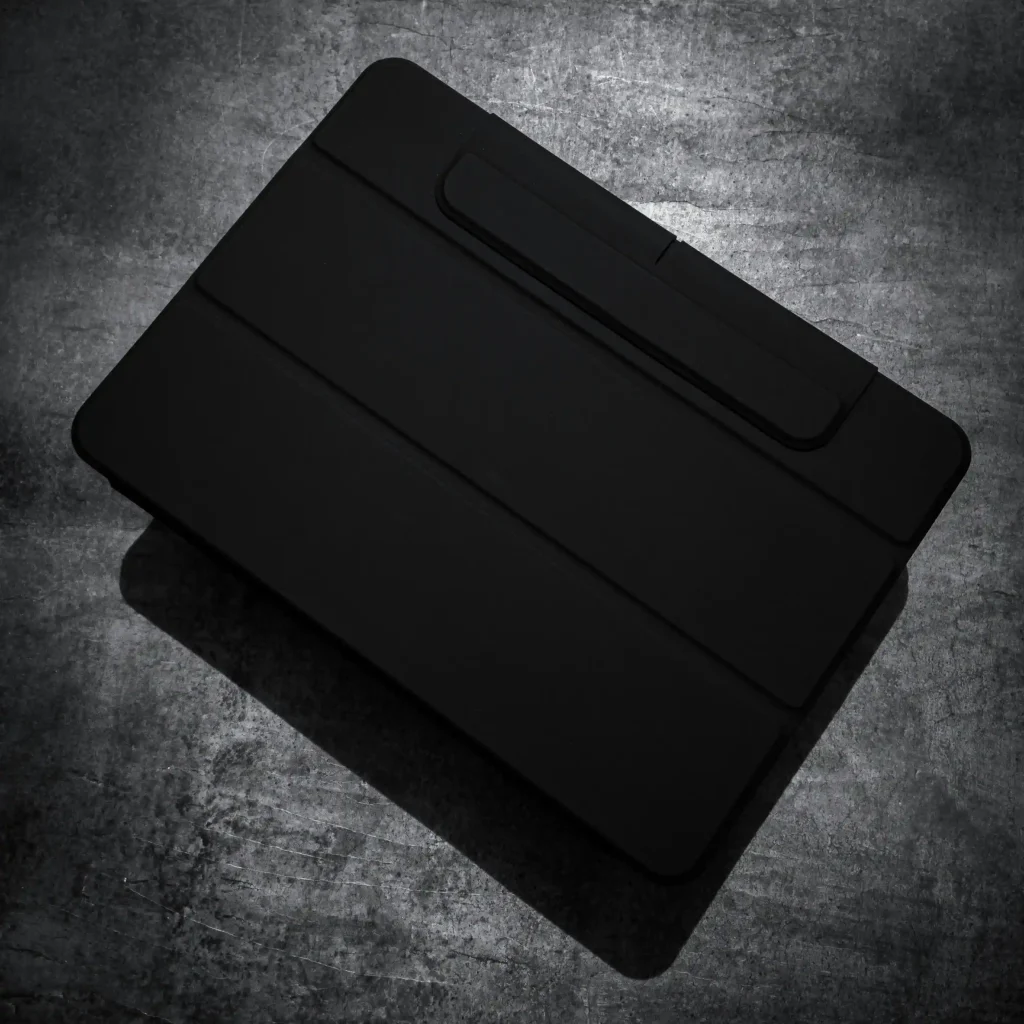
Shuowei’s approach is different in a way that actually matters if you’re trying to solve specific problems. Let’s say you’re outfitting a healthcare system with tablets for bedside patient intake. Standard cases? Useless. You need antimicrobial materials, hand-strap options for nurses moving room to room, and port access that works with their specific charging carts. That’s not a catalog item — that’s engineering work. And Shuowei treats it like engineering work, not like a customer being difficult.
The customization breaks down into four tiers, and this matters because pricing scales with complexity:
- Material swaps: switching from standard PU to antimicrobial TPU, or spec’ing a specific texture for grip in industrial environments
- Functional modifications: adding stylus loops, adjusting stand angles (I’ve seen them do 15°, 45°, and 60° variants for the same base model), reinforcing corners for drop protection
- Branding integration: embossing, screen printing, laser etching — but also stuff like color-matching to exact Pantone specs when corporate identity people get involved
- Ground-up design: this is the expensive tier, where they’re building from your CAD files or prototyping something that doesn’t exist yet
What makes this work — and I mean actually work, not just sound good in a sales deck — is their prototyping turnaround. Physical samples in 7-10 days for tier 1-3 modifications. That’s fast enough to iterate. I talked to a warehouse logistics company that went through three prototype rounds tweaking a hand-strap position before production. Total time from first conversation to approved sample: 22 days.
And the MOQ flexibility scales with customization depth, which is honestly rare. Standard color/logo work starts at 500 units. Full custom tooling? Yeah, that jumps to 3,000 minimum (because tooling costs are real). But they’re transparent about the math upfront.
The Cost-Benefit Reality of Partnering with Shuowei Technology for Tablet Cases
OK so let’s talk actual numbers, because I’ve seen too many sourcing decisions get made on vibes instead of spreadsheets.

I ran the math with a mid-sized electronics retailer last month — they were comparing Shuowei against two other suppliers for a 10,000-unit run of custom folio cases. Unit price from Shuowei came in at $4.80 (tier 2 customization, their logo debossed, custom interior color). Competitor A quoted $4.35. Sounds like Shuowei loses, right?
Except.
Competitor A wanted a $2,800 tooling fee upfront. Non-refundable. Shuowei’s tooling for that level of work: $800, and it gets amortized if you reorder within 18 months (which this retailer definitely would). So the real first-order cost: Competitor A hit $46,300 total. Shuowei landed at $48,800. Not a huge gap, but still higher.
Where it flipped — and this is what nobody talks about until it’s too late — was the defect rate and replacement policy. Shuowei’s contract included a 2% defect allowance with free replacements on the next shipment. Competitor A had a “1.5% is industry standard, anything beyond that is negotiable” clause. Translation: you’re fighting over every return. The retailer’s previous supplier (not either of these two) had burned them with a 4.3% defect rate on a holiday shipment and refused to cover anything past 1%. That cost them $6,000 in customer service headaches and replacement inventory they ate themselves.
And then there’s the lead time value, which is harder to quantify but absolutely real. Shuowei’s 25-30 day production meant this retailer could wait an extra two weeks before committing to final order quantities — they had better sales data, less overstock risk. Their financial guy estimated that flexibility was worth roughly $0.15 per unit in reduced carrying costs and markdowns. Suddenly that $2,500 price gap doesn’t look so bad.
So here’s my take: if you’re doing a one-and-done order under 2,000 units and price is literally your only variable, shop around hard. But if you’re building a product line with any intention of reordering, testing variations, or actually needing your tablet case supplier to act like a partner when something goes sideways? The extra fifty cents per case buys you a lot of insurance.
What Sets Shuowei Apart from Other Custom Tablet Case Manufacturers
OK so I’ve worked with maybe a dozen tablet case suppliers over the years, and honestly? Most of them blur together after a while. Same promises, same Alibaba storefronts, same “yes we can do custom” energy until you actually need something custom. Shuowei’s different in ways that took me a while to notice — not flashy differences, but the kind that matter when you’re six months into a product launch.
First thing: their material library isn’t just bigger, it’s weirder. And I mean that as a compliment. Yeah, they’ve got your standard PU leather and microfiber options (every tablet case supplier does), but they also stock this textured polycarbonate that feels almost like stone, plus a few rubberized fabrics I haven’t seen elsewhere. When a client wanted cases that matched their brand’s “industrial minimalist” vibe — whatever that means — we actually had options beyond black and navy. The design team sent over seven different texture samples without me even asking. Not revolutionary, but refreshing.
The engineering support is where things get real. Most suppliers treat you like a walking purchase order. You send a spec sheet, they quote it, done. Shuowei’s product team will actually push back if your design is going to cause problems down the line. I had them tell me flat-out that the magnetic closure I spec’d would interfere with the tablet’s sleep sensor on certain models — saved me from a batch of 3,000 cases that would’ve generated nothing but returns and angry emails. That kind of proactive problem-solving? Rare.
And here’s something I didn’t appreciate until I needed it: they keep production templates on file. So when that retailer I mentioned earlier came back eight months later wanting the same case in a different color — just swapping burgundy for forest green — the setup costs were basically zero. No new samples, no re-negotiating specs. Most suppliers would’ve treated it like a brand new project (because that’s how they justify fees). This approach actually encourages iteration, which is how you end up with a product line instead of a one-off.
The quality control documentation is also surprisingly thorough. They photograph every inspection checkpoint and dump it all into a shared folder — stitching tension, corner reinforcement, screen fitment, the works. Is it overkill? Maybe. But when you’re dealing with a tablet case supplier remotely, that transparency beats a generic “QC passed” email every single time.
Conclusion
So yeah — finding a tablet case supplier that actually gets the small stuff right makes a massive difference. The template retention thing alone has saved me probably 40 hours of back-and-forth over the past two years. And those inspection photos? They’ve caught problems I would’ve only discovered after 500 units landed in my warehouse.
If you’re sourcing cases for the first time, don’t just chase the lowest quote. Ask about their QC process, their typical response time when something goes sideways, and whether they keep your tooling specs on file. Those answers will tell you everything.
Frequently Asked Questions
Q: How do I find a reliable tablet case supplier?
A: Start by checking whether they keep tooling templates on file — that’s a huge red flag if they don’t. Ask for photos of their QC process and actual response times when issues pop up, not just what’s written on their website. The suppliers who answer specific questions fast (like within 24 hours) tend to be the ones who won’t ghost you mid-production.
Q: What’s the typical MOQ for custom tablet cases?
A: Most tablet case suppliers set MOQs between 500-1,000 units for custom designs, though some will go as low as 300 if you’re flexible on material choices. If you need smaller runs — say 100 units — expect to pay a 20-30% premium per case. Honestly, anything under 200 units usually isn’t worth their setup time unless you’re willing to compromise on customization.
Q: How long does production take with a tablet case supplier?
A: Figure 3-5 weeks from approved sample to finished goods, assuming no major hiccups. That includes tooling adjustments (if needed), production, and their internal QC. Rush orders can shave off a week, but you’ll pay for it — and the quality control sometimes gets sketchy when everyone’s rushing.
Q: Can I use my own logo on cases from a supplier?
A: Yeah, pretty much every tablet case supplier offers logo customization through embossing, debossing, or printing. The setup fee usually runs $50-150 depending on the method, and some suppliers waive it if you hit their higher MOQ tiers. Just make sure you send vector files (AI or EPS) — sending a blurry JPG will delay everything by at least three days.
Q: Why do some tablet case suppliers keep getting my dimensions wrong?
A: Because they’re not saving your specs properly between orders, or they’re using outdated templates. I’ve seen this happen when suppliers handle 50+ clients and don’t have a solid file management system. The good ones tag every client’s CAD files and reference photos so the next order doesn’t start from scratch — ask if they do this before you commit.
Q: What’s the difference between PU leather and genuine leather for tablet cases?
A: PU leather (polyurethane) is synthetic, costs about 40% less, and holds up fine for 1-2 years of regular use. Genuine leather ages better, develops that worn-in look people actually like, but it’ll add $3-6 per unit to your cost. Most tablet case suppliers push PU because the margins are better for them — but if you’re positioning as premium, real leather is worth it.
Q: How much should I expect to pay per unit from a tablet case supplier?
A: Basic folio cases run $2.50-$4.50 per unit at 1,000 MOQ, while premium designs with magnetic closures or multi-angle stands can hit $6-9. Shipping usually adds another $0.80-$1.20 per case depending on whether you’re doing sea or air freight. Those Alibaba listings showing $1.20 per case? Yeah, that’s before tooling fees, samples, and the “small order surcharge” they mention on day 14.