


What Drives Tablet Case Landed Cost Beyond the Unit Price
Unit price is the number that shows up first on a supplier quote — and it’s also the number that misleads procurement teams most consistently. The actual tablet case landed cost is a calculation that starts at the factory gate and doesn’t stop until the shipment clears customs, clears your warehouse intake process, and lands in your inventory system. Every step in between has a cost attached to it, and those costs compound in ways that aren’t always obvious until the invoice arrives.
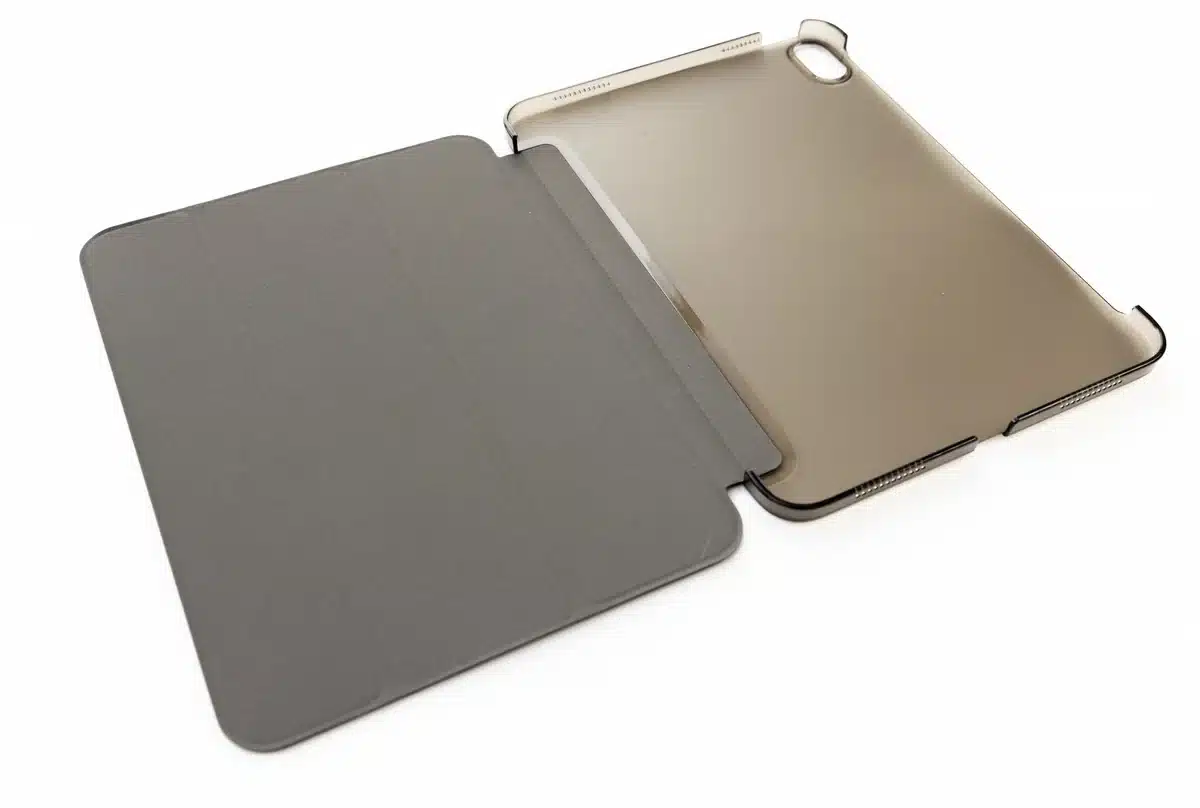
Freight is the most visible add-on, but it’s rarely the most predictable. Ocean freight rates shift with carrier capacity, fuel surcharges, and seasonal demand cycles. Air freight is faster but can push your per-unit cost up sharply — particularly on bulkier case formats like rugged tablet sleeves or folio-style designs with packaging. The dimensional weight calculation alone catches buyers off guard when they’re ordering cases with retail-ready box packaging versus poly-bag bulk packs.
Then there’s the customs layer. Import duties on tablet cases vary by material composition, destination country, and how the product is classified under the relevant tariff schedule. A hybrid case — part polycarbonate shell, part fabric exterior — can attract a different duty rate than a straight silicone or leather case. Getting the classification wrong, even unintentionally, creates delays and potential penalties that eat directly into margin.
- Freight charges (ocean, air, or express courier, plus fuel surcharges)
- Import duties and customs clearance fees
- Port handling and inland delivery costs
- Inspection and quality control costs — particularly relevant when tablet case OEM pricing involves custom specifications or new tooling
- Packaging compliance requirements for specific retail or distribution channels
- Payment terms and currency conversion costs when dealing with cross-border suppliers
Thinking about tablet case total cost of ownership reframes the sourcing decision entirely. A quote that looks lean at the unit level can deteriorate fast once freight terms shift from FOB to your door, or once a quality issue triggers a rework cycle that you’re absorbing domestically. Suppliers who offer transparent cost breakdowns and stable lead times — rather than just competitive sticker prices — tend to produce better landed cost outcomes over repeat order cycles.
Tablet Case OEM Pricing and Tooling Amortization: How Mold Costs Get Built Into Your Quote
Mold costs are one of the most misunderstood line items in tablet case OEM pricing — and they’re almost never labeled clearly on a first quote. A supplier quoting a custom EVA folio or a molded polycarbonate shell has typically absorbed tooling development costs somewhere in the unit price, the setup fee, or both. Knowing where to look changes how you read a quote entirely.

Tooling amortization works like this: a custom injection mold or die-cut tool carries a one-time development cost that the factory needs to recover. Suppliers do this one of two ways — either they charge it as a discrete upfront fee (common on transparent OEM arrangements), or they spread it across the first production run by inflating the per-unit price until the mold cost is covered. The second approach is more common than buyers expect, and it means your unit economics on the first order are not representative of repeat orders.
This matters significantly for tablet case total cost of ownership calculations. If you’re projecting landed cost across three order cycles and you’re using first-order unit pricing as your baseline, you’re overstating long-run costs — or understating them, if the mold fee was buried and you didn’t account for it at all.
A few practical points worth factoring into any OEM sourcing conversation:
- Ask whether tooling is charged separately or amortized into unit pricing, and over how many units
- Clarify mold ownership — some suppliers retain the tool; others transfer ownership to the buyer after a threshold quantity
- Understand what happens to the mold if you switch suppliers or pause orders for an extended period
- Request a revised unit price projection for repeat orders once tooling is fully recovered
Suppliers with structured OEM programs — the kind that support custom specifications from development through production — will typically provide this breakdown without being pushed for it. That transparency is itself a signal worth noting when evaluating tablet case landed cost across the full supplier relationship, not just a single shipment.
Freight, Duties, and Packaging Density: The Hidden Multipliers in Tablet Case Total Cost of Ownership
Unit price and tooling costs are visible line items — freight, duties, and packaging efficiency are where procurement budgets quietly erode. These variables don’t appear on a supplier’s quote sheet, but they shape tablet case landed cost more decisively than most buyers anticipate before their first shipment clears customs.

Shipping mode is the first fork in the road. Air freight moves fast and keeps inventory lean, but the cost-per-unit premium over sea freight can be substantial — sometimes enough to flip a margin calculation entirely on lower-priced SKUs. Sea freight, by contrast, rewards volume and patience. The catch is that minimum container economics push buyers toward larger order quantities, which ties up working capital and increases exposure if a product iteration is needed mid-cycle. Neither mode is wrong. The question is whether the choice is deliberate or defaulted to.
Duties add another layer. Tablet cases typically fall under harmonized tariff codes that attract import duties varying by destination market — and in some trade corridors, additional tariff overlays apply depending on country of origin. Buyers sourcing from China should validate the applicable HS code early, not after a purchase order is confirmed. A classification error discovered at the port of entry creates delays, potential penalties, and retroactive duty liability that no one budgeted for.
Packaging density is the variable most frequently underestimated in tablet case total cost of ownership analysis. Cases that ship flat or nest efficiently into master cartons allow significantly more units per cubic meter — which translates directly into lower freight cost per unit. Bulky retail packaging, rigid inserts, or non-stackable designs all reduce carton fill rates. When evaluating tablet case OEM pricing, request the packed carton dimensions and gross weight alongside the unit quote. Running the freight math on that data, rather than assuming it, is the difference between an accurate landed cost model and a rough estimate.
- Confirm the HS code classification before committing to a purchase order
- Compare air vs. sea freight cost-per-unit across your realistic order volumes, not just the headline MOQ
- Request packed carton specifications — dimensions, units per carton, gross weight — as a standard part of the RFQ process
- Factor duty rates for each destination market separately if you distribute across multiple regions
- Revisit packaging design if fill-rate inefficiency is inflating per-unit freight cost beyond acceptable thresholds
Suppliers experienced in export-oriented fulfillment will have this data readily available — and some will proactively flag packaging adjustments that improve carton efficiency without compromising product protection. That kind of operational input is worth accounting for when comparing supplier relationships on total cost, not just quoted price.
Warranty Spares, Return Buffers, and After-Sale Risk: Budgeting for What Suppliers Don’t Always Mention
Most landed cost calculations stop at the moment goods clear customs. That’s a mistake — because the cost exposure doesn’t stop there, and for tablet cases specifically, the post-arrival phase carries some of the most predictable (and most ignored) budget risks in the whole procurement cycle.
Warranty replacements are the obvious one. If you’re selling through retail or direct channels with any kind of satisfaction guarantee, a percentage of units will come back — wrong fit, cosmetic defects, compatibility issues with device variants the buyer didn’t anticipate. The question isn’t whether that happens. It’s whether you’ve reserved inventory and budget to handle it without placing an emergency reorder at unfavorable MOQ pricing. Tablet case OEM pricing is almost always volume-dependent, so a small top-up order to cover warranty stock typically costs meaningfully more per unit than the original run.
Return buffers work differently from warranty spares but carry similar logic. Distributors and retail partners often negotiate return allowances into commercial terms — sometimes two to five percent of invoice value. That liability flows back upstream whether or not it’s explicitly named in your landed cost model. Buyers who track tablet case total cost of ownership properly build this into their per-unit economics at the planning stage, rather than absorbing it as a surprise write-down after the selling season.
- Allocate a warranty and returns reserve as a line item in your landed cost model — not as a contingency afterthought
- Confirm with your supplier what documentation, photos, or sample returns are required to support a defect claim before you need to file one
- Clarify lead time on replacement production — a six-week turnaround on warranty stock is very different from a two-week one
- If your supplier offers inspection options pre-shipment, weigh that cost against the downstream expense of managing defective units after arrival
Suppliers with structured export experience tend to have clearer defect claim processes and more predictable replacement lead times — both of which reduce the operational drag that after-sale issues create. When evaluating supplier relationships on true tablet case landed cost, that kind of process reliability belongs in the analysis alongside quoted price and freight terms.
Conclusion
The quoted unit price is just the starting point. Everything else — freight mode, duties, compliance costs, inspection fees, and what happens when defective units show up after arrival — is what actually determines whether a sourcing decision made sense.
Getting serious about tablet case landed cost means building a model before you commit to a supplier, not after the container ships. Suppliers who have structured export processes tend to make that easier — clearer documentation, predictable timelines, fewer surprises. That’s worth weighing alongside price.
Run the numbers end to end. Every time.
Frequently Asked Questions
Q: What is tablet case landed cost and what does it actually include?
A: Tablet case landed cost is the total cost of getting a unit from a supplier’s factory floor to your warehouse door — not just the quoted unit price. It typically includes product cost, freight (sea or air), import duties, customs brokerage fees, port handling charges, inland delivery, and any compliance or inspection costs. The number that matters for margin calculations is always the landed figure, never the FOB quote in isolation.
Q: How much does freight mode affect tablet case landed cost?
A: More than most buyers expect — especially on a product category with tight margins and high volume. Air freight can run three to six times the cost of sea freight per kilogram, so for large orders, that gap compounds fast. Sea freight spreads the fixed shipping cost across more units, but it adds weeks to your lead time, which has its own carrying cost implications.
Q: Why does the HS code classification matter when calculating landed cost for tablet cases?
A: Because the wrong HS code — even an honest mistake — can mean your duty rate is miscalculated, and that difference gets reconciled at customs, not before. Tablet cases often fall under protective cover classifications, but the applicable rate varies by destination country and material composition. Getting a binding tariff ruling from your customs broker before the order ships is worth the effort.
Q: How do I build a tablet case landed cost model before committing to a supplier?
A: Start with your supplier’s unit price at a specific MOQ, then layer in freight quotes (get at least two), your destination country’s duty rate for the correct HS code, estimated brokerage and port fees, and a buffer for incidental costs like inspection or re-labeling. Suppliers with clean export documentation — commercial invoices, packing lists, certificates of origin — make this process faster and reduce the risk of customs delays that inflate your actual cost.
Q: How long does it take to receive a tablet case shipment from an overseas supplier?
A: Sea freight from major manufacturing regions to North America or Europe typically runs four to six weeks port-to-port, plus production lead time beforehand and inland transit after arrival. Air freight compresses that to roughly five to ten days in transit — but the landed cost impact is significant. Build your timeline assumptions into your cost model; delays extend your inventory holding costs, which are part of the real landed number.
Q: Can I reduce tablet case landed cost by ordering in higher volumes?
A: Often, yes — but the savings come from different places at different scales. Higher volume spreads fixed freight costs across more units and typically unlocks lower unit pricing from suppliers. The caveat is that larger orders also mean more capital tied up in inventory, so the landed cost per unit might improve while your cash flow situation gets tighter. Run both scenarios before assuming volume is always the right lever.
Q: Is it worth paying more for a supplier with structured export processes?
A: A slightly higher unit price from a supplier with reliable documentation, consistent lead times, and predictable QC outcomes frequently results in a lower actual tablet case landed cost than a cheaper quote that generates customs delays, re-inspection fees, or defective returns. Process reliability doesn’t show up on a price sheet — but it shows up in your final numbers.
Q: What hidden costs do buyers most often miss when estimating tablet case landed cost?
A: Customs brokerage fees, destination port handling charges, and the cost of dealing with non-compliant or defective units after arrival are the most commonly overlooked line items. Compliance costs — things like required safety markings or packaging regulations for specific markets — can also catch buyers off guard if they’re not built into the sourcing brief from the start. A landed cost model that only accounts for freight and duty is incomplete.