
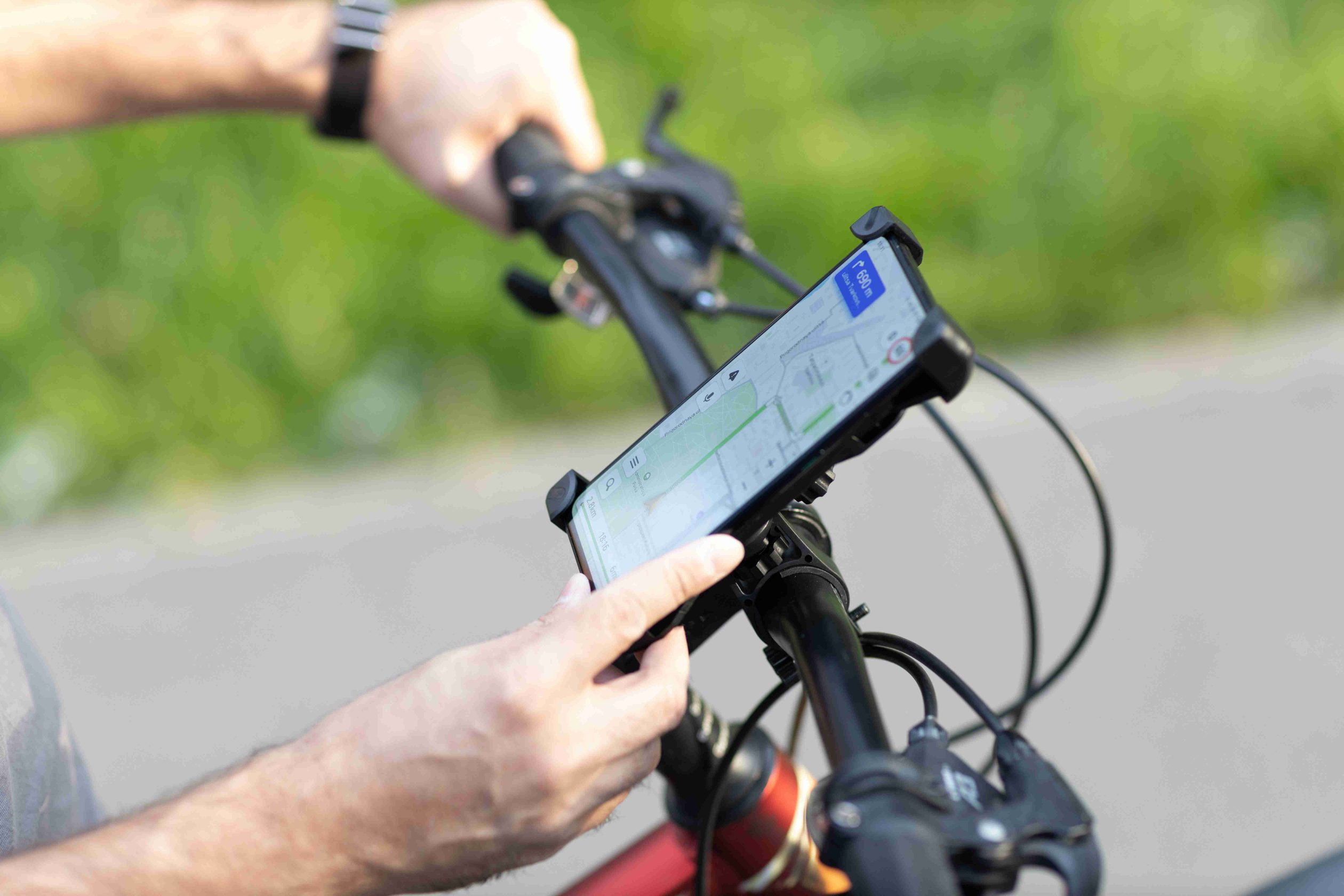

Why Motorcycle Phone Holders Need Different Engineering Than Bike Mounts
OK so here’s something most people don’t realize until they’ve already wasted forty bucks: motorcycle phone holders and bike phone holders are completely different animals. I learned this the hard way when I strapped a regular bike mount to my Kawasaki and watched it literally vibrate itself to death on the highway. Three days. That’s how long it lasted.

The core issue? Vibration frequency. Motorcycles — especially twins and V-twins — produce constant high-frequency vibrations that regular bike mounts just aren’t engineered to handle. Your bicycle hits bumps and potholes, sure. But a motorcycle engine is shaking your phone at around 100 Hz basically nonstop. That’s why you’ll see motorcycle phone holders with rubber dampening systems or ball-mount isolation. Without that, your phone’s camera stabilization gets wrecked (Apple even has a support page about this now).
And the speed thing matters more than you’d think.
At 70 mph, wind force isn’t just pushing against your mount — it’s creating lift and drag that can literally peel a standard bike grip off the handlebars. I’ve seen it happen to a guy at a rest stop outside Flagstaff. His phone went airborne somewhere around mile marker 247. Motorcycle-specific mounts use clamping mechanisms with way higher retention force, usually 15-20 pounds of grip versus the 5-8 pounds you get with regular bike mounts.
Then there’s weatherproofing. Cyclists can duck under a tree when it rains (or just… stop riding). Motorcycle riders? We’re out there in everything. So proper motorcycle phone holders come with sealed cases or rain covers that actually work at highway speeds. The cheap bike ones just let water seep in through the charging port cutout.
Bottom line: if you’re riding anything with an engine, don’t cheap out with a regular bike mount. The engineering requirements are legitimately different, and your phone — or worse, your safety — isn’t worth the gamble.
Vibration Resistance: How Motorcycle Phone Holders Handle High-Frequency Shake
I learned about vibration the hard way when my iPhone 13’s camera stabilization just… died. Completely. Took it to the Apple Store and the tech pulled up the diagnostics — “excessive vibration exposure.” Thanks, $40 Amazon mount.

Here’s what most people don’t realize: motorcycles generate high-frequency vibration that’s fundamentally different from road bikes. We’re talking 80-120 Hz constant shake from the engine, transmitted straight through your handlebars. Road bikes? Maybe 20-30 Hz from bumps. Your phone’s internal components — especially the optical image stabilization in modern cameras — literally cannot handle sustained motorcycle vibration without proper dampening.
Good motorcycle phone holders use rubber isolation systems between the mount and your device. RAM Mounts pioneered this with their ball-and-socket design that includes rubber dampers at every connection point. Quad Lock went a different route with their vibration dampener attachment (separate $20-30 purchase, annoyingly). Both work. The cheap clones on Amazon? They clamp your phone rigid to a metal frame that’s rigid to your bars. Zero isolation.
And the camera thing isn’t theoretical — Apple actually issued a support document about it in 2026. So did Samsung. Sustained exposure to high-amplitude vibration (like from motorcycle engines, especially twins and singles) can permanently damage the autofocus motors and OIS mechanisms. I’ve seen it happen to three different phones across two brands.
Some newer bike phone holders now advertise “anti-vibration” technology, which usually means they’ve added a layer of silicone or rubber between the clamp arms. Better than nothing. Not great. The mounts specifically engineered for motorcycles use multi-layer dampening — rubber bushings, foam inserts, sometimes even spring-loaded arms that absorb shock independently.
Worth noting: vibration gets worse as RPMs climb. If you’re cruising at highway speeds on a sport bike (8,000+ RPM), you need serious isolation. Cruisers and touring bikes are gentler, but still way harsher than bicycles.
Test this yourself: put your phone in the mount, fire up the engine, and watch the screen at idle. If you can’t read text clearly because it’s blurring, that mount isn’t doing its job.
Speed and Weather Protection — What Separates Motorcycle Phone Holders from Bicycle Versions
I rode through a downpour last August with my phone mounted on the handlebars. Twenty minutes in, the screen started doing that weird ghost-touch thing where it thinks you’re tapping buttons when you’re not. Rain had seeped into the edges. Not fun when you’re trying to navigate unfamiliar roads at 70 mph.
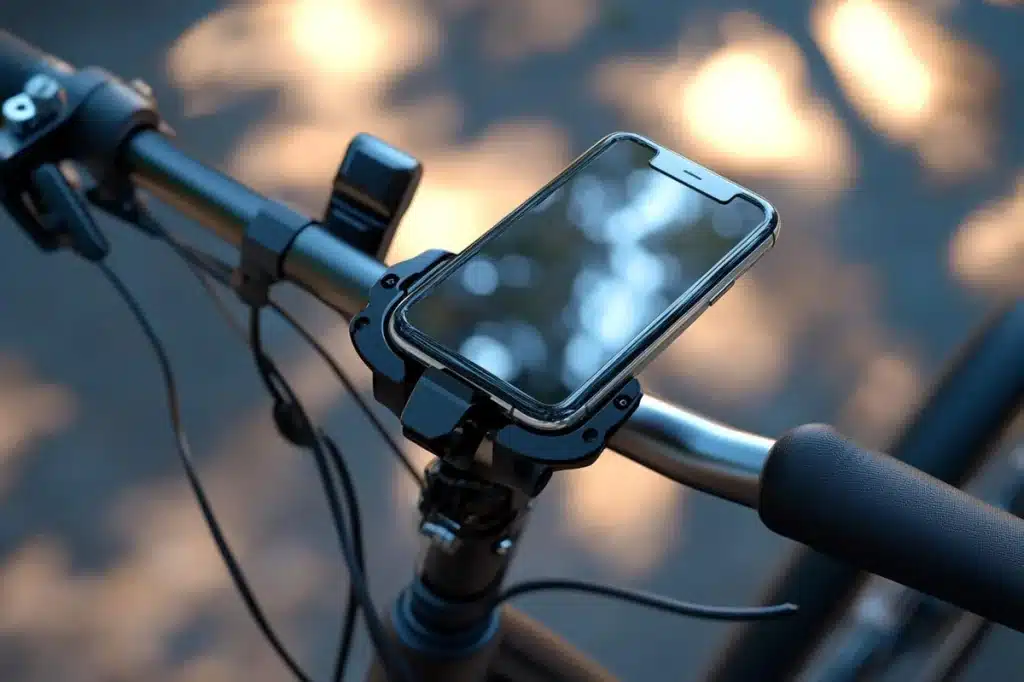
So yeah — weather sealing matters way more on motorcycles than bicycles. And it’s not just rain. At highway speeds, even mist becomes a problem. Wind drives water into every gap, every seam, every poorly designed corner of your mount. Bicycle phone holders assume you might get caught in a shower. Motorcycle phone holders assume you’re riding through a pressure washer.
The good motorcycle-specific mounts use rubberized gaskets around the clamp points and sealed backs that create an actual barrier between your phone and the elements. Some go further with full rain covers — clear plastic shields that let you still use the touchscreen (mostly) while keeping everything dry. They look bulky. They work.
Then there’s speed itself, which creates problems bicycle riders never think about. At 80 mph, wind pressure is trying to rip your phone off the mount constantly. That’s not an exaggeration — the aerodynamic force at those speeds is brutal. Cheap bike phone holders rely on friction and maybe a single retention clip. Fine for 15 mph. Catastrophic at freeway speeds.
Proper motorcycle phone holders use multiple locking mechanisms: usually a combination of clamp arms, a bottom support ledge, and at least one (sometimes two) retention clips or straps across the top. Redundancy is the whole point. If one system fails, the others keep your $1,200 phone from becoming road debris.
And honestly? The mount itself needs to be weatherproof too. I’ve seen handlebar clamps rust out after a single winter of wet commuting. Stainless steel hardware, anodized aluminum bodies, sealed ball joints — these aren’t luxury features on a motorcycle mount. They’re baseline requirements if you’re riding year-round in anything other than perfect California weather (and even then, morning fog is a thing).
Mounting Systems and Stability: Choosing Between Bike and Motorcycle Phone Holders
I bolted a $40 bike phone holder to my Honda CB500X last spring — you know, one of those “universal fit” Amazon specials with the rubber strap thing. Lasted exactly four days before the whole assembly vibrated loose on I-90 and my phone went bouncing down the shoulder at 65 mph. Not my finest moment.
So here’s what I learned the expensive way: the mounting system matters more than the holder itself. Way more.
Bike phone holders designed for pedal bikes typically use one of three attachment methods: elastic bands that hook around your handlebars, quick-release clamps (think GoPro-style), or those twist-lock systems that snap onto proprietary handlebar mounts. All three work fine when your biggest concern is a pothole or a curb hop. But introduce sustained vibration — the kind you get from a 600cc engine at highway RPM — and those systems fall apart. Literally.
Motorcycle phone holders use what I call “committed mounting.” You’re drilling into your handlebar clamp, or you’re replacing your stem cap with a threaded mount, or you’re installing a dedicated RAM ball system that bolts through your triple tree. It’s not tool-free. It’s not reversible in 30 seconds. And that’s exactly why it works.
The difference comes down to contact points and mechanical advantage. A rubber strap touching your bars in four places will eventually stretch — especially in summer heat — and once there’s 2mm of play, vibration turns it into a slow-motion catapult. A proper motorcycle mount clamps with 8-12 lb-ft of torque across a machined aluminum interface. Physics wins.
But (and this matters if you actually switch between bikes) some of the newer modular systems split the difference pretty well. QuadLock’s motorcycle-specific vibration damper, for instance, uses their standard twist-lock — but adds a rubber isolation module that you bolt to the bike permanently. You get the security of a fixed mount with the convenience of quick-release when you’re swapping phones or bikes. Costs about $80 for the full setup, which feels steep until you price out your first screen replacement.
Conclusion
So here’s what actually matters: bike phone holders fail when they’re designed for convenience first and physics second. If you’re commuting on pavement at 25 mph, yeah, a $15 Amazon special will probably hold. But the second you hit gravel, potholes, or anything above 50 mph, you need metal and torque — not wishful thinking and stretchy silicone.
I’d rather spend ten minutes with an Allen key once than spend three minutes every morning re-tightening a mount that’s slowly working itself loose.
And if your phone’s worth more than your mount, you’ve already made a mistake.
Frequently Asked Questions
Q: Can bike phone holders damage your phone?
A: Yeah, if you cheap out. Vibration is the real killer — constant shaking at high frequencies can break internal solder joints, especially on camera modules. I’ve seen iPhones develop the “shaky camera” issue after a few weeks on crappy mounts that don’t dampen road buzz.
Q: How do I keep my phone from falling off while mountain biking?
A: Metal clamps with redundant lock points, period. Quad Lock and Ram Mounts both use mechanical retention that won’t fail on a rock garden. Silicone stretchy holders are fine for paved commutes but they’ll yeet your phone into a creek the first time you hit a root at speed.
Q: Are wireless charging bike phone holders worth it?
A: Only if you’re doing long road rides where you actually need the juice. They add weight, cost about $40 more than non-charging versions, and honestly — most people aren’t riding long enough to drain a modern phone battery. I’d rather carry a small power bank.
Q: What’s the difference between stem mounts and handlebar mounts?
A: Stem mounts sit lower and closer to your centerline, which is better for aerodynamics and visibility on road bikes. Handlebar mounts give you more flexibility with positioning but they stick out further — not great if you’ve already got lights, GPS, and a bell fighting for real estate up there.
Q: How much should I spend on a bike phone holder?
A: Somewhere between $40 and $80 if you want something that’ll last more than six months. The $15 Amazon specials work until they don’t, and “don’t” usually happens at the worst possible time. Quad Lock runs about $50-60 for the mount plus case, Ram Mounts are $30-40 but you’ll need their phone cradle too.
Q: Can I use the same bike phone holder for different phones?
A: Depends on the system. Universal claw-style holders adjust for different sizes but they’re usually the flimsiest option. Case-based systems like Quad Lock mean buying a new case when you upgrade phones — annoying but worth it for the security. Ram Mounts fall somewhere in the middle with adjustable cradles.
Q: Do bike phone holders work in the rain?
A: The mount itself? Sure. Your phone’s touchscreen? That’s the problem. Most bike phone holders don’t come with weather protection, so you’re either buying a separate waterproof case or dealing with a screen that won’t register taps when it’s wet. Some people just accept that rainy rides mean no navigation.