What “Customize Phone Cover” Actually Means (And What Buyers Get Wrong)
So here’s what most people picture when they search “customize phone cover“: slapping a photo onto a plain case and calling it done. That’s part of it. But barely.
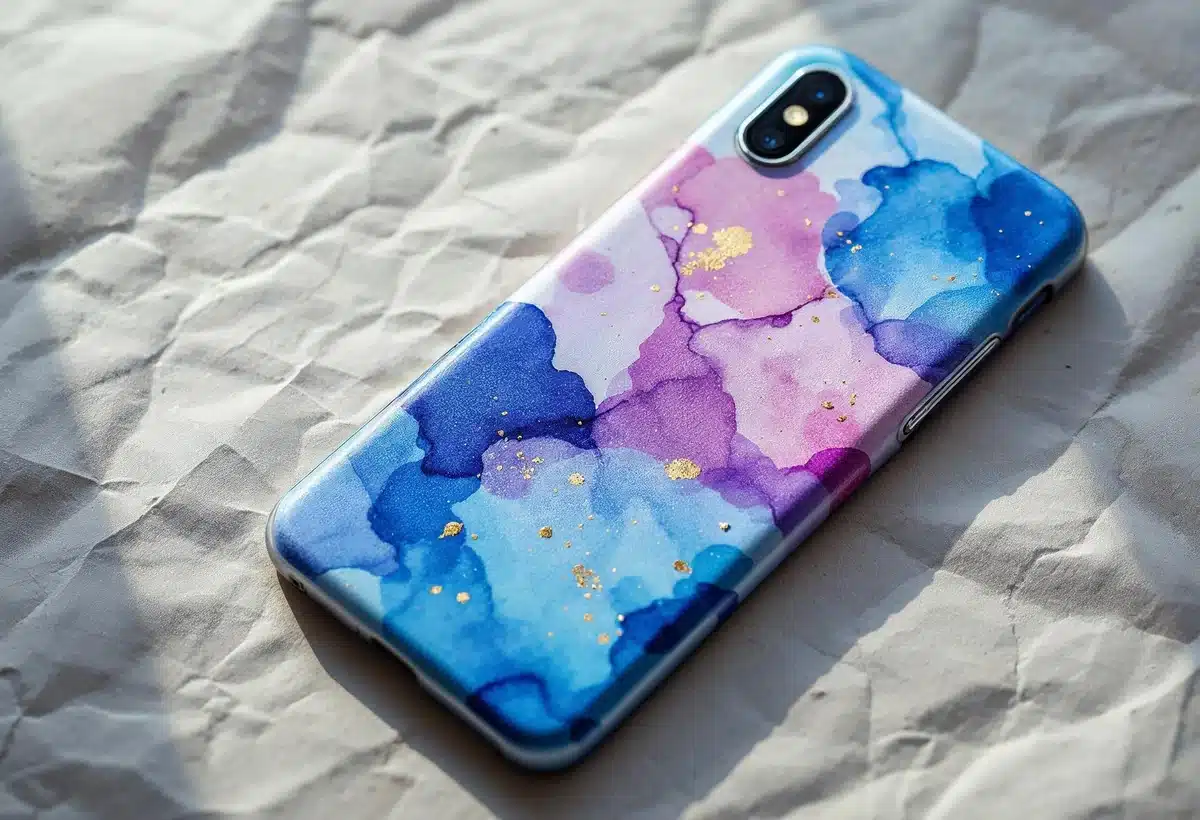
The actual range of what customization covers — pun intended — is way broader than a print-on-demand selfie case from a random Etsy shop. You’re looking at choices that touch materials, structural design, drop protection ratings, finish textures, branding, and even the precise cutout placement for your camera module. Miss any one of those, and you’ve got something that looks custom but functions like a $4 impulse buy.
And this is where buyers consistently go wrong: they treat “customize” as purely a visual exercise.
The confusion is understandable, honestly. A lot of marketing leans into the aesthetic angle — “Protect Your iPad in Style with a case that reflects your personality” — and that framing quietly trains people to think the design is the whole point. It isn’t. The structural decisions matter just as much. Maybe more. A case with gorgeous artwork and zero shock absorption is decorative, not protective.
Here’s a rough breakdown of what customization actually involves at different levels:
- Surface printing: custom colors, patterns, photo prints — the most common, most limited tier
- Material selection: silicone vs. polycarbonate vs. TPU vs. hybrid builds (each handles drops differently)
- Form factor modifications: raised edges, kickstands, card slots, grip textures, wallet attachments
- Protection spec: this is where something like Introducing our Heavy-duty Anti-drop iPad Case becomes relevant — the drop rating, corner reinforcement, and screen lip height are all specifiable
- Branding and packaging: relevant if you’re buying multiples for a team, club, or small business
Why Every Tablet User Needs a case with actual structural thought behind it — not just a pretty skin — is a point that gets made at trade events constantly. Shuowei Technology Participated in HK Global sourcing fairs where this exact conversation came up repeatedly: buyers arriving with aesthetic mockups and leaving with a much longer checklist.
Bottom line? Customize phone cover means nothing without knowing which layer of customization you’re actually after. Start there.
The difference between a skin, a case, and a fully custom phone cover
OK so here’s where most people get tripped up — and honestly, it’s an easy mistake to make. They use “skin,” “case,” and “cover” interchangeably, then wonder why what they ordered looks nothing like what they imagined. These are three genuinely different things.
| Type | What it actually is | Protection level | Customization potential |
|---|---|---|---|
| Skin | Thin vinyl wrap, adhesive-backed, sits flush | Scratch only — zero drop protection | High for graphics, zero for structure |
| Case | Rigid or semi-rigid shell, adds bulk | Drop-rated, corner-reinforced options exist | Moderate — shape is fixed, surface is printable |
| Custom cover | Spec’d from material up — your shape, your finish | Fully variable, you define the brief | Maximum — OEM-level control |
Skins are essentially stickers. Good ones — 3M-backed, properly die-cut — sit beautifully and peel clean. But drop your phone? Gone. Cracked. The skin did nothing.
Cases are a step up, obviously. But the word “case” covers everything from a 0.3mm gel sleeve to something built like a small tank. When people talk about wanting to Protect Your iPad in Style with a case that actually holds up, they’re usually describing something with real material thickness, a raised screen lip of at least 1.5mm, and reinforced corners — not a generic TPU sleeve from a bin at the airport. And if you’re looking at something like Introducing our Heavy-duty Anti-drop iPad Case as a reference point for what “case” can mean at the structured end of the spectrum, the difference becomes pretty stark.
A fully custom phone cover is something else entirely. You’re not choosing from existing molds. You’re defining the brief — material, texture, port cutouts, finish (matte vs. gloss vs. rubberized), even packaging if you’re ordering for a group. The 5 Reasons Why the Full Body approach to custom covers keeps coming up in buyer conversations is simple: it’s the only format where nothing is assumed. Every spec is intentional.
So when you decide to customize phone cover options for yourself or a group, the first question isn’t “what do I want it to look like.” It’s “which of these three things am I actually buying?” That answer changes everything downstream.
Why “custom” doesn’t always mean what the product listing says it does
Here’s the thing that trips up a lot of buyers: the word “custom” on a product listing can mean almost anything — and sellers know it. A seller can technically call a case “custom” because you typed your name into a text field. That’s it. That’s the whole customization. You picked a font, maybe a color from a dropdown of four options, and now it’s “personalized.” Not the same thing.
So what are the actual tiers here? Broadly, when you try to customize phone cover options online, you’re usually landing in one of three buckets:
- Print-on-demand personalization — your image or text printed onto a fixed, mass-produced shell. The case shape, material, and structure are already decided. You’re decorating, not designing.
- Semi-custom configuration — you pick from a constrained set of real variables (material type, finish, maybe a port layout option). More meaningful, but still working within someone else’s mold.
- True custom specification — the brief starts blank. Material, texture, cutouts, edge profile, finish — all of it defined from scratch. This is the format that keeps coming up when people reference Why Every Tablet User Needs a properly fitted cover rather than a generic one adapted to fit.
The gap between the first and third option is enormous. And honestly, most people buying from a marketplace listing don’t realize they’re in bucket one until the case arrives and feels… off. Slightly wrong cutouts. A finish that photographs differently than it looked on screen. A matte coating that’s actually just a thin film over a glossy shell (this is more common than it should be in 2026).
Enhance Your Tablet Experience with an actually custom cover — not a decorated one — and the fit difference is immediately obvious. Shuowei Technology Participated in HK Global sourcing events specifically because international buyers kept raising this exact confusion: they ordered “custom,” they got personalized. Two different products.
Blunt truth. The listing language won’t tell you which bucket you’re in. The spec sheet will.
How to Choose the Right Custom Phone Case Style Before You Commit
Style decisions feel easy until you’re actually staring at a configurator at midnight, second-guessing every choice. Here’s what most people get wrong: they pick a style based on how it looks in a flat mockup, not how it’ll actually function in their hands for the next 18 months.
So before you finalize anything on your customize phone case order, run through these four questions honestly.
- Do you drop your phone more than twice a week? Seriously, be honest. If yes, a slim aesthetic case will fail you — you need raised edges, shock-absorbing TPU corners, and real drop ratings. The same logic applies to tablets, which is why products like Introducing our Heavy-duty Anti-drop iPad Case exist as a separate category entirely, not just a marketing label.
- Is the print the point, or is protection the point? These two goals pull in opposite directions more than people admit. High-coverage artwork often requires a thinner shell to keep color fidelity. A thicker protective build means the print sits on a textured surface — and that changes how the colors read in real light versus a screen preview.
- What finish will you actually tolerate? Matte feels premium for about three weeks, then it starts collecting micro-scratches in pockets. Glossy shows fingerprints constantly but resists surface scuffs better. Clear cases — the ones that let your phone’s original color show through — yellow within months unless the UV-resistant coating is specified explicitly in the materials sheet.
- Are you buying one or many? A single customize phone cover for personal use is a completely different decision than ordering a batch for a team, event, or gift set. Minimums, lead times, and finish consistency all shift.
And honestly, full-body protection is underrated as a style category. People dismiss it as bulky. But if you’ve ever seen a cracked back panel that a 5 Reasons Why the Full Body format would’ve prevented — you get it immediately. Function is style, eventually.
One more thing worth knowing: the material spec sheet (not the product photo) tells you whether the case will actually Protect Your iPad in Style with the finish you’re imagining, or just approximate it. Ask for it before you commit. Always.
Conclusion
The material spec sheet matters more than the product mockup — every time. If a supplier or printing service can’t tell you what the TPU grade is, whether the coating is UV-resistant, or how the print bonds to the surface, that’s your answer right there.
A good customize phone cover isn’t complicated to get right. You just have to ask the boring questions before you approve the fun stuff.
Get the finish you actually want, not the one that looked good in a render and flaked off by month three.
Frequently Asked Questions
Q: What materials are actually used to make a customize phone cover?
A: The most common are TPU (thermoplastic polyurethane), polycarbonate, and hybrid combos that layer both — TPU on the sides for shock absorption, PC on the back for print clarity. The material matters more than people realize, because a soft TPU surface and a hard PC surface take ink and UV coating completely differently. If you’re ordering a custom design with fine detail or gradient colors, a polycarbonate back gives you sharper results almost every time.
Q: How much does it cost to customize phone cover with your own design?
A: For a single unit through a retail service like Casetify or Printful, expect to pay anywhere from $25 to $55 depending on the case type and finish. Bulk orders through a direct supplier drop that per-unit cost dramatically — sometimes under $5 at volume — but you’re committing to minimums. The real hidden cost isn’t the price per case; it’s the reprint when the colors come out wrong because nobody checked the color profile before production.
Q: How long does a customize phone cover typically last before the print fades?
A: Honest answer: anywhere from 4 months to 3+ years, depending entirely on the printing method and coating. UV-printed cases with a protective topcoat hold up significantly longer than dye-sublimation prints on raw TPU, which can start ghosting or yellowing within a season. If a supplier or service can’t tell you whether the print is sealed with a UV-resistant coating, assume it isn’t.
Q: What’s the difference between sublimation printing and UV printing on a customize phone cover?
A: Sublimation bonds dye directly into the surface — it works beautifully on polyester-coated materials but struggles with vibrant blacks and ultra-fine lines. UV printing sits on top of the surface as a cured layer, which gives you sharper detail and better color accuracy, especially on hard PC cases. For most custom designs with logos or photography, UV printing is the stronger choice. Sublimation wins on cost for simple, high-volume runs.
Q: Can I use a customize phone cover for branding or small business merchandise?
A: Absolutely — custom phone cases have become a legitimate merch category, right alongside tote bags and tees. The key is getting a proper print-ready file (300 DPI minimum, with bleed) and confirming the template dimensions match your target phone model exactly. Suppliers like Shuowei that handle OEM customization can accommodate branded packaging and spec-specific finishes, which matters if the case needs to look polished rather than print-on-demand.
Q: Why does my customize phone cover look different from the digital mockup?
A: Two reasons, almost always: color profiles and material interaction. Screens display in RGB; print processes work in CMYK — and nobody warned you to convert before uploading. The second issue is that a glossy mockup render doesn’t account for how a matte TPU surface actually absorbs color differently than a coated PC back. Ask for a physical sample or at least a printed color swatch before approving a full run.
Q: Is it worth paying more for a customize phone cover with a raised edge or camera lip?
A: If you’re actually going to use the case for daily protection — not just aesthetics — then the raised bezel is non-negotiable. A 1.5mm lip around the screen and camera cutout is the difference between a scratch and a cracked lens after a face-down drop. Budget cases often cut this detail first. Check the spec sheet, not the product photo, to confirm the actual lip height.
Q: How do I make sure a customize phone cover fits my exact phone model?
A: Get the template file specific to your model — not a “universal” template, which is basically a red flag — and cross-reference the cutout positions for the buttons, ports, and camera module. Phone dimensions vary even between generations of the same brand (the iPhone 15 Pro and 15 Pro Max are not interchangeable, for example). A case that’s 0.5mm off on a camera cutout will either block part of the lens or leave an ugly gap, and no amount of good design fixes that.