


Tablet Case Wholesale: What Mixed Loading Actually Means for Your Order Structure
Mixed loading is one of those operational details that procurement managers often underestimate until it creates a real problem — either a delayed shipment, a stranded SKU, or a customs declaration that doesn’t align with what’s physically in the container. In tablet case wholesale, the issue comes up constantly because buyers rarely need just one product configuration. They need multiple sizes, multiple materials, maybe multiple brand colorways — and they need them to arrive together.
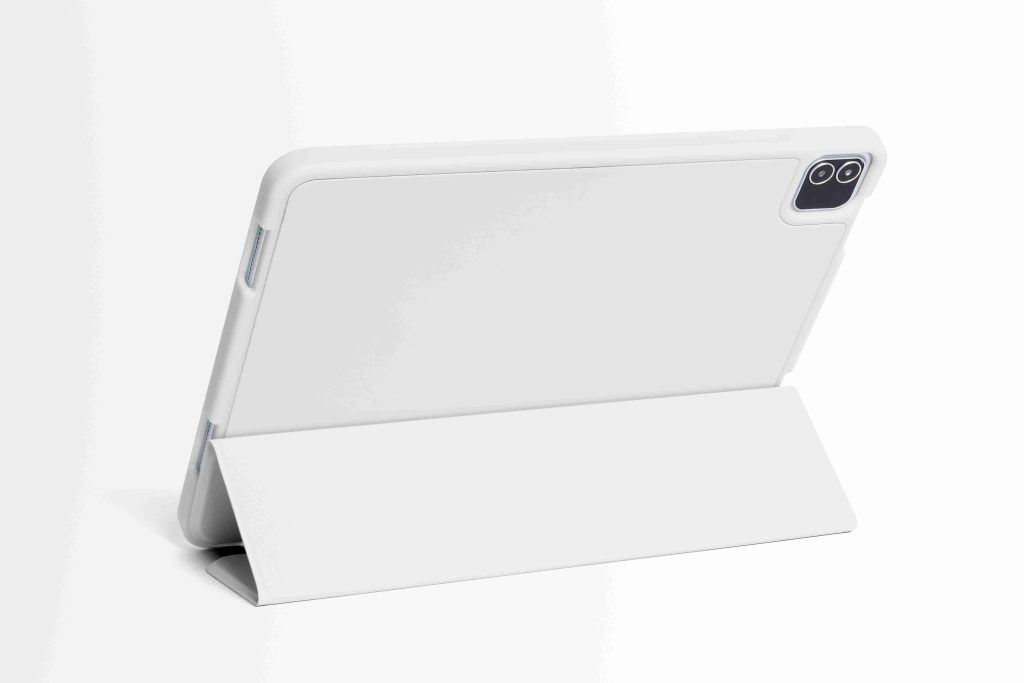
So what does mixed loading actually mean in practice? At its core, it refers to consolidating different SKUs — say, 10-inch folio cases alongside 12-inch rugged shells — into a single purchase order and, typically, a single shipping container. The commercial logic is straightforward: you reduce freight cost per unit, you streamline customs handling, and you avoid managing multiple supplier relationships for what is essentially one product category. The operational complexity, though, is where things get interesting.
The first variable is MOQ structure. Most factories that handle bulk tablet cases will set MOQs per SKU, not per order. That means a buyer requesting five different case styles at 200 units each may not hit the factory’s threshold for any single line item — which either forces a negotiation or pushes the buyer toward a supplier with more flexible minimum structures. This is where working with an established tablet case distributor program can genuinely change the math: distributors often aggregate demand across buyers, which allows smaller order lines to move without triggering per-SKU minimums.
The second variable is packaging compatibility. Mixed loads sound simple until you realize that different case types — slim sleeves versus hard-shell folios, for instance — have completely different carton dimensions and stacking tolerances. A poorly planned mixed load can result in crush damage or wasted container space. Experienced sourcing partners will map carton dimensions against container capacity before the order is confirmed, not after.
- Clarify per-SKU MOQs before finalizing your product mix
- Request carton dimension data for each line item early in the quoting stage
- Confirm whether your supplier’s QC process covers mixed-load inspections or only single-SKU runs
- Align your incoterms with the complexity of the load — mixed orders often benefit from closer oversight at origin
Getting the order structure right at the front end saves significant rework downstream. The suppliers worth working with will flag these issues proactively — not wait for the buyer to discover them at the port.
How Bulk Tablet Cases Are Packaged, Labeled, and Prepped for Retail or Distribution
Packaging and labeling decisions often get treated as an afterthought in wholesale negotiations — finalized late, delegated to logistics, and then scrambled over when the goods are already on the water. For bulk tablet cases moving through retail or distribution channels, that approach creates real operational problems. How a case is packaged at origin directly affects how fast it can be received, shelved, or forwarded to end customers.

Polybag versus retail box is the first fork in the road. Polybag packaging suits warehouse-to-warehouse distribution where cases will be repackaged or kitted downstream. Retail-ready packaging — printed insert cards, hang tabs, barcode labels on the exterior — is a different scope of work entirely, and it carries different costs and lead time implications. Buyers sourcing through a tablet case distributor program should confirm early which format their downstream channels actually require, not assume the supplier will default to the right one.
Labeling requirements vary significantly by destination market. Some retail chains mandate specific barcode formats, placement positions, and language requirements on the packaging itself. Export markets may have additional compliance markings. Suppliers experienced in tablet case wholesale will typically have templates for common retail requirements — but anything non-standard needs to be specified in writing before production starts, not flagged during pre-shipment inspection.
- Confirm whether retail packaging artwork is supplier-provided or buyer-supplied
- Specify barcode type, placement, and language requirements per SKU
- Clarify whether inner pack quantities align with your receiving or display unit needs
- Request pre-production packaging samples if retail presentation is a key deliverable
Inner pack and master carton configuration also matters for distribution efficiency. Bulk tablet cases packed in irregular inner quantities create unnecessary counting and repackaging labor at the warehouse. A clean pack structure — say, six or twelve units per inner, consistent across the run — reduces receiving errors and speeds up put-away. Suppliers who handle high-volume OEM orders typically understand this, but it still needs to be locked into the purchase order rather than left to production discretion.
The prep work done at the factory level compounds in value as the goods move through the chain. Getting it right at origin means fewer touch points, less rework, and cleaner inventory data from day one.
Setting Up a Tablet Case Distributor Program: MOQ, Replenishment Cycles, and Reorder Terms
Structuring a repeatable distributor program around bulk tablet cases requires more than agreeing on a unit price. The commercial terms that govern how stock moves — minimum order quantities, reorder windows, and replenishment triggers — determine whether the program runs efficiently or generates friction on every cycle.

MOQ thresholds in tablet case wholesale typically vary by product complexity. Standard protective shells with no custom branding often carry lower minimums than OEM configurations with printed packaging or proprietary colorways. Buyers building a tablet case distributor program should negotiate MOQs that reflect their actual sell-through velocity, not just the supplier’s preferred run size. An MOQ that looks favorable on paper becomes a liability if it consistently overstates demand and ties up working capital in slow-moving SKUs.
Replenishment cycles deserve as much attention as the initial order. A few structural questions worth establishing early:
- What is the confirmed production lead time for repeat orders — and does it differ from the original tooling run?
- At what inventory level should a reorder be triggered to avoid stockouts given that lead time?
- Does the supplier hold safety stock, or is every order built to demand?
- Are there seasonal capacity constraints that could compress the available production window?
Reorder terms often get less scrutiny than they warrant. Payment schedules, price lock periods, and minimum reorder quantities for top-up shipments should all be defined in writing before the first order ships — not renegotiated when a reorder is already urgent. Suppliers experienced in export-oriented fulfillment generally have standardized frameworks for this, but buyers should push for terms that reflect their own distribution model rather than accepting defaults.
One practical approach: build a tiered reorder structure into the program from the start. Smaller, more frequent shipments at a slightly higher per-unit cost may outperform large infrequent orders when storage costs and demand variability are factored in. The right cadence depends on the distribution footprint — a single regional warehouse has different constraints than a multi-market operation pulling from the same supplier.
Getting these mechanics documented before scale is the move that separates programs that compound efficiently from those that require constant renegotiation.
Evaluating Wholesale Suppliers on Flexibility, Lead Times, and Operational Fit
Supplier flexibility is one of those criteria that looks straightforward on a spec sheet but reveals itself only under operational pressure. For buyers moving volume in the tablet case wholesale space, the real test comes when product specs change mid-run, a retail customer pushes up a delivery window, or a new device release forces a rapid SKU pivot. How a supplier responds to those moments — not just to the initial RFQ — is what determines whether the relationship scales or stalls.
Lead time transparency matters more than lead time speed. A supplier quoting 18 days but consistently delivering in 22 is a planning liability. One quoting 28 days and hitting 27 every cycle is a reliable production partner. When evaluating bulk tablet cases across multiple suppliers, push for historical fulfillment data rather than stated lead times. Ask about their production queue structure — whether your orders run on dedicated lines or are batched with other customers — because that distinction directly affects how schedule changes get absorbed.
Operational fit covers a broader set of variables that procurement teams sometimes underweight during initial supplier vetting:
- Minimum order quantities that align with actual replenishment cycles, not just the supplier’s preferred run size
- Capacity to support format changes — packaging dimensions, labeling requirements, regional compliance markings — without treating each adjustment as a custom project
- Communication structure: a single point of contact with authority to make decisions, versus multi-layer approvals that slow response time
- Export documentation capability, particularly for buyers managing cross-border distribution or running a tablet case distributor program across multiple markets
Suppliers with structured OEM and wholesale operations — the kind built around export-oriented fulfillment rather than domestic retail — tend to handle these variables more predictably. The infrastructure is already oriented toward international buyer requirements rather than adapted from it.
One evaluation move worth building into the process: run a small pilot order with two or three candidate suppliers before committing volume. The pilot reveals production consistency, packaging execution, and communication responsiveness in a way that no factory audit or product sample fully replicates. It’s a front-loaded cost that almost always pays back at scale.
Conclusion
The pilot order idea isn’t optional — it’s the whole game. Anyone who’s sourced tablet case wholesale at volume knows that samples lie and audits miss things, but a real production run with real deadlines tells you almost everything you need to know about a supplier before you’re locked in.
Get the communication structure right from day one. One decision-maker on their end, clear timelines, documented specs. That’s the baseline.
Scale slowly, qualify hard, and don’t let price be the only number you’re watching.
Frequently Asked Questions
Q: What is the typical minimum order quantity for tablet case wholesale?
A: Most manufacturers set MOQs somewhere between 100 and 500 units per SKU — though that number shifts depending on how custom the spec is. A generic stock design will have a lower MOQ than a fully branded OEM build with custom packaging, so the more you deviate from a factory’s standard mold, the higher the floor tends to go.
Q: How do I find reliable tablet case wholesale suppliers overseas?
A: Trade platforms are a starting point, not a finish line. Verify that a supplier has actual export experience — look for documented B2B clients, not just product listings — and always run a pilot order before committing to volume. Companies like Shuowei, which specialize in OEM/ODM sourcing and export fulfillment, exist specifically to bridge the gap between international buyers and verified production capacity.
Q: How much does tablet case wholesale pricing vary by material?
A: Significantly. A basic EVA or TPU case will land at the low end of the unit cost range; genuine leather or rugged hybrid constructions (think hard shell plus silicone bumper) can cost three to five times more at equivalent quantities. The material decision also affects tooling costs if you’re going custom, so it’s not just a per-unit conversation — it’s a total-order-cost conversation.
Q: Why do wholesale tablet case samples sometimes look different from bulk production?
A: Samples are often hand-finished or pulled from a best-available batch — they don’t always reflect what comes off the production line at speed. This is exactly why a pilot order matters more than a sample: it stress-tests the factory’s consistency under real volume conditions, not showcase conditions.
Q: Can I get custom branding on tablet cases ordered wholesale?
A: Most established suppliers offer OEM and ODM options, which means you can typically add custom logos, branded packaging, and color-matched designs. The catch is that custom tooling or screen printing often requires a higher MOQ to be cost-effective — and you’ll want every branding spec documented in writing before production starts, not after.
Q: How long does a tablet case wholesale order take from confirmation to delivery?
A: For a stock design with minimal customization, production lead times typically run two to four weeks, with shipping on top of that depending on your freight method. Custom builds — new molds, bespoke materials, branded inserts — can push the production window to six to ten weeks. Build buffer into your timeline; cutting it close on a first order with a new supplier is a risk that rarely ends well.
Q: Is it worth sourcing tablet case wholesale from China versus domestic distributors?
A: For most buyers ordering at real volume, the unit cost difference is substantial enough that overseas sourcing wins on margin — but only if your logistics, QC, and communication structure are solid. Domestic distributors offer speed and simplicity; direct factory sourcing offers control and cost. The answer depends on your order size, your lead time flexibility, and how much operational overhead you’re prepared to manage.
Q: What quality checks should I require before a tablet case wholesale shipment leaves the factory?
A: At minimum, request a pre-shipment inspection that covers dimensional accuracy, zipper and closure function (if applicable), print quality, and packaging integrity — not just a visual pass/fail on a handful of units. Third-party inspection services exist for exactly this reason, and any reputable supplier in the tablet case wholesale space will accommodate them without pushback. If a supplier resists an independent inspection, that tells you something important.