
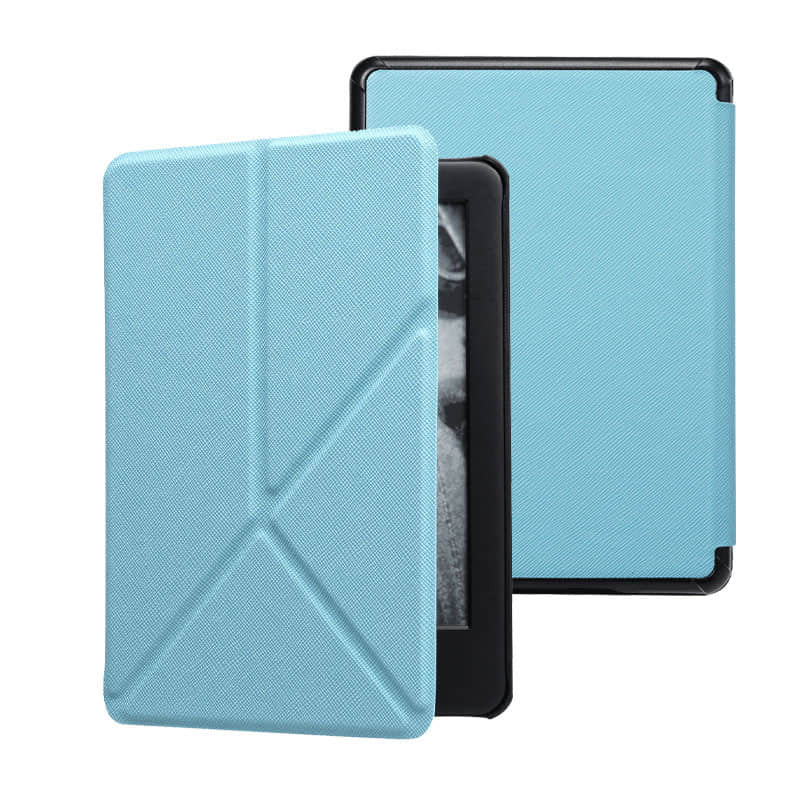

Why a Tablet Case Production Audit Matters Before You Place a Single Order
Placing a large-scale order with a tablet case manufacturer before you’ve verified what’s actually happening on the production floor is one of the more expensive assumptions a procurement team can make. Samples look good. Communication is responsive. The price fits the budget. And then the first shipment arrives with inconsistent stitching, misaligned cutouts, or materials that don’t match the approved spec sheet. By that point, you’re negotiating replacements across a twelve-hour time zone gap.
A tablet case production audit short-circuits that scenario entirely — and it does something else, too. It tells you whether a supplier’s stated capabilities match their actual operational reality. A factory might quote you on custom EVA foam construction, anti-drop TPU shells, and multi-device compatibility, but if their line workers are running a single material type on aging equipment, that quote is essentially fiction. The audit surfaces the gap before it becomes your problem.
What a serious pre-order audit should cover:
- Production capacity versus claimed output — actual units per day, not marketing figures
- Material sourcing transparency — where raw inputs come from and whether substitution happens without buyer approval
- Quality control checkpoints — are inspections in-line, end-of-line, or only triggered by complaints?
- Workforce stability — high turnover at a tablet case factory often signals inconsistent workmanship across production runs
- Certifications and compliance documentation — relevant for buyers importing into the EU, US, or other regulated markets
- OEM and ODM workflow — how the factory handles custom specifications, tooling ownership, and revision cycles
The audit process also reframes the buyer-supplier relationship from the start. Manufacturers who welcome third-party inspections or detailed pre-production walkthroughs — the kind that suppliers like Shuowei support as part of their sourcing coordination — are generally the ones operating with nothing to hide. Resistance to scrutiny, on the other hand, is its own data point.
MOQ discussions and lead time commitments only mean something when the factory behind them can actually deliver. An audit isn’t bureaucratic overhead — it’s the due diligence that makes every other procurement decision downstream more reliable.
Injection Molding Proof Points: What a Legitimate Tablet Case Factory Should Show You
Audit checklists and factory certifications tell part of the story. What separates a credible tablet case factory from one that looks the part on paper is the physical and procedural evidence they can put in front of a buyer — without being asked twice.

Start with tooling documentation. Any manufacturer running legitimate injection molding operations should be able to show you mold ownership records, tooling maintenance logs, and shot count histories. These aren’t bureaucratic details — they tell you whether the molds producing your cases are well-maintained or quietly degrading after years of overuse. A tablet case manufacturer who can’t produce this documentation is either disorganized or concealing something about production capacity.
Material traceability is the next pressure point. Reputable factories maintain records linking incoming resin or TPU stock to specific production runs. This matters when a defect surfaces post-shipment — you need to be able to trace it back to a specific batch, not shrug at a warehouse full of mixed inventory.
Process control during a tablet case production audit should include:
- In-mold temperature and pressure logs from recent production runs
- First-article inspection reports for custom SKUs — showing dimensional tolerances were actually verified, not assumed
- Reject rate data by product line, with documented corrective actions
- Evidence of drop-test and fit-test protocols matched to specific device models
That last point carries more weight than most buyers expect. Fit tolerances for tablet cases are unforgiving — a 0.3mm deviation in a cutout can render a case unusable for a specific device generation. Factories that test fit against actual device units, rather than relying solely on CAD specs, demonstrate a level of production discipline that shows up in far fewer post-production returns.
And then there’s the question of capacity transparency. Can the factory show you current production schedules alongside your projected order? Suppliers who coordinate sourcing across multiple factories — the kind of operational visibility that sourcing partners like Shuowei provide — can cross-reference capacity claims against real floor data rather than optimistic sales estimates.
Proof points aren’t a formality. They’re the mechanism that converts a factory’s stated capabilities into something a procurement manager can actually defend to stakeholders.
Tooling Ownership, Tooling Life, and the Questions Most Buyers Forget to Ask
Tooling is where a procurement relationship gets serious — and where a surprising number of buyers leave significant risk unaddressed. Most RFQ conversations focus on unit price, MOQ, and lead time. The tooling conversation, when it happens at all, tends to get compressed into a single line item on a quotation sheet. That’s a mistake.

The first question to ask any tablet case manufacturer is straightforward: who owns the tooling? Ownership isn’t just a legal formality. It determines what happens when you want to move production, when a mold needs repair, or when a supplier discontinues a product line. Buyer-owned tooling gives you portability. Supplier-retained tooling gives you dependence — sometimes at a price that doesn’t become visible until you try to exit the relationship.
Tooling life is the second variable most buyers underweight. Injection molds for tablet cases are typically rated for a defined number of shots — and that number varies considerably depending on the mold material, the complexity of the case geometry, and the production volume it’s been cycled through. A tablet case factory running high-volume consumer orders may burn through mold life faster than a buyer sourcing lower quantities expects. Ask for the mold shot count upfront. Ask what the replacement cost is, and who bears it when the mold degrades.
There are a few other questions worth putting directly to any supplier during early negotiations:
- Is the tooling stored on-site, or at a third-party mold facility?
- What is the maintenance schedule, and is there documentation?
- Will a tablet case production audit cover mold condition and shot records?
- What happens to tooling if the factory changes ownership or relocates capacity?
Sourcing partners who coordinate across multiple factories — rather than representing a single facility — tend to surface these questions earlier in the process, because they’ve seen what happens when they go unasked. Tooling disputes rarely appear in the first order. They show up in the third or fourth, when volumes are higher and switching costs are real.
Assembly Standards and QC Checkpoints That Separate Serious Suppliers From the Rest
Assembly quality in tablet case manufacturing doesn’t fail dramatically — it fails quietly. A hinge that loosens after thirty cycles. A snap closure that loses tension in humid climates. Corner reinforcement that looks solid in a photo sample but separates under moderate drop pressure. These aren’t material failures. They’re process failures, and they’re almost always traceable to gaps in assembly standards and QC checkpoints.
What separates a serious tablet case manufacturer from a facility running on thin margins and thinner oversight comes down to whether quality is built into the production sequence — or bolted on at the end. End-of-line inspection catches visible defects. It doesn’t catch misaligned internal frames, inconsistent hinge torque, or adhesive that wasn’t given adequate cure time before packaging. Those issues ship.
The QC checkpoints worth asking about specifically:
- In-process dimensional checks — are case dimensions verified mid-run, or only on finished units?
- Closure and hinge function testing on a sample basis during assembly, not just final inspection
- Adhesive bond verification protocols, including cure time documentation
- Foam and padding placement checks for cases with interior protection layers
- Pre-packaging functional test: does the case actually fit the target device model under production conditions?
A tablet case factory that runs structured in-process QC will have records — not just verbal assurances. Ask for a recent inspection report. Ask how non-conforming units are flagged and whether they’re tracked back to specific operators or shifts. Factories with real accountability structures can answer these questions without hesitation. Factories without them tend to reframe the conversation toward their certifications instead.
Certifications matter, but they don’t replace process discipline. ISO documentation tells you a factory has a quality management system in place. A tablet case production audit tells you whether that system is actually running on the floor. The two don’t always match — and the gap between them is where most procurement problems originate.
Sourcing partners who work across multiple facilities tend to carry comparative data on assembly consistency between factories. That’s a meaningful advantage when evaluating a new tablet case manufacturer, because assembly standards rarely surface in a factory’s own marketing materials — they surface in production records and audit findings.
Conclusion
The right tablet case manufacturer isn’t the one with the most polished pitch deck — it’s the one that can walk you through exactly what happens when a batch fails QC.
Certifications are a starting point, not a finish line. What actually separates reliable suppliers from risky ones is process discipline on the floor: defect tracking, operator accountability, audit records that reflect reality rather than aspiration. Those details don’t show up in a product catalog, which is exactly why you have to ask for them directly.
So before you commit to a supplier, push past the marketing materials. Request production data. Talk to someone who’s audited the facility. The answers — or the evasions — will tell you everything you need to know.
Frequently Asked Questions
Q: What does a tablet case manufacturer actually do differently from a regular factory?
A: A dedicated tablet case manufacturer runs tooling, material testing, and fit validation around specific device dimensions — not just generic pouch or sleeve production. The distinction matters because tablet cases require precise cutout tolerances for ports, cameras, and buttons, and a generalist factory often treats those as afterthoughts rather than engineering requirements.
Q: How do I find a reliable tablet case manufacturer for a private label order?
A: Start with trade directories and verified sourcing platforms, but don’t stop at the listing — request production samples, ask for client references in your product category, and push for a facility audit before committing. Suppliers like Shuowei that offer OEM/ODM support and direct project coordination tend to be easier to vet because there’s an actual person accountable for your order, not just a sales inbox.
Q: How much does it cost to manufacture tablet cases in bulk?
A: Unit costs vary widely depending on material — EVA foam, PU leather, polycarbonate, and folio-style designs each carry different tooling and labor costs. Generally, MOQs and per-unit pricing drop significantly once you cross into the hundreds or thousands of units, so the price you see for a sample run rarely reflects what you’d pay at commercial volume.
Q: Why does the tablet case manufacturer’s QC process matter more than their certifications?
A: Certifications confirm a factory met certain standards at a point in time — they don’t tell you what happens on the floor on a Tuesday afternoon six months later. What actually protects your order is whether the manufacturer tracks defect rates by batch, holds operators accountable for rejects, and keeps audit records that reflect real production data rather than curated paperwork.
Q: How long does it take to produce a custom tablet case order from scratch?
A: For a fully custom design — new tooling, custom colorways, branded packaging — lead times typically run eight to fourteen weeks from approved sample to shipped goods. Off-the-shelf customization (logo printing, minor spec changes on an existing mold) can move faster, sometimes within three to five weeks depending on the manufacturer’s current production load.
Q: Can I order a small batch from a tablet case manufacturer, or do they only work with large buyers?
A: Most tablet case manufacturers set MOQs somewhere between a few hundred and a few thousand units — the exact threshold depends on whether custom tooling is involved. Buyers with smaller initial orders often negotiate by choosing from existing molds with custom branding applied, which sidesteps the tooling cost that drives MOQs up in the first place.
Q: What materials should I specify when working with a tablet case manufacturer?
A: The short answer: it depends on your end market and price point. PU leather reads as premium but degrades faster than genuine leather or TPU in heavy-use environments; polycarbonate shells offer drop protection but add weight; EVA foam works well for carry cases but poorly for daily-use folio styles. Specify not just the material but the grade — a vague “PU leather” requirement leaves too much room for substitution without your knowledge.
Q: Is it worth visiting a tablet case manufacturer’s factory before placing an order?
A: For any order above a certain commercial threshold — or if you’re building a long-term supply relationship — an on-site visit (or a third-party audit) is worth the cost. A factory floor tells you things a product catalog never will: how organized the production lines are, whether quality checkpoints actually exist, and whether the facility matches the capacity claims in the pitch deck.