

What “Requirement Freeze” Actually Means — and Why Skipping It Destroys Your Tablet Case Product Development Timeline
Requirement freeze sounds like project management jargon — and it is — but the concept matters enormously in custom tablet case OEM work, where a single undocumented change mid-development can cascade into weeks of rework, scrapped tooling, and a launch date that quietly slips further and further out.
Here’s the core problem. Tablet case product development involves overlapping workstreams: structural design, material selection, mold fabrication, print or branding setup, and compliance testing. These don’t happen in sequence — they run in parallel to compress the timeline. So when a buyer changes the corner reinforcement spec after molds are already being cut, or decides to swap from PU leather to a rubberized shell after the first sample round, the factory isn’t just revising a sketch. They’re potentially scrapping tooling costs, reordering raw materials, and restarting a sample cycle that already consumed three to four weeks.
Requirement freeze means locking the functional and aesthetic specifications before production-stage tooling begins. That lock covers:
- Device compatibility and dimensional tolerances
- Material grade and finish (including texture, color references, and surface treatment)
- Hardware details — hinges, clasps, port cutouts, camera aperture sizing
- Branding placement, method (deboss, print, emboss), and color matching standards
- Packaging format and labeling requirements
The freeze isn’t about being inflexible. It’s about recognizing that a reputable OEM tablet case supplier will price and schedule a project based on a defined scope — and that scope changes after tooling confirmation are almost never free or fast. Most factories will accommodate revisions, but at added cost and with timeline penalties that compound quickly if a buyer has a retail or distribution deadline locked in.
Procurement teams that skip a formal freeze — or treat early samples as a “we’ll figure it out as we go” phase — often find themselves paying for multiple sample iterations, absorbing expedite fees, or shipping product that doesn’t fully match the original brief. Getting the specification documented, signed off internally, and confirmed with the factory before tooling approval isn’t bureaucracy. It’s the single most effective thing a buyer can do to protect the development timeline.
Stage Gate Checkpoints Every OEM Tablet Case Supplier Should Be Running Before You Sign a Purchase Order
Most procurement problems in custom tablet case OEM projects don’t originate on the production floor. They originate in the weeks before a purchase order is ever raised — specifically, in the absence of any formal checkpoint structure between buyer and factory. A well-run OEM engagement isn’t a single handoff. It’s a sequence of defined decision gates, each one designed to catch misalignment before it becomes a cost.
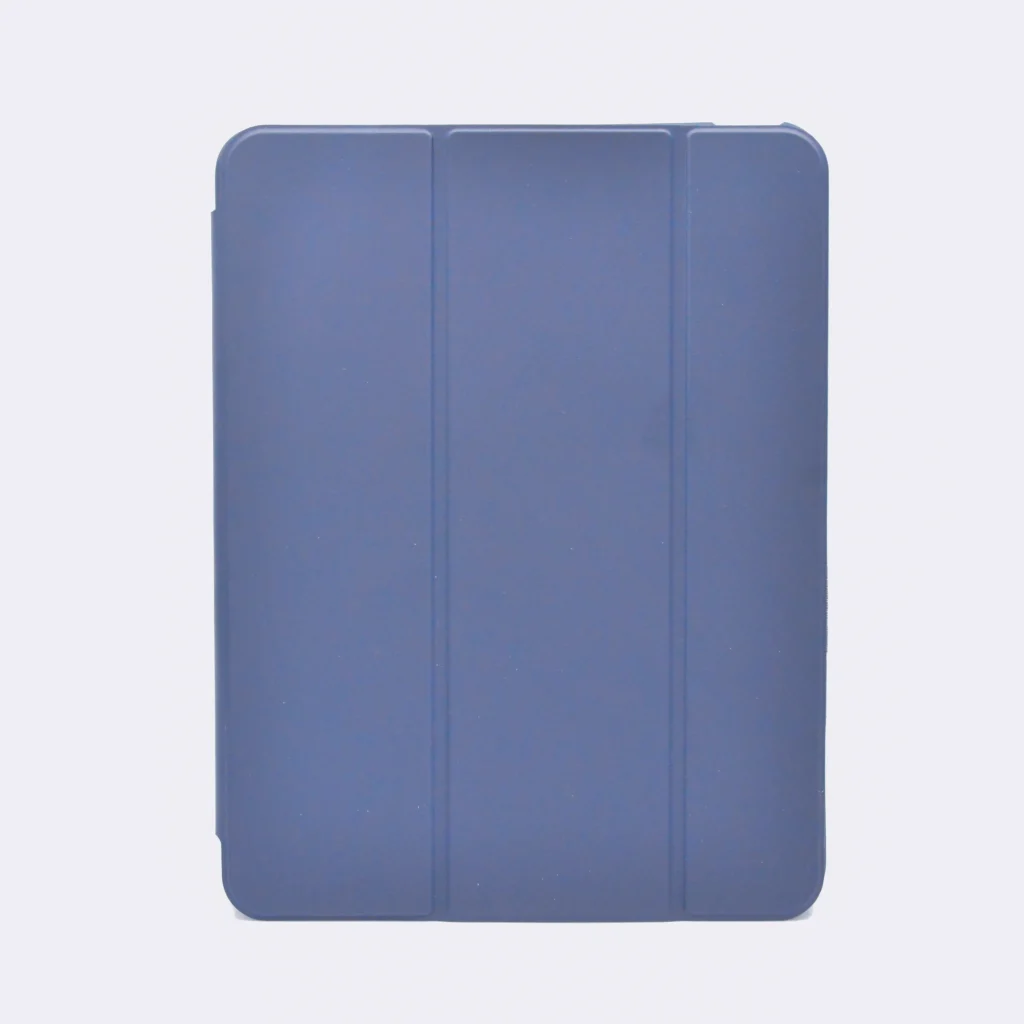
The checkpoints that matter most, in rough sequence:
- Specification lock confirmation — factory acknowledges the finalized material, dimension, and feature set in writing before tooling is commissioned.
- First article inspection (FAI) — a physical review of the initial production sample against the documented spec, not against memory or a verbal brief.
- Pre-production approval — sign-off on color, texture, hardware finish, and packaging before a full run begins.
- In-line quality check — an audit conducted during active production, typically at the 20–30% completion mark, to catch systematic defects early.
- Pre-shipment inspection — final AQL-based review of finished goods before containers are loaded.
Any OEM tablet case supplier that treats these as optional formalities rather than contractual milestones is a risk to the timeline. The gate structure exists precisely because production momentum — once a line is running — creates pressure to ship over pressure to fix. Buyers who haven’t embedded checkpoint authority into the purchase agreement often find that defects are “within acceptable range” by the factory’s internal standard, even when those defects would fail the buyer’s retail or distribution requirements.
Tablet case product development also introduces a specific wrinkle that generic hard goods sourcing doesn’t: compatibility. A case that passes visual inspection but ships with incorrect cutout tolerances for a device model is a returns problem, not a cosmetic one. That kind of failure is almost always traceable to a missed FAI step — where a physical device fit-check wasn’t required before mass production approval.
Factories with mature export experience — the kind that routinely handles international B2B orders across multiple device categories — typically have this checkpoint infrastructure already built into their project coordination process. The question a procurement team should be asking isn’t whether a factory can run these gates. It’s whether they’ll run them on your order, documented, with buyer sign-off required at each stage.
From Approved Sample to Mass Production: Where Custom Tablet Case Orders Actually Break Down
The approved sample is not a production guarantee. That distinction matters more in custom tablet case OEM than buyers often expect — because the gap between a signed-off sample and a compliant mass production run is where a significant share of order failures actually originate.

What tends to go wrong isn’t dramatic. It’s incremental. A material substitution happens quietly when a subcomponent supplier changes grades. A colorway drifts slightly because the production batch used a different mixing ratio than the sample. Molded corners come out fractionally softer because the tooling temperature wasn’t held to spec. None of these failures announce themselves — they accumulate across thousands of units before anyone flags them.
The structural issue is handoff fragmentation. In many factories, the team that manages tablet case product development and sampling operates differently from the team running production lines. Specifications exist, but they’re not always enforced at the line level with the same rigor applied during prototyping. Buyers who don’t build inspection checkpoints into their contract terms — pre-production material sign-off, in-line QC at a defined production percentage, pre-shipment AQL inspection — are effectively trusting that the factory’s internal culture will hold the standard. That’s a procurement risk, not a partnership.
There are a few specific failure points worth building into any sourcing checklist:
- Material certification gaps — where approved-sample materials aren’t locked to a named supplier or grade in the production BOM
- Tooling wear without notification — molds degrade over run cycles, and tolerances shift without a formal tooling maintenance trigger
- Artwork and finish inconsistency — particularly relevant for branded or private-label orders where surface treatment is part of the product identity
- Packaging spec drift — carton dimensions, labeling placement, and barcode readability are frequently deprioritized after sample approval
Working with an OEM tablet case supplier that maintains documented production specs — tied directly to the approved sample, not interpreted from memory — removes most of these variables before they compound. The factory’s willingness to provide traceability documentation at each stage is often the clearest signal of whether their quality control infrastructure is real or performative.
How to Vet an OEM Tablet Case Supplier’s Process Maturity Before You’re Locked Into a Bad Run
Process maturity is not something a supplier will volunteer in a pitch deck. It shows up — or doesn’t — in the operational details they either have ready or have to scramble to produce. Before committing to a production run with any custom tablet case OEM, the evaluation window is the sample and pre-production phase. That’s when a factory’s real infrastructure becomes visible.
Start with documentation habits. A supplier operating at a mature process level maintains a formal engineering change log — meaning any revision made between the prototype and the production sample is recorded, dated, and traceable. If a factory can’t produce that log on request, revisions are being managed informally, and informal management is exactly how spec drift compounds across a run. Ask specifically: what triggers a tooling inspection? What’s the threshold for flagging a material substitution? Vague answers here are diagnostic.
There are four operational signals worth testing directly during supplier evaluation:
- Written process control documents tied to the approved sample — not general SOPs, but product-specific specs covering tolerances, surface finish standards, and packaging criteria
- A defined internal audit schedule for in-process inspection, not just end-of-line checking
- Clear escalation protocols — who signs off on a deviation, and at what stage does production pause versus proceed with flagging
- Evidence of cross-functional handoffs between the tablet case product development team and production floor, particularly on first-run orders
The distinction between a supplier who passes samples and one who maintains quality across volume is almost always procedural. A capable OEM tablet case supplier will have these processes formalized because they’ve learned — through real production problems — that informal coordination doesn’t scale.
One practical test: request the inspection records from a comparable previous order, not a reference letter, actual data. Defect rate by category, rework volume, any line stops. A supplier with nothing to show either doesn’t track it or doesn’t want to. Neither is a position a procurement manager wants to be in after tooling costs are sunk and lead time commitments are made.

Conclusion
The spec sheet and the sample are not the contract — the process behind them is. Any custom tablet case OEM relationship that doesn’t come with documented QC procedures, traceable inspection data, and clear sign-off protocols is a risk you’re accepting on faith, and faith doesn’t hold up when a container of defective units lands at your warehouse.
Ask for the records. Real ones.
If a supplier can’t produce defect rate data from a comparable previous run, that’s your answer before a single dollar of tooling is committed.
Frequently Asked Questions
Q: What is custom tablet case OEM and how does it differ from buying stock cases?
A: Custom tablet case OEM means you’re contracting a manufacturer to produce cases built to your specifications — your materials, your dimensions, your branding — rather than pulling from a catalog of finished goods they already make for everyone. The distinction matters because stock cases are optimized for the manufacturer’s margins, not your product fit or brand requirements. With OEM, you own the design outcome; with stock, you’re just reselling someone else’s decisions.
Q: How much does it cost to start a custom tablet case OEM project?
A: Tooling costs alone — for custom molds or die-cut fixtures — can run anywhere from a few hundred to several thousand dollars depending on material complexity and case construction. Unit pricing then drops significantly once you clear minimum order quantities, which typically start in the low hundreds for simpler designs and climb for anything with embedded hardware or multi-material builds. The number most buyers underestimate is the cost of sample iterations; budget for at least two or three rounds before you lock production specs.
Q: How long does a custom tablet case OEM order take from design to delivery?
A: A realistic timeline — from approved design files to goods on a boat — is typically eight to sixteen weeks, depending on tooling complexity, material sourcing, and how many sample revision rounds are needed. Buyers who compress this timeline by skipping thorough sample approval almost always pay for it in defect rates or fit issues at the production stage. Build the timeline backwards from your launch date, not forwards from when you feel ready to start.
Q: What information do I need to provide to a custom tablet case OEM supplier before they can quote?
A: At minimum: the tablet model and exact dimensions, preferred material (EVA, PU leather, polycarbonate, etc.), closure type, any port or button cutout requirements, target quantity, and packaging spec. Branding details — debossing, screen printing, custom labels — need to come in before tooling is finalized, not after. Suppliers who quote without asking for most of this information are estimating, not pricing.
Q: Can I order a small batch to test the market before committing to a large custom tablet case OEM run?
A: Some manufacturers offer pilot or pre-production runs — often at a higher per-unit cost — specifically for market validation purposes. The catch is that tooling costs are usually fixed regardless of volume, so a small test run doesn’t save you on setup; it just limits your inventory exposure. If a supplier won’t do a smaller initial run at all, that’s worth knowing upfront rather than after you’ve signed an NDA and paid a deposit.
Q: Why do custom tablet case OEM samples sometimes look different from final production units?
A: Samples are often hand-finished or built on pre-production tooling — meaning surface texture, color consistency, and edge finishing can shift once the line moves to mass production conditions. This is exactly why sign-off protocols exist: the approved sample becomes the physical benchmark against which production units are measured, not a rough approximation. Any supplier treating the sample as a “general direction” rather than a binding reference is telling you something important about how they run QC.
Q: How do I verify that a custom tablet case OEM supplier actually has quality control processes in place?
A: Ask for inspection records — actual defect rate data from a comparable previous run, not a certificate on a wall. Suppliers with real QC infrastructure can produce AQL sampling reports, rework logs, and documented sign-off checkpoints without hesitation. A supplier who responds to that request with vague reassurances rather than paperwork is answering your question, just not in the way you were hoping.
Q: Is it worth using an OEM sourcing partner instead of going direct to a custom tablet case OEM factory?
A: Going direct to a factory works well if you have the internal capacity to manage specifications, sample rounds, QC oversight, and export logistics — all in a language and time zone that may not be yours. A sourcing partner adds a layer of cost but also a layer of accountability, particularly for buyers placing their first custom order or working with a new supplier for the first time. The real question isn’t cost; it’s whether you have the bandwidth to catch problems before they become a container of unusable inventory.