

Tablet Case Material Procurement: What Your Spec Sheet Is Probably Missing
Most tablet case spec sheets cover the basics — dimensions, color options, maybe a logo placement note. What they rarely capture is the material-level detail that actually determines whether a product holds up in the field, clears customs without issue, or ends up returned in bulk after six months of use. For procurement managers placing volume orders, that gap between spec and reality is where margin gets lost.
Tablet case material selection isn’t just a design decision. It’s a compliance decision, a logistics decision, and — depending on your end market — a liability decision. Different materials carry different regulatory requirements, different minimum order thresholds, and wildly different lead times depending on where they’re being manufactured and how much custom tooling is involved.
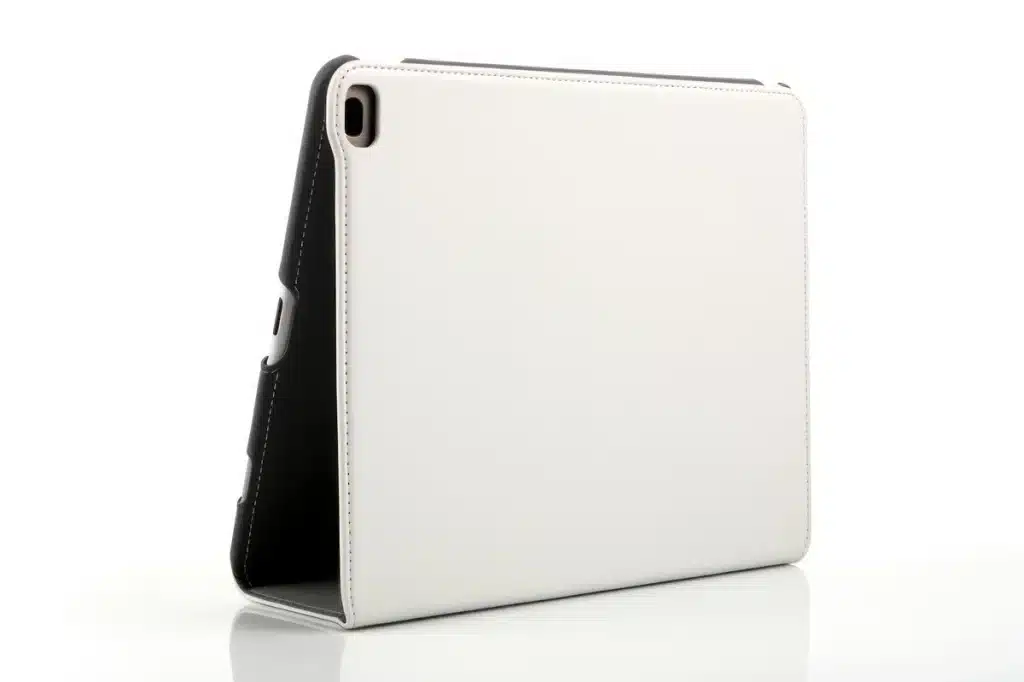
Take the PU leather vs silicone debate, which comes up constantly in sourcing conversations. On paper, both are cost-effective. In practice? They behave completely differently across temperature ranges, aging cycles, and surface treatment processes. PU leather tends to delaminate under sustained heat — a real problem for logistics environments or markets with extreme climates. Silicone, meanwhile, attracts dust, which tanks perceived quality in premium retail contexts. Neither is universally better. The right call depends on end-use conditions your spec sheet probably doesn’t mention.
There are several material-level details that tend to get overlooked in early procurement discussions:
- Shore hardness ratings for TPU and silicone components — these have a big impact on actual drop protection performance
- Surface coating durability (UV resistance, anti-scratch grade) for PU leather and polycarbonate shells
- Foam or padding density specs inside folio-style cases
- Certification requirements by destination market — RoHS, REACH, or California Prop 65 compliance for certain dyes and adhesives
- Minimum order quantities tied to specific material grades, which can shift substantially when moving from standard to custom formulations
Suppliers with real export-oriented production experience — the kind that handle OEM and ODM orders across multiple markets — will flag these variables early. That early-stage material dialogue is where buyers get the most traction, both on quality outcomes and on total landed cost. Waiting until sampling to raise these questions almost always costs more time than it saves.
PU Leather vs Silicone Tablet Case: How to Match Material to Market and Margin
The choice between PU leather and silicone isn’t just aesthetic — it’s a margin decision, a market-fit decision, and, depending on your destination channel, a compliance decision. Buyers who treat it as purely a surface preference tend to get surprised later, usually at the sampling stage or when a retail buyer pushes back on certification documentation.
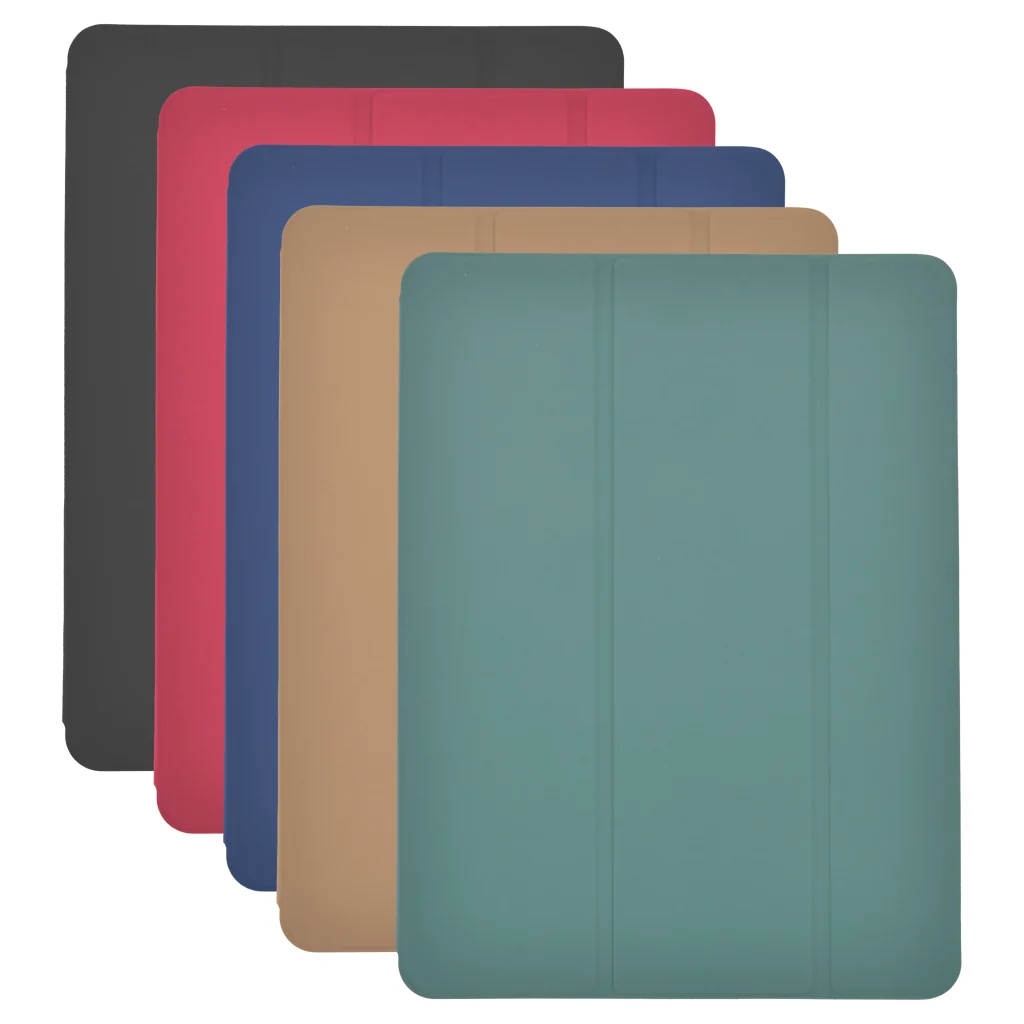
PU leather positions well in corporate gifting, executive accessories, and folio-style cases targeting professional or enterprise segments. It carries a perceived premium that supports higher retail price points, and the material lends itself to debossing, logo embossing, and color matching — all of which matter when a buyer is building a branded product line. That said, PU leather tablet case material has real limitations in high-humidity markets or outdoor-adjacent use cases. Delamination over time is a known failure mode, and the adhesive layers involved can trigger scrutiny under REACH or Prop 65 depending on dye composition.
Silicone goes the other direction entirely. It’s tactile, grippy, chemical-resistant, and — when food-grade or FDA-compliant silicone is specified — clears regulatory hurdles in markets where PU leather gets flagged. The trade-off is that silicone carries a more utilitarian look, which caps perceived value in premium retail contexts. For education sector orders, rugged consumer electronics accessories, or OEM builds targeting younger demographics, that’s rarely a problem.
When comparing the two formats head-to-head from a procurement standpoint, the picture looks roughly like this:
| Factor | PU Leather | Silicone |
|---|---|---|
| Perceived value tier | Mid to premium | Mid to budget |
| Customization options | Embossing, color, stitching | Molded texture, color, logo print |
| Durability concern | Delamination over time | Dust attraction, color fade in UV |
| Compliance sensitivity | Dyes, adhesives, REACH/Prop 65 | Food-grade spec if required |
| MOQ flexibility | Moderate — varies by finish | Higher for custom molds |
The pu leather vs silicone tablet case comparison ultimately resolves around end-channel expectations. Suppliers experienced in export-oriented OEM production — the kind handling multi-market orders with varied compliance requirements — will typically push buyers to confirm the destination channel before locking in tablet case material specs. That’s the right instinct. Getting that alignment early prevents costly mid-run material substitutions and keeps lead times predictable.
Certifications, MOQs, and Lead Times — The Supplier Criteria That Actually Matter
Procurement decisions that look clean on a spec sheet have a way of unraveling once the commercial realities surface. Certifications, MOQ structures, and lead time commitments aren’t administrative footnotes — they’re the criteria that determine whether a supplier relationship actually holds up across order cycles.
Start with compliance documentation. The tablet case material you specify for European retail channels needs REACH certification at minimum; orders routed toward California-adjacent distribution often require Prop 65 compliance declarations on top of that. For corporate or education fleet programs, buyers increasingly expect RoHS alignment even on non-electronic accessories — the reasoning being that devices and cases are often bundled and assessed together. A supplier who can’t produce current test reports on request is a supplier who’ll slow your customs clearance.
MOQ is where material choice and commercial reality collide most visibly. The pu leather vs silicone tablet case distinction matters here in a very practical way: PU leather cases can often be produced with lower per-SKU MOQs because the material works across a shared cut-and-sew process, while silicone requires dedicated tooling per model — which means custom mold amortization gets factored into the MOQ floor. Buyers sourcing across multiple device sizes should account for that tooling cost structure early, not after the quote comes in.
- Request material-specific test reports (REACH, Prop 65, RoHS) — not just a general factory audit certificate
- Clarify whether quoted MOQs apply per SKU or per order — the difference compounds fast across a multi-model catalog
- Confirm lead times separately for stock tablet case material versus custom-spec or custom-color runs
- Ask explicitly about mold ownership terms if you’re sourcing silicone — some suppliers retain tooling rights by default
- Verify re-order lead times, not just initial production timelines — replenishment windows often differ
Lead times for custom tablet case material runs — particularly those involving proprietary colorways, embossing, or dual-material constructions — typically run longer than standard catalog timelines suggest. Suppliers set up for export-oriented OEM fulfillment, coordinating across compliance requirements for multiple destination markets, tend to build buffer into their project timelines as a matter of practice. That buffer exists for a reason. Compressing it is where quality escapes happen.
How to Evaluate a Tablet Case Manufacturer Before You Commit to a Production Run
Supplier selection at the material spec stage — before tooling, before sampling, before anything gets signed — is actually where procurement managers hold the most power. Once a production run is in motion, renegotiating tablet case material specs gets expensive fast. And slow. The evaluation has to happen earlier than most buyers think it does.
Start with material transparency. A credible manufacturer should be able to tell you, without blinking, where their base materials come from, what grades they stock as standard, and what the lead time difference looks like between catalog-ready material and custom-spec builds. If you ask “what TPU durometer do you run at standard?” and get a vague non-answer? That’s already telling you something. Suppliers who actually know their materials know that question cold.
Certifications work differently depending on where you’re selling. For EU distribution, RoHS and REACH compliance documentation on any PVC-adjacent tablet case material is non-negotiable — full stop. For North America, check whether their foam padding or adhesive components carry relevant CPSC documentation. And here’s the thing: the certification conversation also reveals how export-oriented a supplier really is. Manufacturers built for international OEM fulfillment (like Shuowei, which maintains active compliance files as a baseline) don’t scramble to produce paperwork on request. They just have it.
- Request physical samples across at least two material categories — a PU leather vs silicone tablet case comparison, for instance, tells you a lot about finishing quality and edge-sealing capability at the same time
- Ask for references from buyers in your destination market specifically, not just generic testimonials
- Confirm who owns the tooling after sampling — mold ownership terms vary a lot and directly affect your flexibility on future re-orders
- Verify that their stated MOQ actually applies to your specific material configuration, not just their most common catalog run
So here’s something buyers don’t talk about enough: responsiveness during the evaluation phase is its own signal. Suppliers who turn around technical queries quickly, send organized spec sheets, and flag potential compliance gaps without being asked — they tend to run active production the same way. The reverse is also true. A slow or evasive pre-sale process almost never improves once purchase orders are in play. And that’s exactly when communication gaps stop being annoying and start being costly.
Conclusion
Tablet case material is ultimately a procurement decision, not just a product spec — and the difference shows up in returns, warranty claims, and reorder headaches down the line. Get the material right for your end user’s actual context, not just the price tier you’re trying to hit.
The supplier vetting piece matters just as much. A clean sample and a fast, organized pre-sale process are the two clearest signals you’ll get before committing to production volume.
So if you take one thing from all of this: don’t finalize material specs in isolation. Loop in your compliance requirements, your target market’s durability expectations, and your supplier’s actual production capability — all at once, before sampling starts.
Frequently Asked Questions
Q: What is the best tablet case material for heavy daily use?
A: TPU and polycarbonate combinations tend to hold up best under real daily punishment — TPU absorbs shock at the corners while the PC shell resists scratching and structural deformation. For truly rough environments (job sites, schools, warehouses), look at rugged hybrid cases that layer EVA foam or silicone inside a hard outer shell. The “best” material depends entirely on your use context, not just the drop-rating on the spec sheet.
Q: What tablet case material is safest for kids?
A: Silicone is the go-to for children’s cases — it’s grippy, soft-edged, compressible on impact, and generally free of the sharp structural elements that hard plastics can develop after repeated drops. The bigger compliance question is whether the silicone meets food-contact or toy-safety standards in your target market, because “silicone” as a label covers a wide range of formulations, and not all of them qualify.
Q: How do I choose the right tablet case material for my product line?
A: Start with the end user’s actual environment, not the price bracket you’re working in. A corporate buyer equipping field technicians needs something completely different from a DTC brand selling to college students — even if both are sourcing at similar MOQs. Map out durability expectations, regional compliance requirements, and your supplier’s confirmed production capability before you even request samples; changing the tablet case material spec after tooling has started is expensive and slow.
Q: Why does tablet case material matter for compliance and export?
A: Certain materials — particularly some PVCs and lower-grade plastics — contain substances restricted under regulations like REACH in Europe or CPSIA in the US. If your tablet case material doesn’t meet the chemical composition requirements of your target market, you’re looking at customs holds, product recalls, or failed retailer audits. Always request material composition documentation (not just a finished-product test report) from your supplier before committing to volume.
Q: How long does a leather tablet case last compared to synthetic alternatives?
A: Genuine leather, with reasonable care, typically outlasts most synthetic alternatives by a significant margin — but “leather” in the tablet case market often means PU leather (polyurethane-coated fabric), which behaves very differently. PU leather usually starts peeling or delaminating after a year or two of daily use, especially in humid climates. If longevity is the actual selling point, be transparent with buyers about the material distinction — it affects expectations and return rates.
Q: Can I get a tablet case material customized for a specific brand or spec?
A: OEM and ODM suppliers — particularly those with export-focused operations like Shuowei — routinely handle customized material specs, whether that’s a specific Shore hardness for silicone, a particular fabric weave for textile cases, or a surface finish on polycarbonate shells. The key is locking in your material spec before sampling, not after, because post-sample changes often trigger tooling revisions and extended lead times.
Q: How much does tablet case material affect the unit cost?
A: Material is typically one of the larger cost variables in case manufacturing — switching from basic TPU to a premium hybrid construction (say, TPU plus PC plus microfiber lining) can meaningfully shift your per-unit cost, often more than buyers expect. That said, material cost and perceived value don’t always scale together; a well-executed single-material silicone case can command a strong retail price if the finish quality is there. Always ask suppliers to break out material cost separately so you can make informed substitutions if margins are tight.
Q: Is it worth paying more for premium tablet case material at scale?
A: At volume, the cost delta between mid-grade and premium tablet case material often looks large upfront but shrinks considerably when you factor in return rates, warranty claims, and reorder frequency. A case that fails at the hinge or starts peeling within six months generates support costs that erode margin fast — and damages the product’s review profile in ways that are hard to recover from. The smarter calculation is total cost over the product lifecycle, not just landed unit cost.