
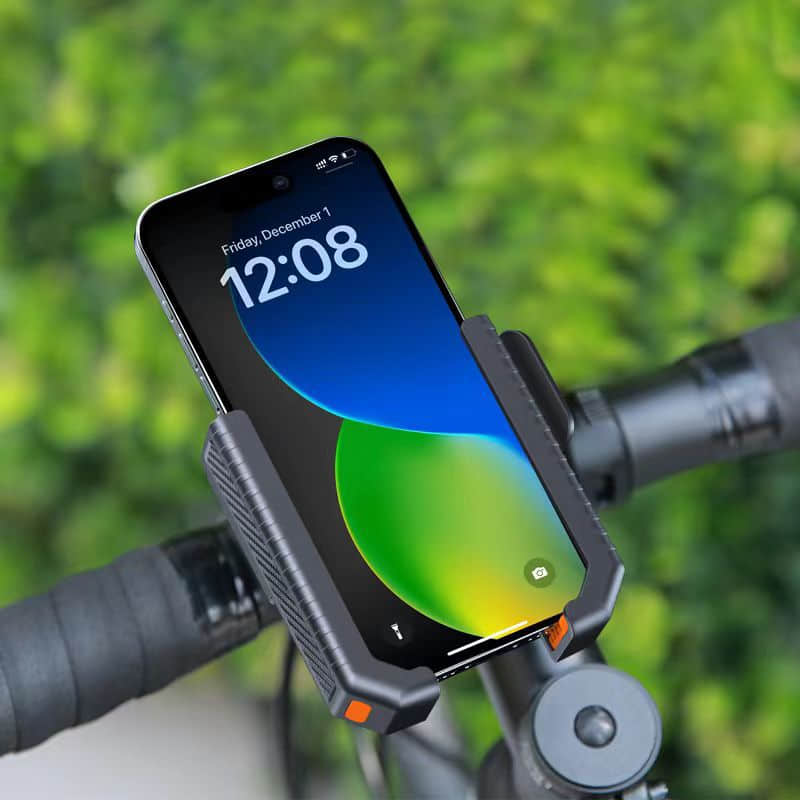

Bike vs. Motorcycle Phone Holders: Key Differences
Grab any bike phone holder off a shelf and slap it on a motorcycle — and you’ll probably regret that decision within about ten minutes on the road. The two categories look similar at a glance, but they’re solving genuinely different problems, and mixing them up is a mistake that costs people real money.
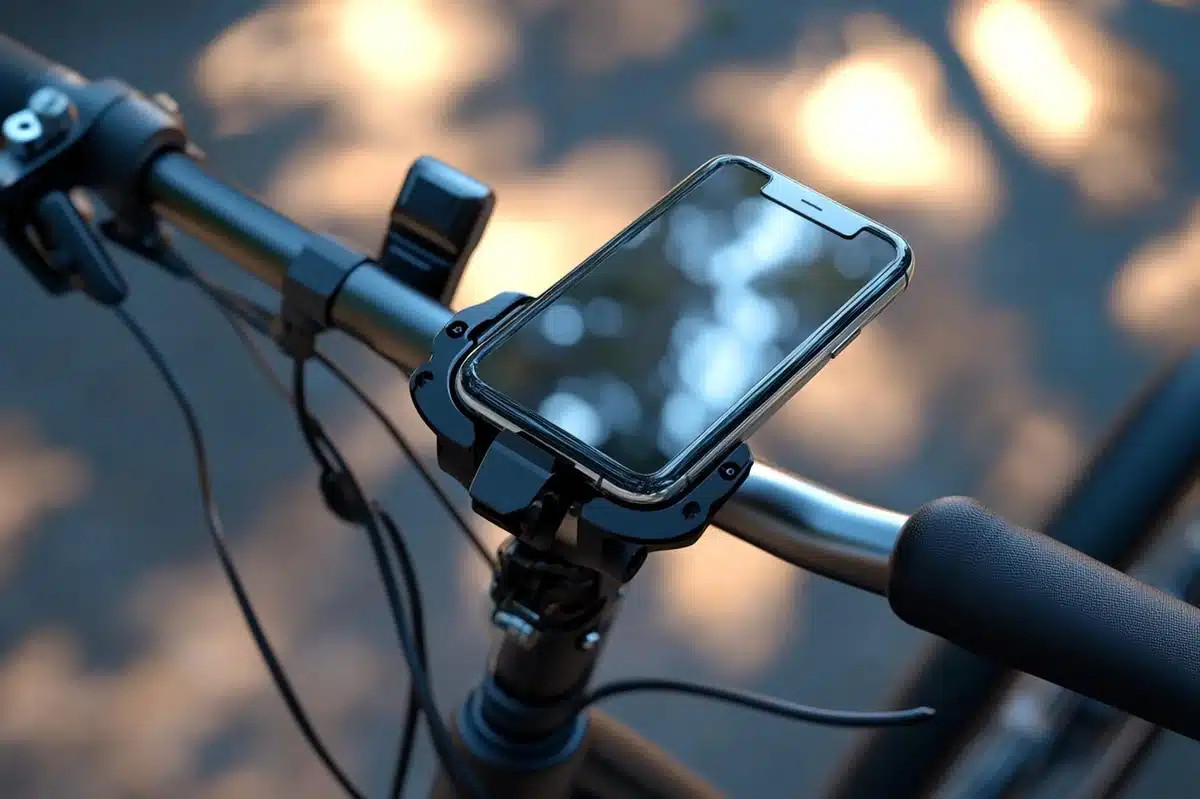
Vibration tolerance is the big one. Motorcycle engines — especially singles and V-twins — produce sustained, high-frequency vibration that will chew through a flimsy clamp mount or crack a plastic cradle fast. Bicycle holders are built for the occasional bump and low-speed wobble. That’s it. So a holder rated for road cycling is not the same engineering challenge as one rated for a 600cc engine doing 70mph on a highway.
Not the same. At all.
There’s also the exposure factor. Motorcycle riders deal with wind blast at serious speeds — we’re talking consistent 50-70mph airflow pressing against a phone screen — plus rain, mud, and the occasional gravel spray. Bicycle holders? Mostly need to survive a light drizzle and a gravel path. When suppliers explore the applications of phone case accessories alongside mounting hardware, this distinction usually comes up fast, because weatherproofing specs diverge sharply between the two product types.
Here’s a quick breakdown of where these categories actually split:
| Feature | Bike Phone Holders | Motorcycle Phone Holders |
|---|---|---|
| Vibration resistance | Low to moderate | High — often shock-dampened |
| Typical mount type | Handlebar clamp (22mm standard) | Handlebar or mirror stem (22–28mm) |
| Weatherproofing | Basic splash resistance | IP54–IP65 rated common |
| Locking mechanism | Spring or strap | Reinforced clamp with secondary lock |
| Price range (retail) | $8–$25 | $20–$60+ |
And honestly, this is where buyers sourcing in bulk — whether they’re stocking a sports retailer or building out a private label line — need to be precise with their specs from day one. A supplier used to export-oriented fulfillment (like coordinating OEM specs for international buyers) will catch this distinction early. One that doesn’t ask the right questions won’t.
The crossover confusion also shows up in adjacent product categories. Someone researching how a phone case printer vending machine stocks its inventory, for example, will notice that protective cases marketed toward cyclists often carry different drop-rating specs than those marketed toward motorcyclists — same principle, different tolerances. Context matters. Always.
Why Bike and Motorcycle Phone Holders Aren’t Interchangeable
Swap one for the other and you’ll feel the difference within the first five minutes. Not a subtle difference, either — we’re talking about a mount that was engineered for smooth tarmac suddenly dealing with the kind of vibration profile that shakes loose poorly torqued bolts. Motorcycle handlebars can generate sustained high-frequency vibration, especially at highway speeds on a cruiser or a mid-sized naked bike. Bicycle handlebars don’t. That’s the whole ballgame, really.
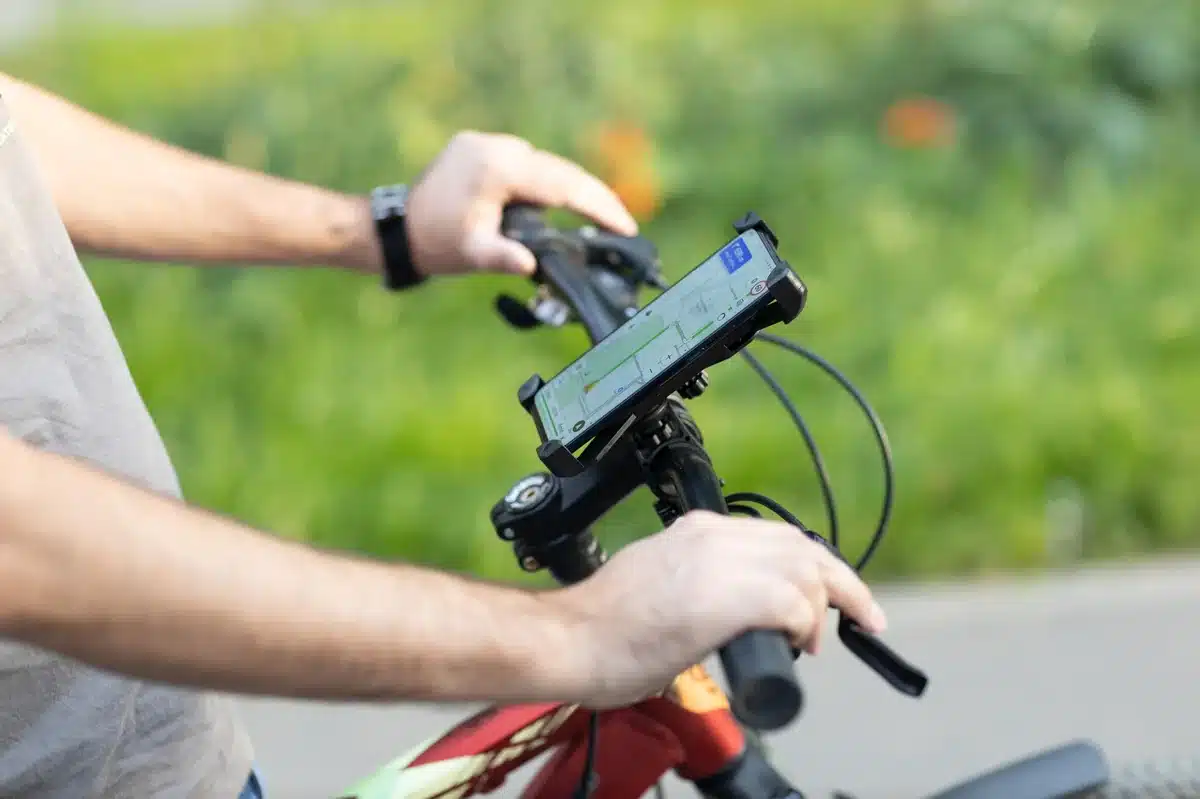
So here’s what actually separates the two categories at a spec level:
- Vibration dampening: Motorcycle-rated mounts include rubber isolation layers or gel-padded cradles; most bike phone holders don’t bother because they don’t need to.
- Clamp diameter: Road bike bars typically run 22–23mm; motorcycle bars land at 22mm but the mounting collars are built to withstand torsional force that cycling mounts simply aren’t rated for.
- Lock mechanisms: Motorcycle holders often use secondary locking arms or screw-down retention. Bicycle versions lean on spring tension — perfectly fine at 20mph, not at 80.
- Weather sealing: A commuter cyclist might accept a basic splash-resistant holder. A motorcyclist doing long-distance touring needs something rated for sustained rain exposure.
And then there’s the certification question. When brands explore the applications of phone case accessories across both cycling and moto markets, the honest ones publish separate product lines with separate tolerance specs — not one SKU with a vague “fits most handlebars” claim.
The confusion bleeds into retail, too. Anyone studying how a phone case printer vending machine stocks accessories for a mixed-use sporting goods location will notice that the inventory logic has to separate these categories cleanly — because a customer grabbing the wrong mount doesn’t come back happy. Same principle applies to bulk sourcing decisions (and yes, suppliers who specialize in export-oriented OEM fulfillment know to ask which application you’re building for before they quote you).
Bottom line? Interchangeable in appearance. Not interchangeable in function. Not even close.
How Vibration, Speed, and Weather Change What a Phone Holder Needs to Do
Vibration is the thing most buyers don’t think about until a mount fails at 40 km/h on a gravel path. And when it does fail — when the phone bounces out mid-ride or the clamp cracks after two weeks — the root cause is almost always that the holder wasn’t built with real-world road physics in mind. Not aesthetics. Not price point. Physics.
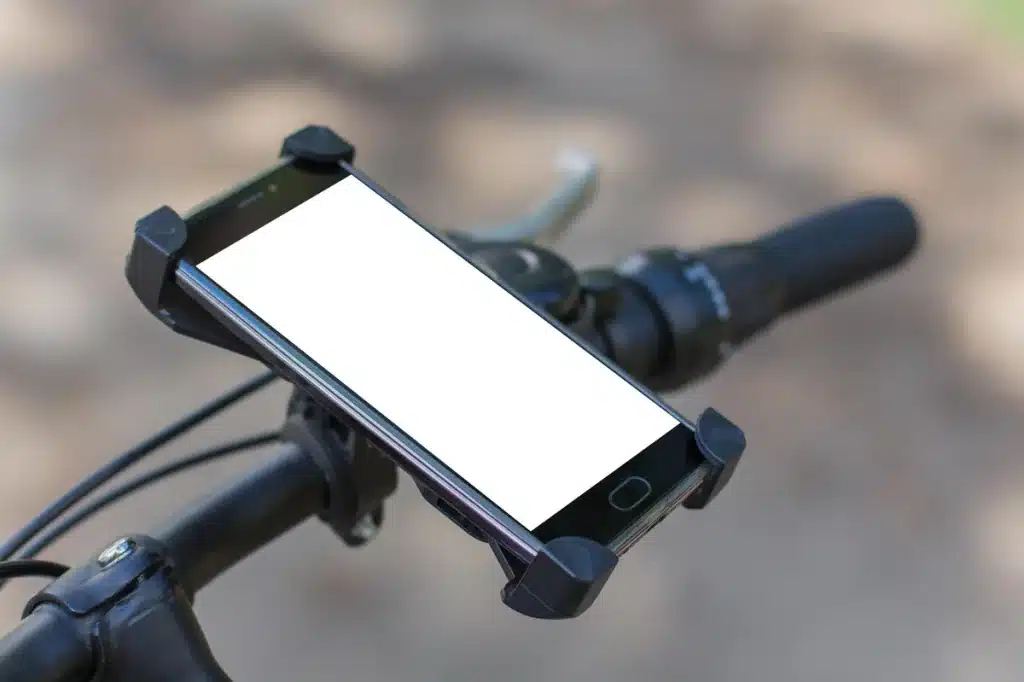
So here’s what’s actually happening on a bike: every surface irregularity sends a vibration pulse up through the fork, through the stem, and directly into whatever’s clamped to your handlebar. Smooth tarmac? Manageable. Cobblestones, gravel, or packed dirt trails? The frequency and amplitude jump dramatically — we’re talking resonance patterns that can loosen a plastic clamp in under an hour of continuous riding. Bike phone holders designed for road cycling typically use rubberized dampening inserts or silicone cradles to absorb this, but the spec matters: a 3mm silicone pad handles different loads than a 6mm one, and budget holders rarely publish those numbers.
Speed changes the equation differently. At higher speeds, wind drag on the phone itself becomes a real lateral force — the phone acts like a small sail. Holders with shallow side grips fail here first. This is exactly why anyone looking to explore the applications of phone case accessories in sport contexts quickly realizes that mounting security and aerodynamic profile are linked variables, not independent ones.
Weather. Ugh. Rain makes grips slippery, UV exposure degrades cheap ABS plastic faster than any lab test suggests, and temperature swings cause plastics to expand and contract around the phone body. (Anyone who’s left a phone holder in direct sun for a summer knows the warping problem firsthand.) Suppliers who understand how countries embrace phone case printer and accessory markets for cycling know that UV-stabilized materials aren’t optional for outdoor hardware — they’re table stakes.
Cold weather stiffens elastomers. Hot weather softens them. Neither extreme is kind to a mount trying to hold a 200-gram device at speed. And the secondary stress points — the locking tab, the ball joint if there is one, the tightening knob — all feel these shifts before the main body does. Not a minor detail. A critical failure point.
Mounting Systems Compared: What Works on Handlebars Doesn’t Always Work on a Motorcycle
Handlebar clamps and motorcycle stem mounts look almost identical in product photos. They are not. The mechanical demands are completely different, and conflating the two is how bike phone holders get destroyed — sometimes spectacularly — within a few rides.
Bicycles generate vibration in a relatively narrow frequency band. Rough pavement, gravel, the occasional pothole — all real stress, but manageable. A motorcycle running at highway speed produces sustained, high-amplitude vibration that will loosen a standard O-ring clamp in under an hour. The locking mechanism that feels rock-solid on a morning commute by pedal bike becomes a liability at 70mph. And the failure mode isn’t gradual — it’s a phone bouncing off tarmac at speed. Not theoretical. Observed. Repeatedly.
So here’s how the main mounting categories actually stack up against each other:
| Mount Type | Best Application | Vibration Tolerance | Typical Clamp Range |
|---|---|---|---|
| O-ring rubber clamp | Bicycle handlebars | Low–moderate | 22–35mm diameter |
| Stem bolt adapter | Road/MTB bikes | Moderate | Fixed — bike-specific |
| RAM-style ball mount | Motorcycles, e-bikes | High | Adjustable, 20–38mm |
| Fork crown mount | Gravel/touring bikes | Moderate–high | Frame-dependent |
The RAM-style ball-and-socket system dominates the motorcycle segment for a reason — that double-locking knuckle design absorbs resonance instead of transmitting it directly into the phone body. Expensive. Worth it. (Cheaper alternatives that mimic the look without the engineering are everywhere, and they’re not the same thing at all.)
When suppliers who understand how countries embrace phone case printer and accessory markets for cycling start sourcing mounting hardware, the first question worth asking is which use case is actually being served. A product spec sheet that says “fits all bikes” is almost always lying to you. Stem diameters alone vary from 22mm on older city bikes up to 35mm on modern MTB setups — that’s not a rounding error, that’s a completely different bracket.
But the deeper issue is case compatibility. Buyers who want to explore the applications of phone case accessories across cycling categories quickly realize that universal cradle mounts and case-integrated mounts behave differently under load. Case-integrated systems — where the phone case itself clicks into the mount — distribute stress more evenly. Cradle mounts concentrate it at four contact points. On a bicycle, the difference is minor. On a motorcycle, it’s the difference between a secure ride and a cracked screen.
Conclusion
The spec sheet problem is real — “fits all bikes” is marketing shorthand for “we didn’t test this properly.” When you’re sourcing or buying bike phone holders, the mount type and case compatibility matter far more than the price point. Get those two things right, and everything else is just color options.
Case-integrated systems are worth the extra effort for anything beyond casual city riding. Cradle mounts are fine until they’re not — and on rough terrain, “not” happens fast.
So before you commit to a design or a supplier, nail down the actual use case first. The hardware follows from that, not the other way around.
Frequently Asked Questions
Q: What are the different types of bike phone holders available?
A: The main categories are stem mounts, handlebar cradles, and case-integrated systems — each solves a different problem. Cradles grip the phone directly and work with almost any device; case-integrated mounts (like those from Quad Lock or SP Connect) attach via a dedicated case and hold significantly better on rough terrain. If you’re just commuting on smooth roads, a cradle is fine. If you’re doing trail riding or long-distance touring, skip straight to case-integrated.
Q: How much should I expect to spend on a decent bike phone holder?
A: Budget cradle mounts start around $8–15 and will do the job for casual use. A mid-range case-integrated system — case plus mount — typically runs $40–70 depending on the brand. Anything under $10 is worth being skeptical about; the locking mechanisms on cheap holders tend to fail right when you don’t want them to.
Q: Why do bike phone holders keep spinning or rotating while riding?
A: Nine times out of ten it’s a clamping force issue — the mount isn’t gripping the handlebar tightly enough, or the ball joint has loosened over time. Check that your handlebar diameter actually matches the mount’s spec (most handlebars are 22.2mm or 31.8mm, and mixing those up is more common than you’d think). Retighten everything and add a rubber shim if there’s any slop in the fit.
Q: Can I use the same bike phone holder on both a bicycle and a motorcycle?
A: Technically yes, but it’s not a great idea for regular motorcycle use. Motorcycle engines produce high-frequency vibration that slowly destroys phone cameras and loosens cradle mounts — there’s even a known issue with certain OIS camera modules failing from prolonged engine vibration. Motorcycle-rated holders (look for ones with vibration dampeners) are a separate product category for a reason.
Q: How do I know if a bike phone holder will fit my phone case?
A: This is honestly the most overlooked spec when people shop for bike phone holders. Cradle-style mounts usually accommodate cases up to about 3–4mm thick; bulkier cases — especially battery cases or rugged cases — will either not fit or will sit loose. If you’re buying in bulk or sourcing for retail, it’s worth confirming exact case clearance dimensions with the supplier before committing to an order.
Q: Are bike phone holders waterproof?
A: The mount hardware usually handles rain fine — it’s metal or hard plastic, so a splash won’t kill it. The phone itself is the weak point, and most bike phone holders don’t include any screen or port protection. If you’re riding in wet conditions regularly, look for holders with a built-in weather cover, or pair a standard mount with a water-resistant phone case.
Q: How long do bike phone holders typically last?
A: A well-made mount — metal clamp, quality polymer cradle — should last 2–4 years of regular use before the locking tabs or rubber grips start degrading. UV exposure is the silent killer here; cheap plastics go brittle fast in direct sunlight. Case-integrated systems tend to outlast cradles because there are fewer moving parts that can wear out.
Q: Is it worth buying a branded bike phone holder versus a generic one?
A: For casual city cycling, a well-made generic holder from a reputable supplier is genuinely fine — the design differences are minor at low speeds. Where branding starts to matter is in the case-integrated ecosystem: Quad Lock’s mount interface, for example, won’t accept SP Connect accessories, so you’re locked into one system once you buy the case. Pick your ecosystem based on long-term accessory compatibility, not just the upfront price.