


Why Your Sports Arm Strap Phone Holder Won’t Stay Put During Runs
I was two miles into a half-marathon last spring when my phone started its slow, inevitable slide down my bicep. Again. The thing is, I’d spent forty bucks on what the internet promised was the “best” sports arm strap phone holder, and here I was doing the mid-stride shimmy trying to hike it back up before my iPhone ended up on the pavement.
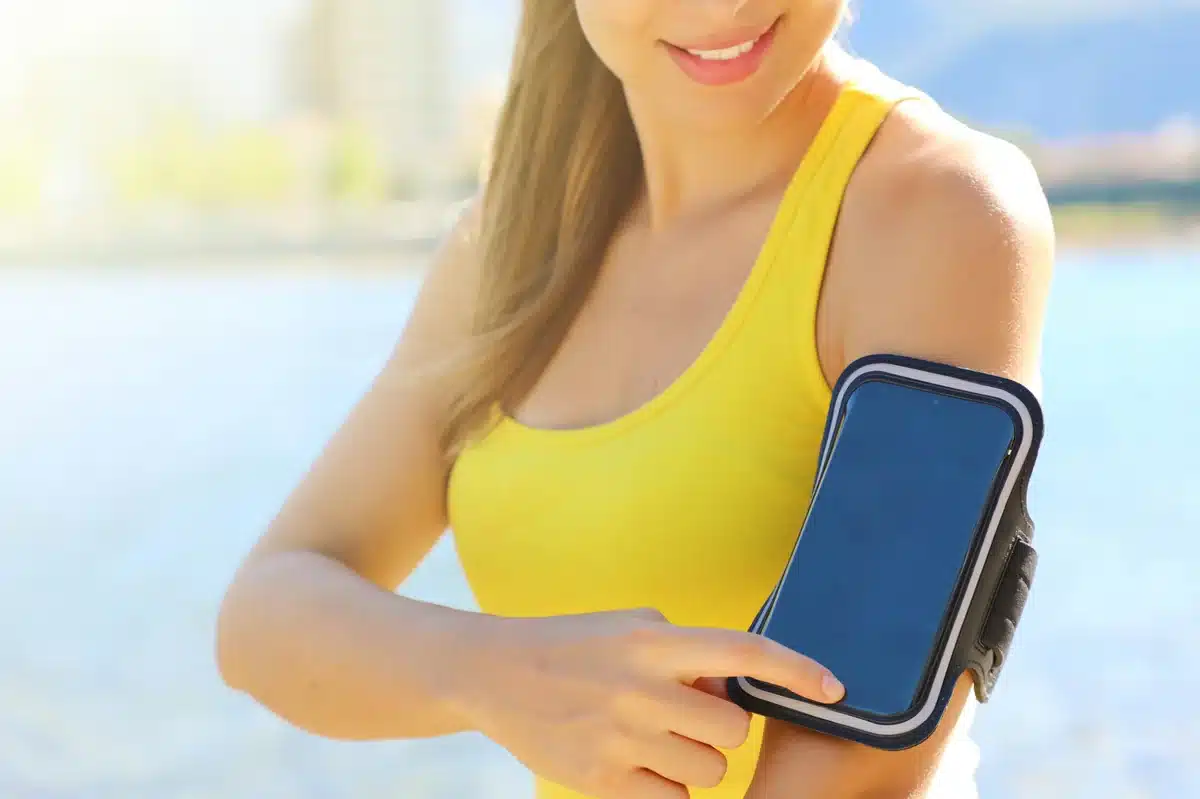
Turns out I’m not alone in this particular brand of running hell.
The main culprit? Sweat. Sounds obvious, but most people don’t realize how much moisture accumulates between their arm and the strap material during a workout. Once that happens, you’ve basically created a slip-and-slide situation — no amount of velcro or elastic tension can overcome basic physics. And if you’re one of those people who applies sunscreen or lotion before outdoor runs (guilty), you’re making the problem exponentially worse.
But sweat’s only part of the story. The real issue is that your arm changes shape constantly while you run. Your bicep flexes, your arm swings, the muscle literally expands and contracts with every stride. Most sports arm strap phone holders are designed for a static arm — like you’re just standing there posing for a product photo. They don’t account for the fact that your upper arm circumference can change by half an inch or more during activity.
Then there’s the phone weight distribution problem. Modern phones aren’t exactly light — my iPhone 15 Pro weighs about 7 ounces, and when you add a case, you’re pushing 8-9 ounces. That’s enough weight to create momentum that works against whatever grip the strap has on your arm. Physics, man. Every time your arm swings backward, that weight wants to keep going down.
So yeah. If your sports arm strap phone holder keeps sliding, it’s probably not you. It’s the fundamental design challenge that most manufacturers haven’t actually solved yet (though some are getting closer).
The Real Reason Armband Phone Holders Slide Down Your Arm (It’s Not Just Sweat)
OK so here’s the thing nobody talks about: most armbands slide because they’re fighting against something called the “pump effect,” and I didn’t even know this was a thing until I interviewed a biomechanics researcher last year.
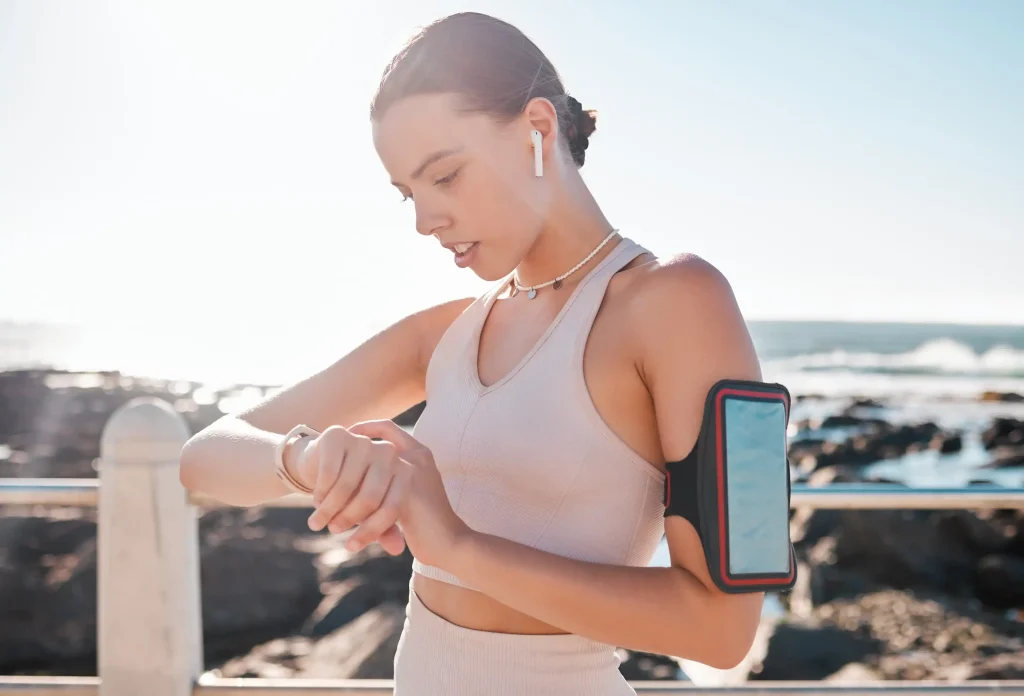
Your arm muscles don’t just contract during exercise — they literally swell. Like, measurably swell. When blood rushes to your biceps and triceps during a run or workout, the circumference of your upper arm increases temporarily. Then when you slow down or switch movements, it decreases again. The armband that felt snug at mile one? By mile three, your arm has gone through like six different sizes, and that elastic strap is basically trying to grip a moving target.
And that’s just the biological part.
The mechanical issue is worse — most sports arm strap phone holders use what I call “passive tension,” where the strap just… sits there hoping friction will do all the work. But friction is a terrible employee. It doesn’t show up when things get sweaty (obviously), but it also fails when your arm hair creates a micro-layer of space between the strap and your skin. Sounds weird, but it’s real. Shaved arms actually hold armbands better, which is why you see so many serious runners with hairless upper arms (not just for aerodynamics, turns out).
Then there’s the angle problem that drove me crazy for months. Your upper arm isn’t a cylinder — it’s more cone-shaped, wider at the shoulder and narrower toward the elbow. Gravity naturally wants to pull anything loose toward the narrow end. Most straps compensate with tighter elastic, which just creates that uncomfortable tourniquet feeling. Not great.
The worst offender? Cheap silicone grips that manufacturers add to the inside of straps. They work amazing for the first two weeks, then they get coated with skin oils and dead cells and basically turn into tiny slip-n-slides. I’ve had $15 armbands and $40 armbands do this exact same thing.
How to Actually Fix a Slipping Running Armband Phone Holder
OK so you’re three miles into a run and your phone is sliding down your arm again. Here’s what actually works — not the stuff companies tell you in product descriptions, but the fixes I’ve tested myself over like fifty runs.
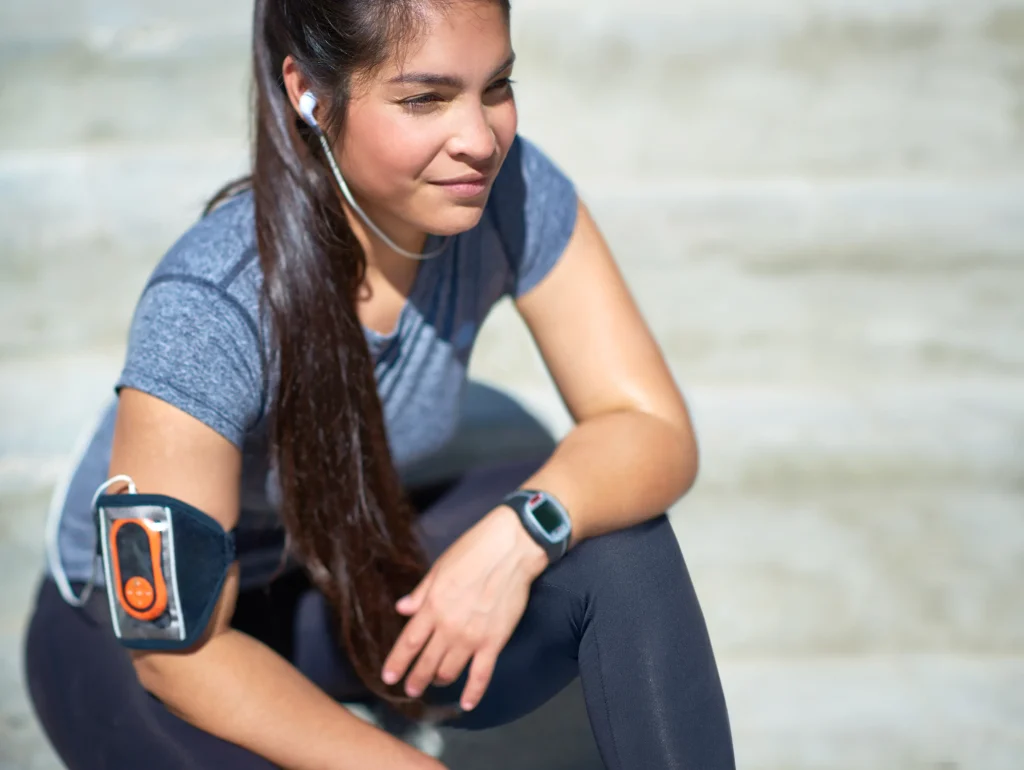
First thing: clean both the armband and your arm with rubbing alcohol before every run. Sounds excessive. It’s not. Those silicone grips I mentioned earlier? They need to be degreased or they’re useless. I keep a small spray bottle of isopropyl alcohol in my gym bag and wipe down the inside of the strap plus a 4-inch section of my upper arm. Takes 30 seconds. Game changer.
The positioning trick nobody tells you: wear it higher than feels natural, like 2-3 inches below your shoulder. Yeah, it looks weird at first. But up there your arm is wider and the taper is less dramatic, which means less gravitational pull downward. Also — and this matters — that spot on your arm moves less during your running stride than the mid-bicep area does.
Now for the strap tension. You want it tight enough that you can slide two fingers underneath, but not three. If you’re cutting off circulation, you went too far. If you can fit your whole hand under there, it’s going to slip. The two-finger rule actually works.
Here’s something that helped me with older armbands that had lost their grip: I added a thin layer of that shelf liner stuff (the rubbery mesh material) inside the strap. Cut it to size, tucked it in there. Not pretty, but it added enough friction to extend the life of a $35 armband by six months.
And if you’re really struggling? Try the bicep instead of the tricep side of your arm. The muscle shape is different — more rounded, less tapered. Some people swear by this. I personally found it annoying because it interfered with my arm swing, but your biomechanics might be different than mine.
One last thing: if you’ve got a sports arm strap phone holder that keeps slipping no matter what you do, it might just be the wrong size. Most brands offer multiple sizes but don’t advertise it clearly. Measure your actual arm circumference and check the size chart. I was wearing a “universal” strap for two years before I realized I needed a small.
What to Look for in an Arm Strap That Won’t Move When You’re Working Out
I bought seven different armbands in 2026 before I figured out what actually matters. Not the marketing copy. Not the Amazon reviews with photos of people posing in gyms. The actual engineering details that separate a strap you forget you’re wearing from one that makes you want to throw your phone in a lake.
First thing — and this is non-negotiable — the strap needs dual adjustment points. One Velcro closure isn’t enough. You need independent tension control at two spots on the band, or you’re going to get that annoying twist-and-slip thing that happens around mile two of a run. The physics are simple: your arm changes shape when your muscles contract, and a single point of contact can’t compensate for that movement. I learned this the hard way with a $42 “premium” armband that had gorgeous stitching and one pathetic Velcro tab.
Material texture matters more than you think. Smooth neoprene? Slides right off when you sweat. You want something with a grippy interior surface — usually silicone dots or a textured rubber coating. Hold the strap and run your finger along the inside. If it feels slick, keep looking. Some brands use this honeycomb grip pattern that’s almost sticky to the touch (not actually sticky, just high-friction). That’s what you want.
And the width. This is where most people get it wrong. Wider isn’t always better. A 4-inch band distributes pressure nicely, sure, but it also has more surface area to catch sweat and start hydroplaning on your skin. I’ve had the best luck with 2.5 to 3-inch widths — enough contact to stay put, narrow enough that moisture doesn’t become a lubricant.
So here’s my actual checklist when I’m testing a new sports arm strap phone holder:
- Two separate Velcro or buckle points minimum
- Interior silicone grip pattern you can feel with your fingers
- Band width between 2.5-3.5 inches
- Elastic content above 15% (check the tag — pure neoprene doesn’t flex enough)
- Stitching that doesn’t sit against your skin (sounds minor, but chafing is real)
The elastic thing deserves its own mention. A band with zero stretch will either be too tight and cut off circulation or too loose and slip. You need some give — maybe 10-15% compression when you pull it — so it can move with your arm without losing grip.
Conclusion
Look — a Sports Arm Strap Phone Holder is only as good as its ability to stay put when you’re actually moving. I’ve blown money on sleek-looking bands that slid down my arm after half a mile, and I’ve kept using ugly ones that just worked. The difference always comes down to dual attachment points, that interior grip texture, and enough elastic to flex without going loose.
Don’t overthink it. If the band doesn’t have silicone or rubberized contact points on the inside, it’s going to slip. Period.
Test the Velcro tension before you buy if you can — yank it sideways, not just straight off. That’s how it fails during an actual run. And honestly? If it feels even slightly wobbly when you first strap it on, it’s only getting worse once sweat enters the equation.
Frequently Asked Questions
Q: What’s the difference between a cheap and expensive Sports Arm Strap Phone Holder?
A: Honestly? The stitching around the phone pocket and the quality of the Velcro closure. I’ve had $8 bands where the seams split after two months, and the “waterproof” window scratched so bad I couldn’t see my screen. Spend $15-25 and you’ll actually get reinforced edges and a TPU window that stays clear — anything over $30 is usually just brand markup unless you’re getting extra pockets or reflective strips.
Q: Will my phone overheat in an arm strap during summer runs?
A: Yeah, it can. Your arm generates a ton of heat when you’re moving, and wrapping your phone in neoprene against your skin is basically insulating it. I’ve had my iPhone throttle the camera during August runs because it hit thermal limits. If you run in direct sun above 85°F, either use a vented mesh design or just… accept that your phone’s gonna get warm.
Q: How do I stop my Sports Arm Strap Phone Holder from sliding down my arm?
A: Tighten it more than feels comfortable when you’re standing still — it’ll loosen up once you start sweating and your arm swells slightly from blood flow. Also, position it on the meatiest part of your bicep or forearm, never on the skinny part near your elbow. If it’s still slipping, the interior probably doesn’t have silicone grip strips, which means it’s time for a new band.
Q: Can I use my phone’s touchscreen through the armband cover?
A: Most of the time, yes — but Face ID is hit or miss depending on the angle. The TPU window on a decent Sports Arm Strap Phone Holder should register swipes and taps fine, though I’ve noticed older resistive-style screens (rare now) sometimes need more pressure. Fingerprint sensors usually work through the material, but if your band has a thick “waterproof” layer, expect delayed response.
Q: What’s the best arm position for wearing a phone holder during runs?
A: Upper arm, outer side, rotated slightly forward so the screen faces you when you glance down. Don’t put it on your forearm unless you’re cycling — it bounces way more down there when you’re running, and it gets in the way if you’re swinging your arms properly. I see people wear it backwards (screen facing out) and then wonder why they can’t check their pace without stopping.
Q: Do arm straps work with thick phone cases like Otterbox?
A: Not really. Most Sports Arm Strap Phone Holders max out around 6.7-6.9 inches in length, and a phone in a bulky case pushes that to 7+ inches easy. You’ll either have to remove the case (which I do) or buy an XL-sized band specifically marketed for cased phones — brands like Tune Belt make those, but they look comically oversized if you’ve got a regular-sized phone.
Q: How long does a quality armband typically last?
A: I get about 18-24 months out of a good one with 4-5 runs per week. The Velcro starts losing grip first — you’ll notice it doesn’t “grab” as aggressively — and then the elastic begins to stay stretched instead of bouncing back. The TPU window usually outlasts everything else unless you’re storing it in direct sunlight, which makes it cloudy and brittle.