
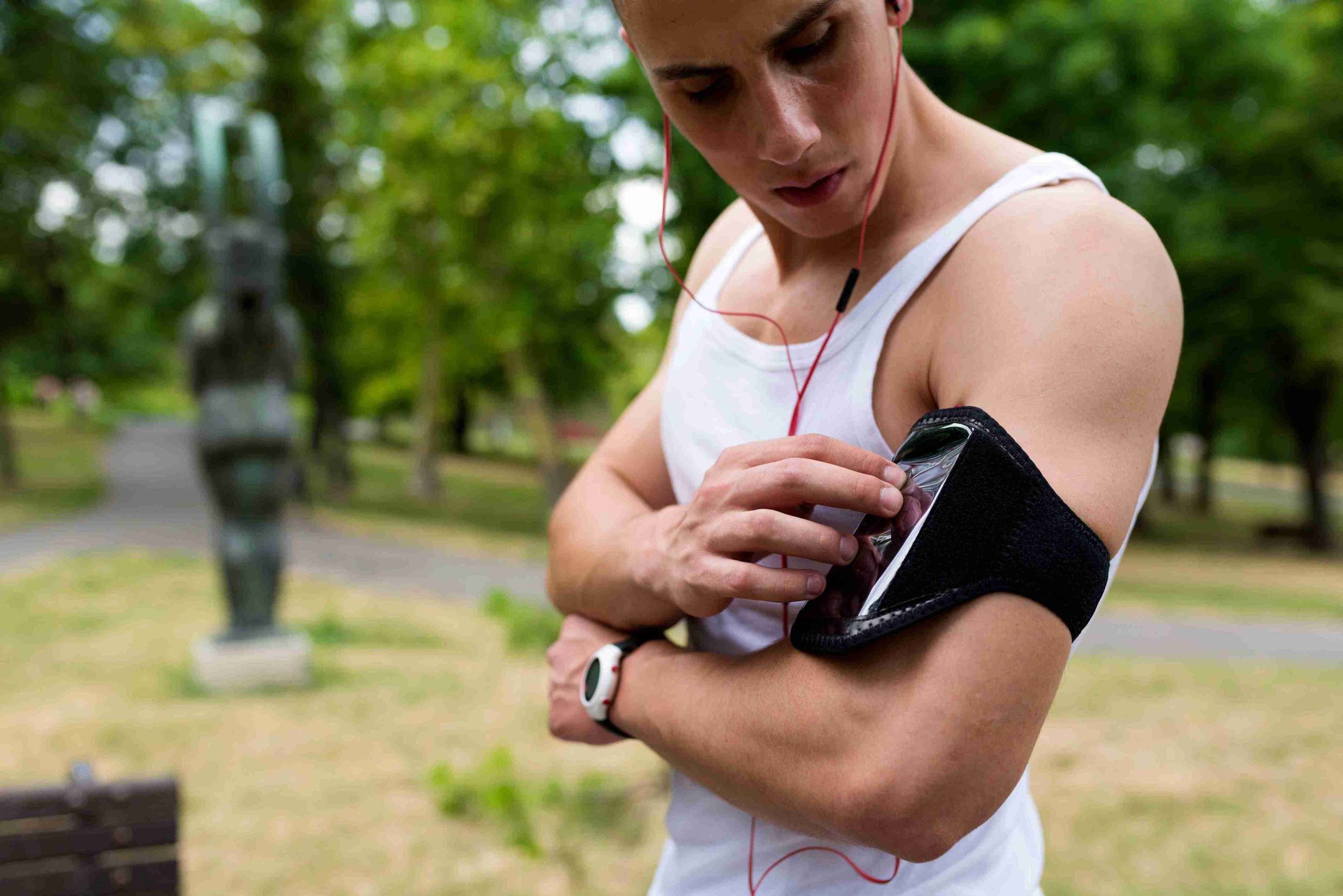

Why Reflective Arm Strap Phone Holders Actually Matter for Night Runners
I almost ate pavement at mile four last Tuesday.
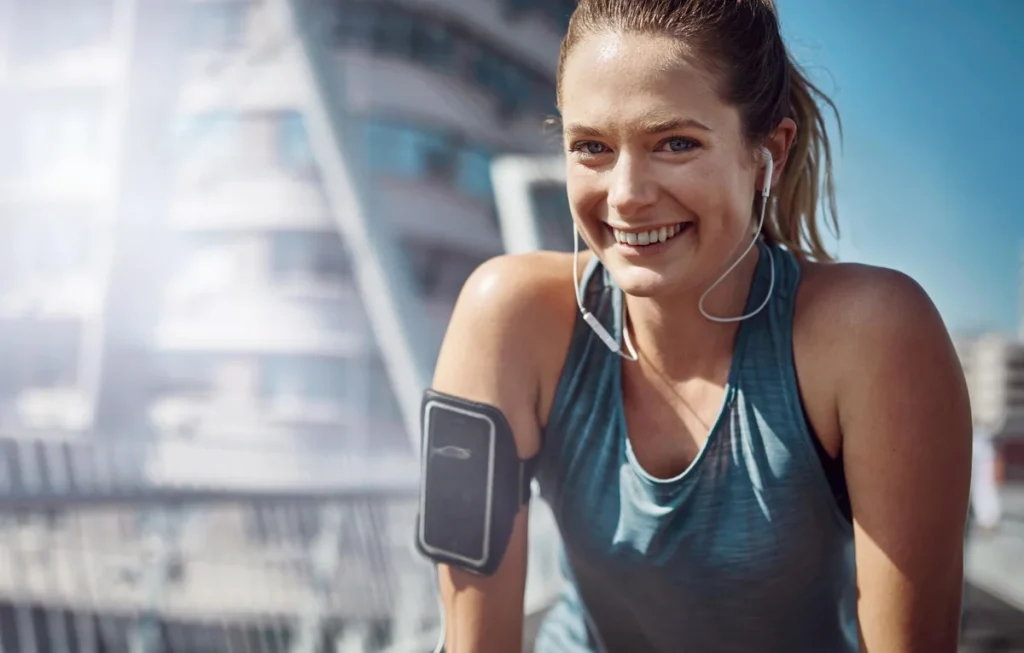
Not because I tripped — because a cyclist came around a corner doing maybe 20 mph and didn’t see me until the last second. He swerved. I jumped. We both yelled something unrepeatable. The whole thing was over in two seconds, but my heart rate stayed jacked for another half mile. And honestly? That near-miss was 100% avoidable if I’d been wearing something reflective.
Here’s the thing about running after dark: you think you’re visible because you can see streetlights and headlights just fine. But drivers can’t see you. At all. Studies show that a pedestrian wearing all black is visible from about 55 feet away at night — which gives a driver going 30 mph roughly 1.3 seconds to react. That’s not enough time to sneeze, let alone brake.
So where does a reflective sports arm strap phone holder fit into this? Right on your upper arm, exactly where headlights hit when you’re running on the shoulder or crossing an intersection. The reflective material bounces light back at drivers from several hundred feet away — I’ve tested this with a friend in a parking lot, and the difference is absurd. Without the armband, she could barely make me out at 100 feet. With it? She spotted me from over 400 feet, easy.
And look, I get it. You’re already carrying your phone for music or tracking your run or whatever. Why not make that necessary piece of gear do double duty? A reflective armband means you’re not adding bulk (another clip-on light or a whole reflective vest), you’re just upgrading something you were going to wear anyway. Plus — and this matters if you run urban routes like I do — it keeps your phone accessible without making you look like a Christmas tree covered in blinking LEDs.
The visibility thing isn’t paranoia. It’s physics. Reflective surfaces work because they’re designed to catch and redirect light at specific angles, which is why that little strip on your arm can outperform a white t-shirt by a factor of ten.
What to Look for When Buying a Sports Arm Strap Phone Holder That Stays Put
I’ve bought seven different armbands in the last four years. Want to know how many are still in my drawer and not in a landfill? Two. And honestly, one of those is borderline.
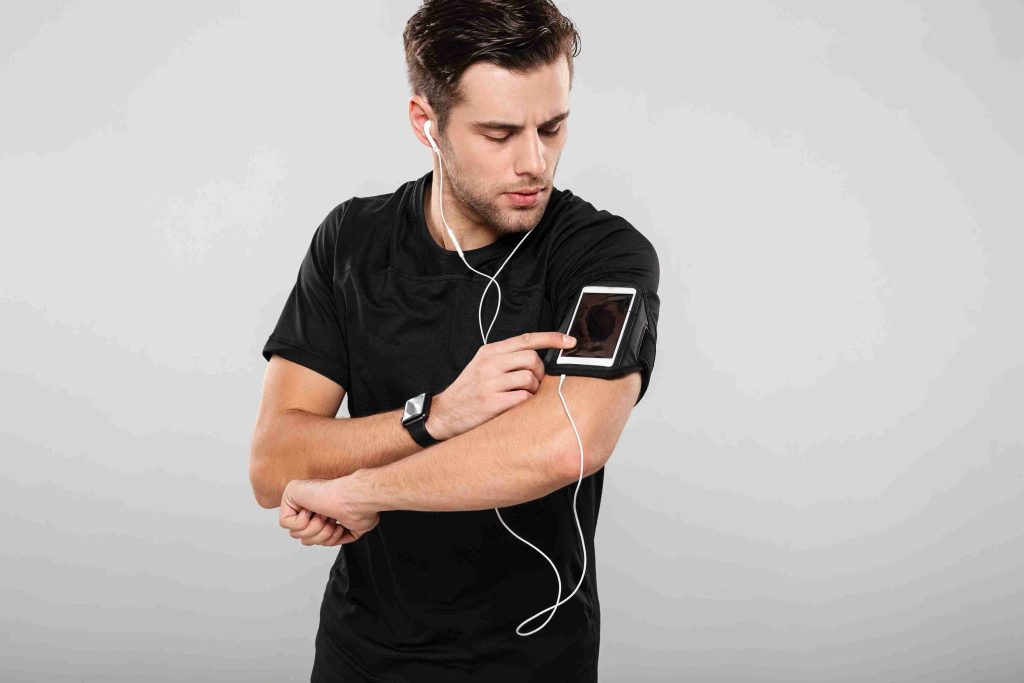
The problem isn’t quality — most of these things are made decently enough. The problem is fit. Or more specifically, the problem is that manufacturers assume your arm is either a stick or a tree trunk, with no middle ground. So here’s what actually matters when you’re trying to find one that won’t slide down your bicep like a sad bracelet halfway through mile three.
First: adjustable straps with actual range. I’m talking at least 8 inches of adjustment, ideally more. My upper arm measures about 13 inches around (I checked because I got tired of guessing), and I need the strap to sit snug without cutting off circulation. Too tight and your arm goes numb. Too loose and the whole thing rotates around your arm like a drunk satellite. Neither is fun.
The material matters more than you’d think — and this is where reflective armbands can actually shine beyond just visibility. Look for ones with silicone grip strips on the inside. Not the whole interior (that gets sweaty and gross), just strategic strips that create friction points. The good ones place these at the top and bottom edges where the band wants to slip most.
Phone pocket depth is weirdly critical. Your phone needs to sit deep enough that it’s not flopping around, but not so deep you can’t hit the screen controls through the clear plastic. I run with a Pixel 8 — not the biggest phone out there but not small either — and I’ve had armbands where the thing just… wouldn’t seat properly. It’d stick out at the top like it was trying to escape.
And speaking of that clear plastic: make sure it’s actually touch-responsive. Some cheaper ones use plastic so thick you’re basically jabbing at your screen like you’re angry at it. (You will be, eventually.)
The reflective strips themselves should wrap around at least 50% of the band’s surface area. Partial coverage on just the front? That’s marketing, not safety. You want visibility from multiple angles because drivers approach from… well, multiple angles.
The Best Materials and Reflective Features That Keep You Visible (and Your Phone Safe)
I got sideswiped by a cyclist once — not hit, just startled badly enough that I tripped over my own feet — because neither of us saw each other in the pre-dawn dark. That was the week I stopped buying armbands based on price alone.
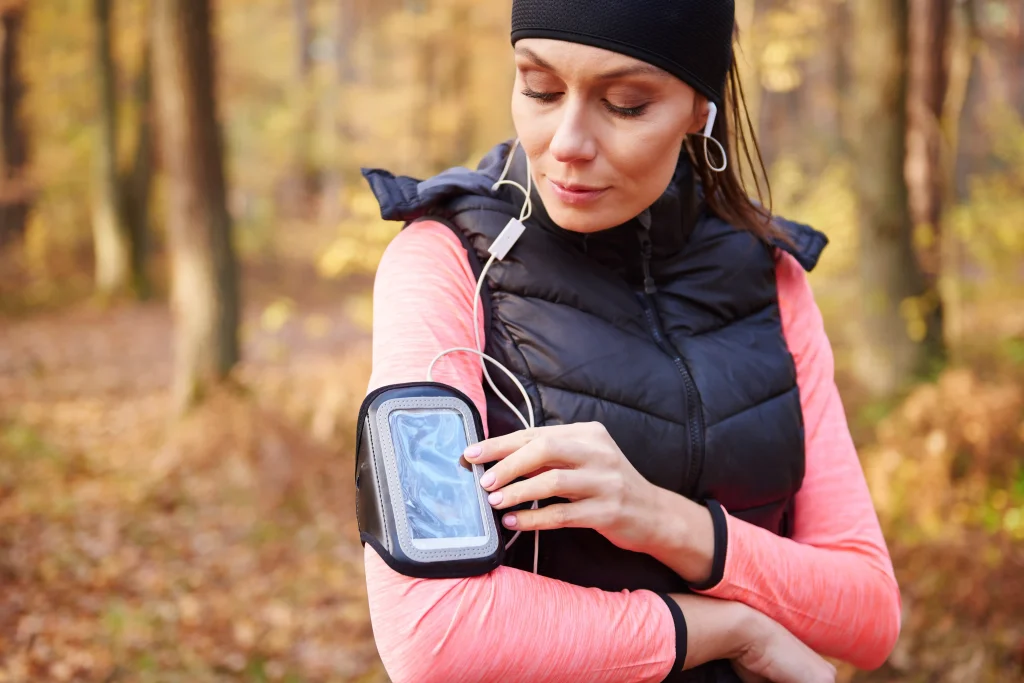
Material-wise, you want neoprene or a neoprene blend. It’s sweat-resistant (not waterproof, but resistant enough that your arm sweat won’t turn it into a soggy disaster), it’s got some give so it doesn’t chafe, and it holds its shape after a hundred washes. I’ve tried the cheap polyester ones. They work fine for maybe three weeks, then the elastic gets stretched out and the whole thing starts sliding down your arm mid-run like a sad bracelet.
The reflective material itself — and this is where brands get sneaky — should be either sewn-in reflective fabric or heat-bonded reflective strips. Not printed. Printed reflective ink fades after maybe 20 washes, and then you’re just wearing a dark band with ghost outlines of where safety used to be. Look for 3M Scotchlite if you can find it listed in the specs. That stuff actually works.
And here’s something I didn’t think about until I started running on actual roads with actual traffic: the reflective strips need to catch light from low angles. A driver’s headlights aren’t hitting you straight-on like a spotlight — they’re coming at you from maybe 2-3 feet off the ground. So bands with vertical reflective strips on the sides? Way more effective than just a horizontal stripe across the front.
Some of the better Reflective Sports Arm Strap Phone Holder models now have 360-degree reflective coverage, which sounds like overkill until you’re running on a country road at 5:30 AM and a pickup truck gives you an extra three feet of space because they actually saw you. Then it feels about right.
Water resistance matters for your phone more than you’d think. Even if you’re not running in the rain — I don’t, because I’m not a masochist — arm sweat is real. Look for an IPX4 rating minimum on the plastic window covering your screen. Keeps condensation from building up on the inside and making your phone think you’re touching it when you’re not.
Sizing and Fit — How to Pick an Arm Strap Phone Holder That Won’t Slip Mid-Run
I’ve had an armband slide down to my elbow three miles into a half-marathon, and I can confirm: it’s the most annoying thing that will happen to you that day. Worse than chafing. Worse than forgetting your headphones. So let’s talk about how to actually get the fit right.
Measure your upper arm circumference where you plan to wear it — usually about halfway between your shoulder and elbow. Not flexed. Just relaxed. Most Reflective Sports Arm Strap Phone Holder models list their size range in inches or centimeters, but here’s the thing nobody tells you: if you’re on the edge of two sizes, go smaller. The elastic stretches out after a few runs, especially if you wash it (which you should, because arm sweat is gnarly).
The strap mechanism matters way more than the size chart. I’ve tested probably fifteen different armbands at this point, and the ones with dual Velcro adjustment points — one at the top, one at the bottom — stay put. Single-strap designs always migrate. Always. Physics doesn’t care about your Amazon reviews.
And look for silicone grip strips on the inside of the band. They’re usually these little textured dots or lines that sit against your skin. Make a huge difference when you start sweating. Without them? You’re basically strapping a phone to a slip-n-slide.
Phone size compatibility is weirdly inconsistent across brands. A “fits phones up to 6.7 inches” claim doesn’t account for phone thickness — my Pixel with a case barely squeezed into an armband that supposedly fit 7-inch screens. If you run with a chunky protective case, add about 0.3 inches to your phone’s listed diagonal measurement and shop accordingly.
One more thing: try it on before you run. Walk around your house for ten minutes with your phone loaded in. If it’s sliding or pinching or feels weird standing still, it’s going to be unbearable at mile four. Return it. There are too many options out there in 2026 to settle for an armband that doesn’t fit right from the start.
Conclusion
Here’s what it comes down to: get the fit right first, reflectivity second, everything else third. A Reflective Sports Arm Strap Phone Holder that slides down your arm or cuts off circulation is useless, no matter how bright it glows under headlights. I’ve returned three armbands in the past year for exactly that reason.
The good news? Once you find one that actually stays put and doesn’t feel like a blood pressure cuff, you’ll probably use it way more than you expected. Early morning runs, evening walks, cycling commutes — visibility matters more than most of us think until we’re actually out there in the dark.
Try it on. Walk around. If it feels off, send it back. There’s one out there that’ll work for you.
Frequently Asked Questions
Q: Can I wash a Reflective Sports Arm Strap Phone Holder?
A: Most of them, yeah — but check the label first because some reflective materials don’t love washing machines. I hand-wash mine with soap and water every couple weeks, let it air dry. Takes like three minutes and keeps it from getting that weird sweaty smell.
Q: Will my phone overheat inside the armband during long runs?
A: It can, especially if you’re running in direct sun and your phone’s already warm. The neoprene or lycra wraps around it pretty tight, which traps heat. I’ve had my phone shut down twice during summer half-marathons — now I just slip it out during water breaks for like 30 seconds to cool off.
Q: How visible are these things to drivers at night?
A: Way more visible than you’d think, honestly. Good reflective strips on a Reflective Sports Arm Strap Phone Holder will bounce back headlights from maybe 300-500 feet away — that’s enough for a driver to see you and slow down. Not as bright as a reflective vest, but better than nothing if you’re just doing neighborhood runs.
Q: What’s the largest phone size these armbands typically fit?
A: Most standard Reflective Sports Arm Strap Phone Holders max out around 6.7 inches, which covers basically every current iPhone and most Androids. If you’ve got something bigger — like a Galaxy Ultra or a phone with a massive case — you’ll need to hunt for “XL” or “Plus” versions specifically.
Q: Do these work for cycling or just running?
A: They work fine for cycling, but here’s the thing: your arm position on a bike is different, so the armband might rotate or slide more than it does when you’re running. I know cyclists who swear by them, and others who’d rather mount their phone on the handlebars. Try it out on a short ride first.
Q: Can I use my phone’s touchscreen through the cover?
A: On decent models, absolutely — the clear plastic window is thin enough that Face ID and touchscreen both work fine. Cheap ones use thicker plastic that makes swiping feel laggy or doesn’t register taps at all. That’s one area where spending an extra $8-10 actually matters.
Q: How tight should a Reflective Sports Arm Strap Phone Holder actually feel?
A: Snug enough that it doesn’t slide when you shake your arm, but you should still fit two fingers under the strap without forcing it. If you see skin bulging around the edges or your arm goes numb after five minutes, it’s too tight. Loosen it one notch — it’ll stay put better than you think.